
In a professional’s career, one of the most longed-for and awaited moments is when, after years of dedication and improvement, the opportunity to take on a leadership role finally arises.
However, becoming a leader can also bring insecurity and uncertainty. A knack for management is not always innate. And developing that skill is often a big challenge for many people.

And where do games come into all this? There is much more in common between video games and business than most eyes can see. The positions on a company’s org chart can be very similar to the roles a player plays during a match.
Games, like professional life, are driven by choices. Just as a player has to decide on actions that are decisive for their progress, a professional also often has to choose between different career paths. For example, choosing between continuing as an individual contributor (a term used to describe people who do not steer their careers toward administrative or managerial roles) or becoming a leader.
Contents
- Playing Diablo is like being an individual contributor
- Playing StarCraft is like being a manager
- Hybrid and intermediate roles
- Defining your professional life is like choosing a game
Playing Diablo is like being an individual contributor
The famous role-playing games (RPGs) are those in which the player controls the character as if it were an extension of themselves. The user performs the tasks alone to earn items and rewards that let them improve their character and unlock more complex and refined quests.
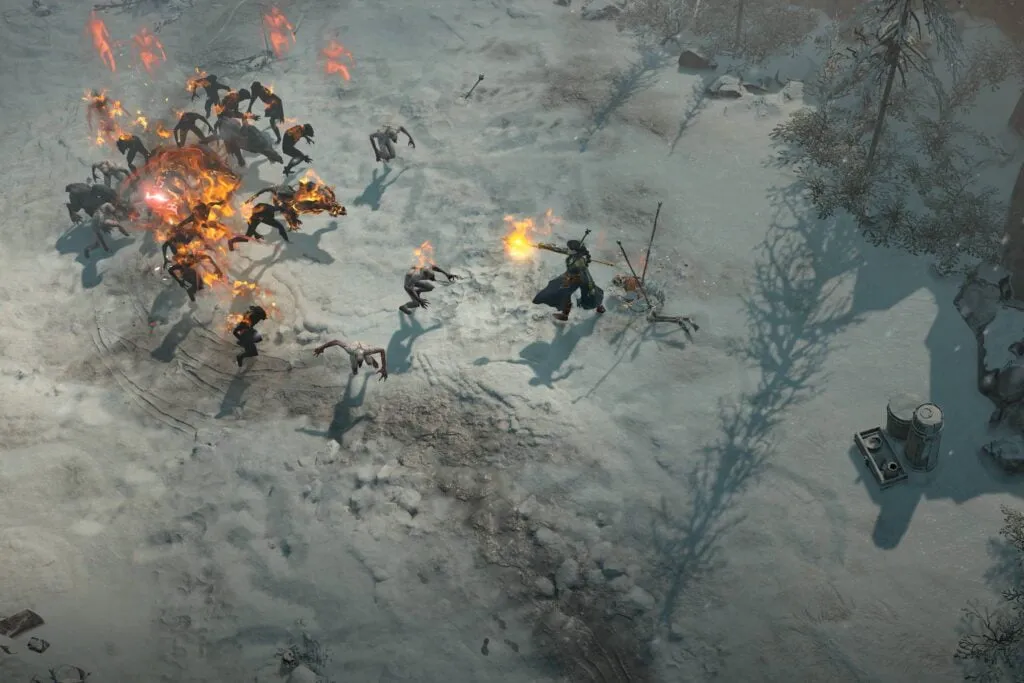
In the titles of the Diablo franchise, one of the most popular in the genre, for example, the player takes on the identity of an adventurer who must complete the different challenges that arise throughout the game’s story, usually centered on exploring new territories, killing monsters, and defeating bosses. As these challenges are completed, the character evolves and starts receiving increasingly advanced quests.
Any resemblance to the natural course of a professional career is no coincidence. And the correlations don’t stop there.
In an RPG, it is the player’s job to complete tasks with as little outside interference as possible. If a monster is too hard to kill, it is the player who must strengthen their attacks until the adversary is defeated. Inside a company, there are many situations analogous to this. If you were given the responsibility of solving a technical problem, for example, you can seek guidance from colleagues or specialists, but the task of acting to solve the issue will still be yours.
In addition, RPGs have a mechanic similar to the process of a professional’s skills development. While on one side you collect items and rewards that make the character evolve, on the other you seek out courses, training, workshops, lectures, and other ways to improve your skills and grow at work.
Another similarity is focus. In an RPG, the player has the option of focusing on a specific task according to their intentions. If they want to level up their character or obtain magic items, they can keep killing monsters over and over. Likewise, if a professional has a task that needs a little more focus, it is easier to dedicate themselves exclusively to it as an individual contributor than as a leader with several other responsibilities to attend to.
Playing StarCraft is like being a manager
Unlike RPGs, real-time strategy (RTS) games are not centered on a single character, but on an entire army. They are usually titles set in an open field where two opponents battle and build bases in real time. The player’s role is to act as the leader, creating strategies to command the army and defeat the opponent.
One of the most popular RTS titles is the StarCraft franchise. The connections that can be made between StarCraft and the corporate environment are so strong that several successful entrepreneurs have publicly expressed their admiration for the game. Besides StarCraft, we can also cite the Age of Empires series as an example of the genre.
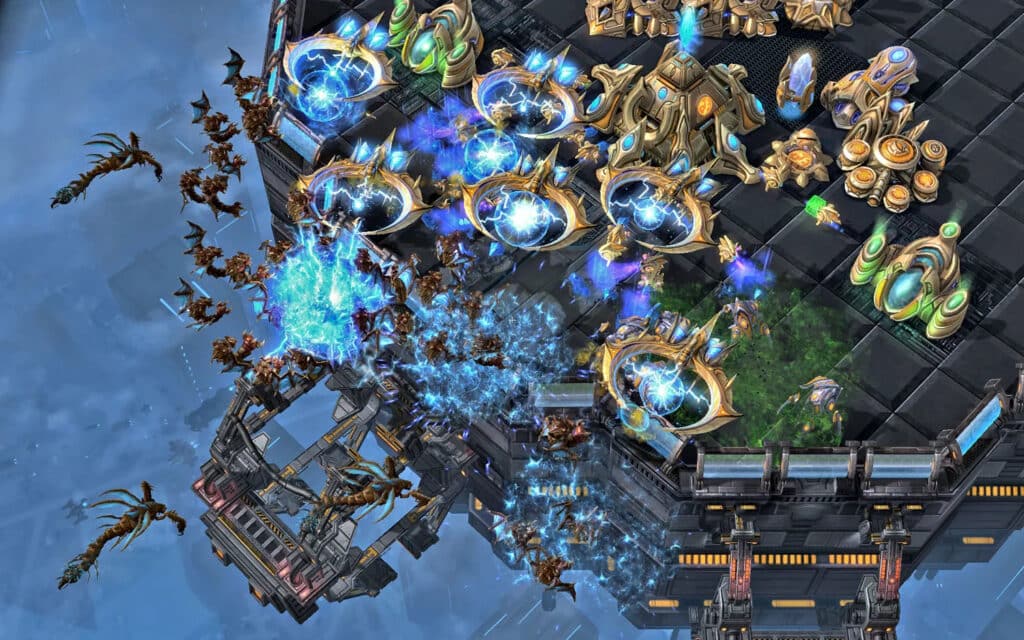
The fact is that there is a lot in common between playing a real-time strategy game and playing a professional leadership role.
In both cases, the final goal is never achieved alone. Both an RTS player and a leader need to delegate roles and make sure all the components of their army/team work in sync so that the battle/project succeeds. The results of the work also take a little longer to be seen, and the pursuit of growth and training is no longer strictly individual, but aimed at the skills and performance of everyone.
Unlike an RPG player or an IC, someone who plays an RTS or coordinates a team often finds themselves responsible for several things at the same time, and the activities in the two contexts are often equivalent.
If in a StarCraft match you need to send worker units to gather resources, in a company the leader needs to request budgets and plan headcount. While the game army’s new units need to be trained, newly hired employees also need guidance. If on one side the opponent must be constantly monitored, on the other you must stay aware of business needs.
Hybrid and intermediate roles
Within companies there are also roles that seem to sit somewhere between the IC and the leader. Tech Managers, for example, tend to split their time between the everyday tasks of an individual contributor and managing a small team.
In the world of video games there are titles like Spellforce 3, which combines elements of both RPG and RTS. In this game, the player controls a character they created and up to 3 companions, each with different abilities, as in RPGs. At the same time, some maps require building operating bases and advanced structures to gather resources, and it is also necessary to recruit units to fight larger groups of enemies or complete certain tasks, situations common in RTSs.
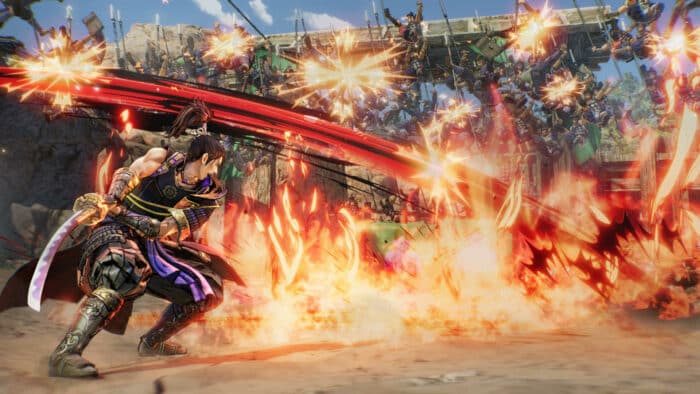
Besides that one, there are also Musou-type games, a Japanese game genre in which you control a very strong character, capable of fighting hundreds of simple enemies. The objective of the missions almost always consists of winning the battle, finding an escape route, or defending a fortress.
But although the player can control only one character at a time and spends most of the time fighting alone, it is possible to interact with and instruct other characters (usually controlled by the game’s own artificial intelligence). These interactions are important for the success of the missions, since the player is leading everyone toward the same goal. But if the game’s characters are unable to complete the challenge, the player can step in to prevent defeat. Notice the similarities with managing a professional team?
Defining your professional life is like choosing a game
Our intention with this article was to show that, both in a game and in professional life, there isn’t exactly a better or worse choice. There are different choices.
Some players who are good at RPGs will not necessarily be able to perform well in the missions of an RTS. However, there are also some with more hybrid skills who can stand out in both genres.
In the business world, the same happens: a great IC will not always be a great manager, and vice versa. That doesn’t mean there are no professionals who stand out in both positions, or those who are comfortable with a middle ground.
In general, we are led to believe that going from IC to manager is a big career upgrade. But the reality is that, depending on the market and the professional’s profile, this is not always the case. There is no right formula for reaching your goals, and that is a maxim both in games and in life.
Reference
Should I become a manager? Playing StarCraft can help you decide