
It may be a somewhat unusual fact for some people, but StarCraft 2, the classic real-time strategy computer game worshipped by millions of gamers around the world, is also a favorite of many people in the corporate world.
The reason for such success is that it is possible to draw many parallels between the game’s gameplay and the administrative routine of a company. And this is especially true when we talk about startups.
In recent years, the term startup has been used to define young, innovative companies that are born with the mission of creating a scalable business model, offering solutions to specific problems and growing quickly.
However, although countless startups appear day after day, few survive, and those that manage to consolidate usually face instability and battles along the way. A journey very similar to that of an ordinary StarCraft 2 player.
Contents
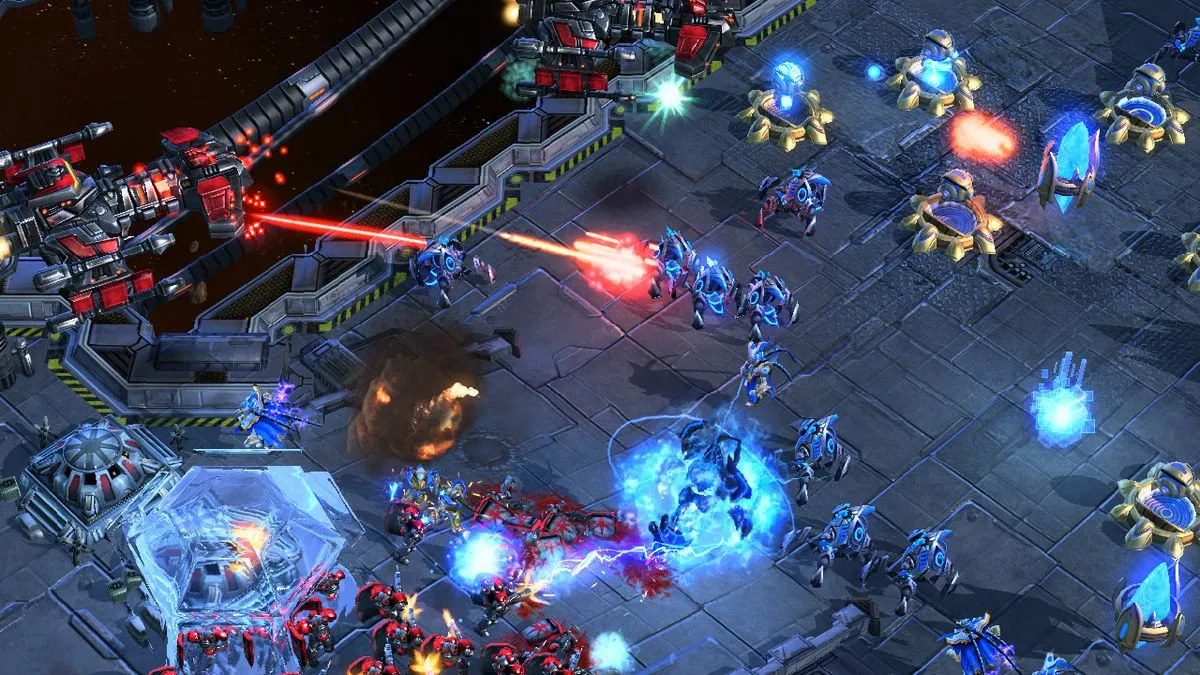
You learn to win through mistakes, in the game or in business
Source: TechRadar
Anyone who has tried to start a business knows very well that it takes high doses of courage, vision, instinct, strategy and, above all, persistence. A StarCraft 2 match demands the same skills, but at a much faster pace of events.
The fact is that nobody becomes a winner without losing many times first. And this applies to games and business alike.
In StarCraft 2, for example, the player is always testing new tactics, armies, attacks and structures until finding a set of strategic combinations that works. A startup works the same way.
Just like in strategy games, there is no definitive tutorial or magic command that will make things work out in a business venture. You have to study, analyze and take risks. And if the result is a loss, giving up should not be an option.
A true winner sees losses as an opportunity to learn and come back even stronger for the next battle. In other words: if the initial strategies and goals were not so successful, you need to recalculate the route and start a new match, but always making use of what worked before.
Ups and downs are part of the cycle
Trough of sorrow is a term coined by the English entrepreneur and author Paul Graham, founder of the startup accelerator Y Combinator.
In short, “trough of sorrow” is the period in a startup’s life when the euphoria of the beginning gives way to uncertainty, instability and poorly defined prospects.
It is a moment that practically all startups go through and, for a large share of them, it also means the end of the line, whether for financial or administrative reasons or even a lack of motivation.
The fact is that a company’s trajectory is not a graph that grows exponentially. Paul Graham himself illustrated this very well by drawing the startup curve, a visual representation of the ups and downs these ventures go through.
Source: DEV Community
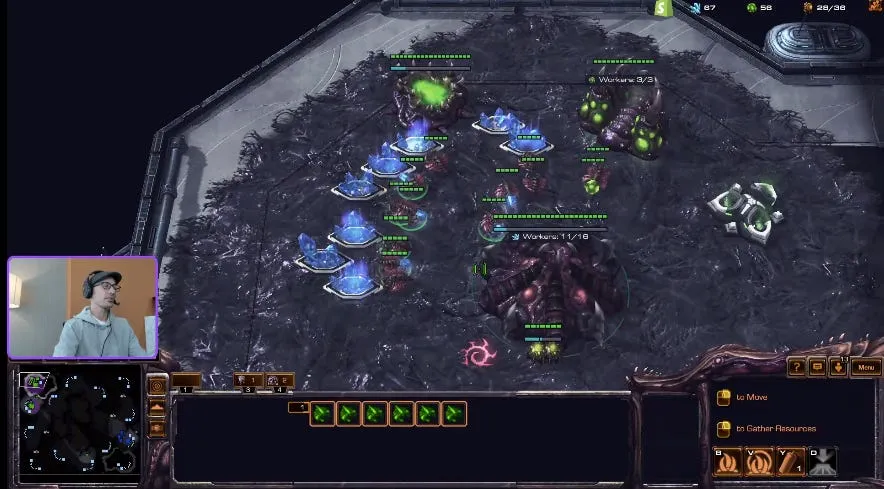
The stages of the startup curve are very similar to the first minutes of a StarCraft 2 match. As in business, there is an initial euphoria followed by a period of uncertainty accompanied by a great need to intensify work and rebuild strategies.
StarCraft 2 x Startup: different environments, similar battles
| Time in StarCraft 2 | Curve phase | StarCraft 2 | Startup equivalent |
| 1 min. | Before Startup | – You produce the first SCVs (the Terran race's worker units) on the map. – Gather resources, build supply depots and barracks that produce simpler, immediate units. | – You set up an office and hire people so everyone works around the products/services/campaigns. – You build the MVP of the project, development and manufacturing lines. |
| 2 min. | Before Startup | – You create a mini army of marines (the Terran race's infantry) and tanks to lead an offensive. – You don't know for sure when you have enough units. If you send them too early, they may be destroyed. If you wait too long, the opponent gains time to build a defense. | – You already have a minimum viable model for the launch of the products/services. – You have no idea whether the products/services/campaigns will be accepted in the market you intend to enter and/or establish yourself in, for customer and competitive reasons. |
| 3 min. | Initial Enthusiasm | – The army travels through unknown territory to the enemy base. – Your tanks are knocking down enemy buildings and units. | – You start to see your products, services and brand reaching new markets in terms of segments and territories. – Your products, services and advertising campaigns are performing in these new frontiers. |
| 4 min. | Reality Sets in | – Time has also passed for the opponent, who happens to have a good-sized army, and you are no longer sure my team will win. – You start thinking about retreating. | – A month or two goes by since the business launched and you wonder where all that web traffic, all that sales performance and revenue went. – You start to have doubts about how you will keep growing. |
| 5 min. | Trough of Sorrow | – Your army is being destroyed and you have to retreat or let your units be destroyed. – You must rebuild units and keep gathering resources. | – You begin to see that all your work on SEO, partnerships, marketing, product development, customer service, etc. is not enough to advance in the market. – You don't want to run through all your money and start looking for organic ways to grow. |
| 10 min. | Starts Working | – You have rebuilt your economy and now have a good-sized army. – You win some small battles and skirmishes (quick conflicts) here and there, but never enough to defeat the opponent. | – You get a boost from more word of mouth and/or after an influencer talks about your product or service. – Paid marketing works, but the CAC (customer acquisition cost) is very high. – You are still trying to figure out how to keep the business wheel turning. |
As we have seen, the mechanics of a strategy game have many similarities with the trajectory of a new business. However, there is also a crucial difference: in the startup world, there is no option to lose something repeatedly just to learn or improve. It is allowed and even advisable to lose some battles, but never to let that become a predominant pattern.
Resilience in real life is not as simple or as quick as in a video game. That is why knowing how to make smart, effective choices and plans should be one of the main skills of a good entrepreneur. And a good StarCraft 2 match can be a great way to develop it.
How about starting now?