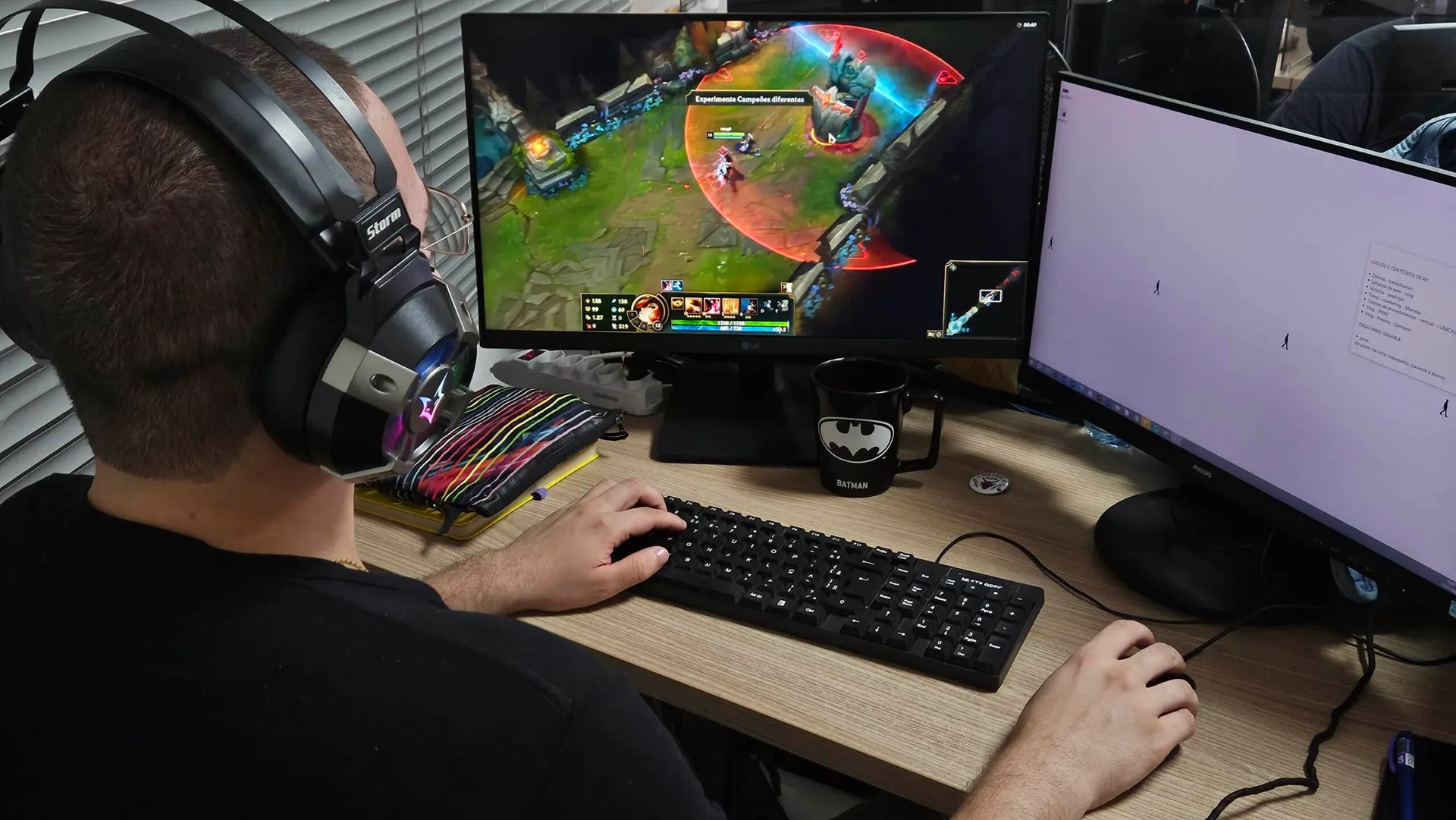
Looking at how games can influence different aspects of life, including the work experience – what we call Game-to-Work – we interviewed a few people who like to play during breaks in their work schedule, especially at lunchtime, to better understand how this activity can influence their routine.
Contents
In the rush of everyday life, for those who have gaming as a hobby, finding a moment in the middle of the routine to devote to it can be very hard. So using work breaks to unwind, turning your attention to a form of entertainment very different from the reality of work, can be a good way to make the day lighter.
And, beyond being purely an entertainment activity, playing during work breaks can help the creative process and even support the development of skills.
Since it is usually quite different from the activity done at work, playing and relaxing a little can even affect the quality of the work, because it affects the employee’s mental health.
With these hypotheses in mind, we interviewed some Fapuga | Nepuga employees with experience playing during work breaks to learn more about how this activity affects their routine, and whether they notice any influence of games on the development of their own skills.
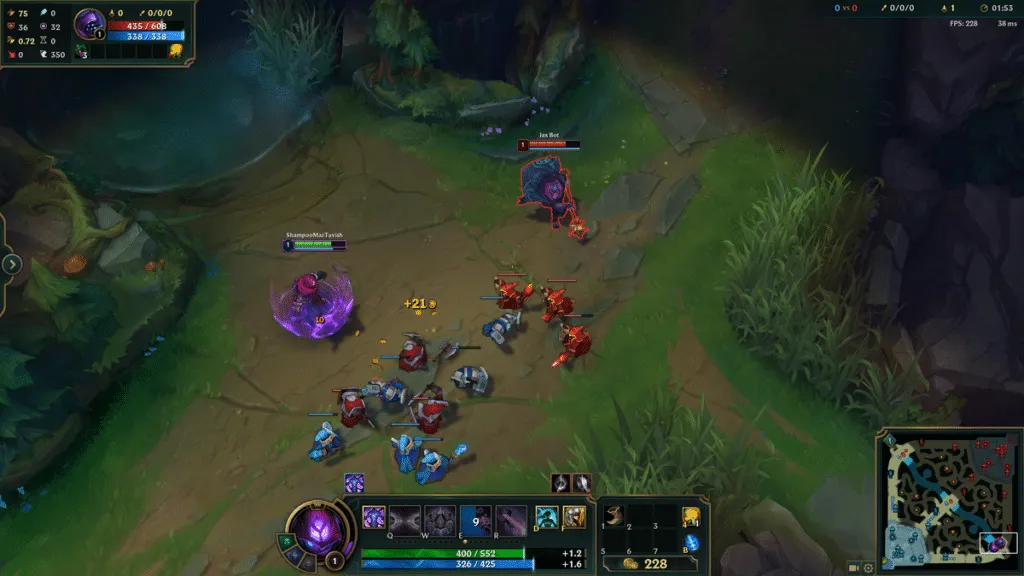
Courtesy: Adrian Holm.
They all reported something in common: they play or have played League of Legends, often with coworkers during their respective lunch breaks. So we will talk more about the topic from the perspective of this specific game.
Among so many possible games, LOL is an online game with different modes of relatively quick matches, around 30 minutes, and it is also free and has a mobile version.
For those who want to play with coworkers, the game’s accessibility and popularity make it easy to put together a team.
Despite the features that make the game popular, each of the employees interviewed described a different experience with it, in terms of motivations and how it affects their own routine.
But, starting with the similarities and then going into the particulars of each player, all of them saw the need to work as a team to reach the common goal.
During LOL matches, you need strategic vision and the ability to communicate with the team; these are truly decisive skills that can be better developed through this and other team games. As one of the interviewed employees comments:
“So when the team is willing to collaborate, many times you can turn around matches that seemed lost. Sometimes we manage to have a mindset, a spark, and say, ‘hey, wait, we’ve been hammering at this too much, what if we did that instead?’”, said Luis Américo, an IT technician.
Game-to-Work in Practice
Social media specialist Antônio Germano, in turn, spoke about bonding with his team beyond the game:
“It’s been a while since I played at work, but when I play I feel more connected to the team, my interaction increases and I have a sense of belonging; it’s also smart in terms of emotional intelligence, how to communicate, and so on.”
Beyond development within the game, we can already see how what is worked on in the dynamics of a match also extends to interpersonal relationships at work: when it comes to belonging or the need to communicate with the team to win alongside coworkers, those lessons are naturally transferred to the common goals within the company or project.
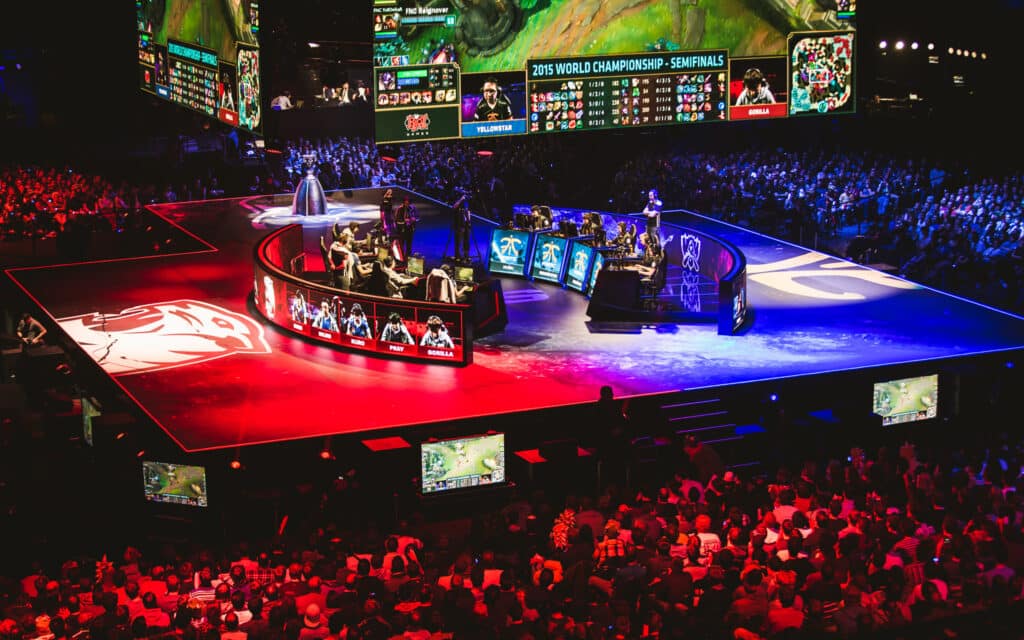
Fnatic vs KOO Tigers – 2015 League of Legends. Courtesy: Bruce Liu, CC BY-SA 3.0, via Wikimedia Commons.
Lessons like these can develop from the way calls are made, by observing what works best in the team’s dynamics, who does best at which role, whether someone has the profile to take on leadership, and so on.
During a match, players may also feel more at ease exploring skills they don’t feel comfortable using in the workplace. After all, games are full of reward mechanisms, an environment conducive to exploring and taking risks. And if you are not a professional player or competing seriously, what would you have to lose?
The creative boost a match can provide
When it comes to how playing during rest periods can affect the work routine, views differ a little.
Accounts vary: some mention choosing to play during this time to let go of everyday worries, while others tell how the activity – very frenetic in some matches – leaves players even more “wired,” as web designer Gabriel Saldanha explains:
“Mentally, I didn’t rest at all. But I can give attention to a different kind of thing. So the focus ends up going to another goal and, when I go back to work, it ends up flowing better than it would if I had stayed 100% on it.”
It is widely known that breaks not only help but, in many cases, are essential in processes that demand creativity.
As we have discussed here on the blog, people learn precisely during breaks, while they recap what they have seen before. This is because, when we try to remember, we consolidate our memories more and more.
Before we wrap up, it is worth remembering that, when workload is excessive, playing a little will not solve things, not to mention possible harm caused by too much screen time.
Otherwise, choosing break times at work to play a little can bring different benefits to employees who enjoy this activity. Whether to stimulate creativity, to build bonds with coworkers, or to take a pause from more routine matters, a match can indeed be a good choice.