Games that simulate reality are not exactly new. Board games like the classic Monopoly, released more than eight decades ago, already borrowed concepts from the real world and turned them into entertainment and, why not, into a way to teach those concepts. In the video game era, this idea expanded in titles like SimCity and The Sims, as well as in business simulation games.
Teaching business can be a difficult task, especially in today’s complex landscape, and games that emulate everyday processes and challenges can be great allies.
The game-based learning methodology, which consists mainly of drawing parallels between the real world and the world of games, has so many enthusiasts that there is a wide range of video games designed specifically for business.
These are games that, by emulating reality, replicate scenarios, processes and/or roles that recur in corporate routines. People who are not interested in the business world can play them too, of course, but they are widely used to train professionals and to foster a more dynamic and holistic business vision in them.
This convergence of business, education and entertainment has had very positive impacts wherever it is implemented. The gamified method is recognized as an efficient way to boost student engagement and help them develop fundamental soft skills and hard skills.
In addition, games that put students in contact with situations they are likely to face in their corporate routine take learning beyond theory. The practical view of things becomes sharper, and professionals feel more confident when making decisions in the real world.
Keep reading our article and find out how games can make it easier to train successful professionals for the market.
Contents
- Playing is, above all, exercising the mind
- 5 business simulation games for every taste and industry
- Making mistakes in the virtual world prepares you for mistakes in the real world
Playing is, above all, exercising the mind
The cognitive stimulation caused by games is already a well-documented topic among scholars and experts. From ages 8 to 80, contact with games is proven to benefit our brains, exercising the mind and developing soft skills such as reasoning, strategy and resilience.
Business simulation games are no different. As we said before, they can promote the improvement of skills that matter for a career and for the personal growth of those who learn through them.
Teaching concepts such as accounting, marketing and planning are just some of the many possibilities this type of game offers. The benefits of the gamified methodology are tangible and show up in many ways in professional everyday life.
Experience-based learning
One of the most widely publicized (and proven) advantages of teaching business through simulation games is, without a doubt, the fact that the games put students in direct contact with everyday situations and their consequences.
The experience a professional gains from something like this is directly reflected in their future attitudes at work.
Both the dynamic itself and the exchanges with the other participants in the same methodology will end up influencing the decisions the professional makes in the future. Having already had prior contact with certain issues and challenges, this specialist will tend to conduct their actions with more assertiveness and knowledge.

Understanding how the real world works
Anyone who thinks simulation games can only help professionals in a certain market or position is mistaken. Areas such as marketing, human resources, education, operations and financial services, administration and many others can benefit from the methodology.
From a teaching standpoint, these games are useful because they allow students to gain experience and test their skills in different scenarios before having to face the same situations in the real world. The big advantage is that, unlike a company, a game is a risk-free environment, at least free of risks with real potential for impact.
This way, the professional finishes their training with the games and returns to their work routine already prepared for when the same conditions they faced during their training happen in the real world.
Skills development
Leadership, management skills, teamwork, problem solving, critical thinking and time management are just some of the skills that can be taught and improved through the gamified method.
Like corporations, a game environment is almost never individual. In both contexts, teamwork and decision-making are constants. Knowing how to deal with others is an essential skill for anyone who wants to be a successful professional, and games that simulate reality are a great way to start training that ability.
Training capable leaders
And since we mentioned the word leadership in the previous section, we could not fail to highlight how useful simulation games are in training new and effective leaders.
Leadership at different levels is an element common to practically all games and dynamics of the genre. Problems that recur in a manager’s routine are frequently emulated, leading the player to exercise their ability to solve them. All of it, as we said before, with the advantage of being in a risk-free environment where mistakes become lessons, not consequences.
Leading people and businesses is not the simple, comfortable task it may seem at first glance. By having early contact with the challenges of management through games, professionals become better prepared and more experienced for the challenge.
5 business simulation games for every taste and industry
The current range of business simulation games covers the most diverse professions, roles and fields. Check out some of the main ones below.
1) Two Point Hospital
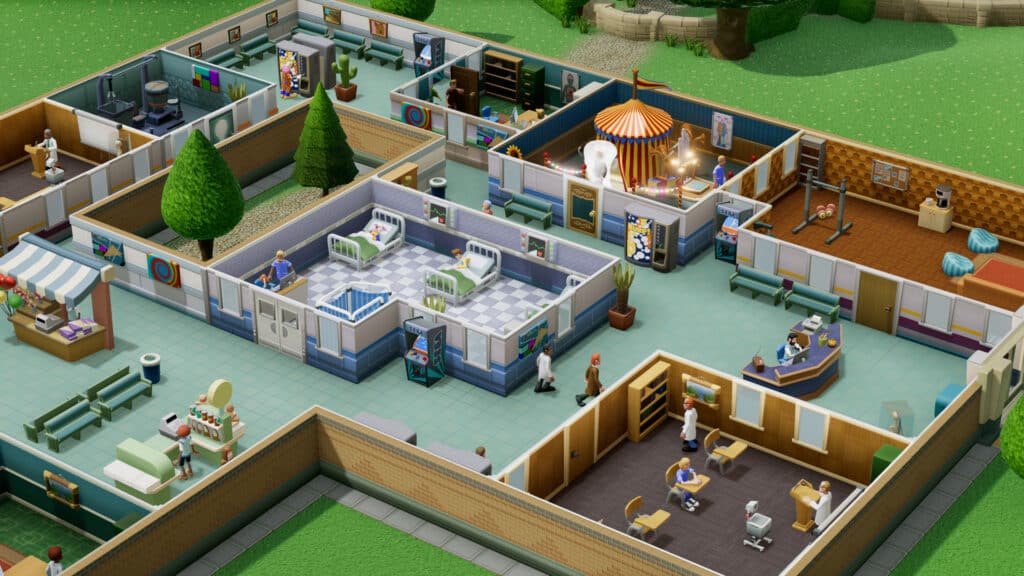
Healthcare is one of the most important areas there is, and taking care of it can be quite a challenge for someone without expertise.
Two Point Hospital is a simulation game developed especially for those who want or need to enter the field of hospital management. In it, the participant is put in the shoes of an administrator who must manage all the operations of a large hospital.
In the game, the player receives a series of tasks related to building and maintaining the hospital, as well as subtasks that include creating new rooms and beds, hiring new doctors and nurses, and managing administrative and financial resources.
The main goal of Two Point Hospital is to train the future manager to run their healthcare unit in a way that satisfies both patients and the medical staff.
To do this, the game uses playful elements and plenty of humor, its main trademark. The virtual patients who come to the hospital tend to present rather unusual “illnesses,” such as Cubism and Turtle Head, challenging the player to think of new treatments and effective solutions.
2) Two Point Campus
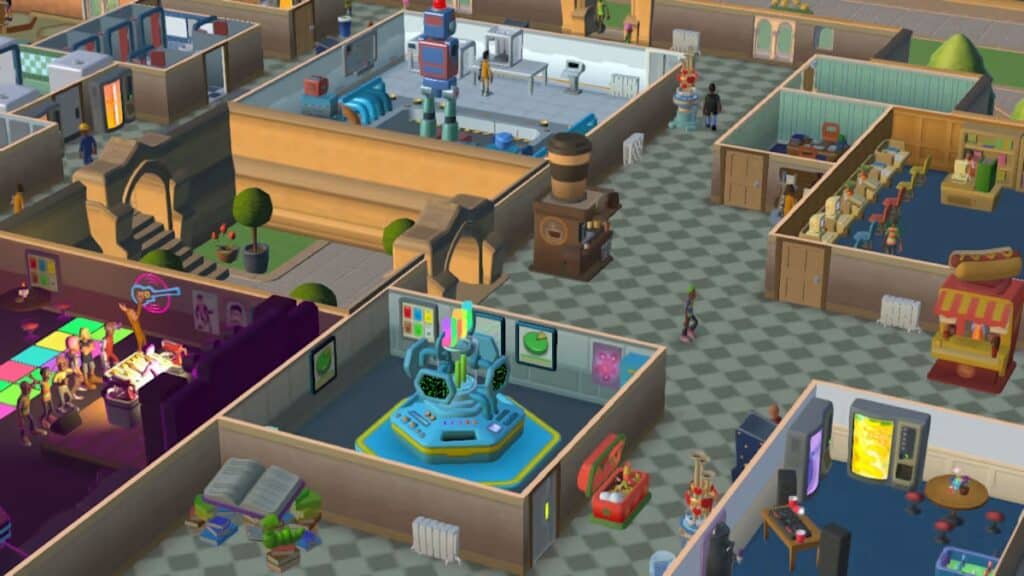
Two Point Hospital was so well received that it ended up generating a spin-off: Two Point Campus. Out goes the hospital, in comes the university.
The premise of Two Point Campus is the same as its sister game, but swaps healthcare for education. Players are challenged to build and run their own university campus, with all the challenges that the role involves.
The game’s activities include building properly equipped classrooms (and other essential facilities, such as restrooms, dormitories and dining halls), recruiting and training staff and, of course, making sure students are happy and satisfied.
The characteristic humor of Two Point Hospital could not be missing either. The university in Two Point Campus offers some rather offbeat courses, such as Witchcraft, for example, and the students’ behavior is anything but orthodox.
3) Job Simulator
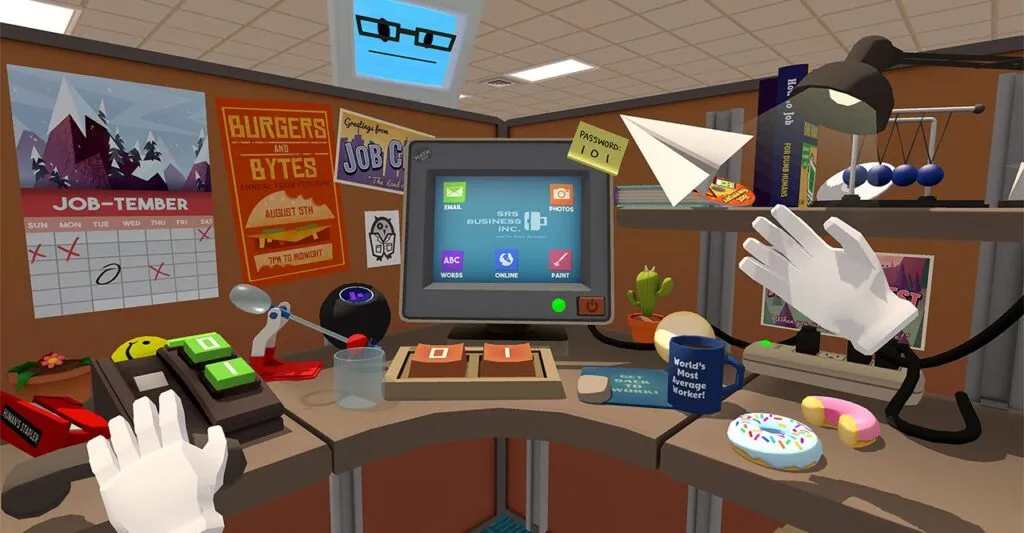
The title Job Simulator is already enough to give a clear idea of what the next game in our selection is about.
What sets Job Simulator apart from other business simulation games is that it does not put the player in the position of running a fictional company. Here, the roles taken on are office worker, chef, mechanic and convenience store clerk.
The lighthearted tone of the game is evident from the premise: in the year 2050, robots have replaced all human workers. The job simulator is a way for people in that future to have the chance to experience what it is like to work.
As in the titles of the Two Point franchise, humor also sets the tone in Job Simulator. Office workers type on a keyboard with only two giant keys, store clerks throw fireworks at customers, chefs hurl food and mechanics put bananas in tailpipes so cars pass carbon emissions tests.
It sounds very fanciful, and it really is. But real-life corporate routines can also be quite bizarre at times, and it is important to be prepared for absolutely any situation.
4) Capitalism II
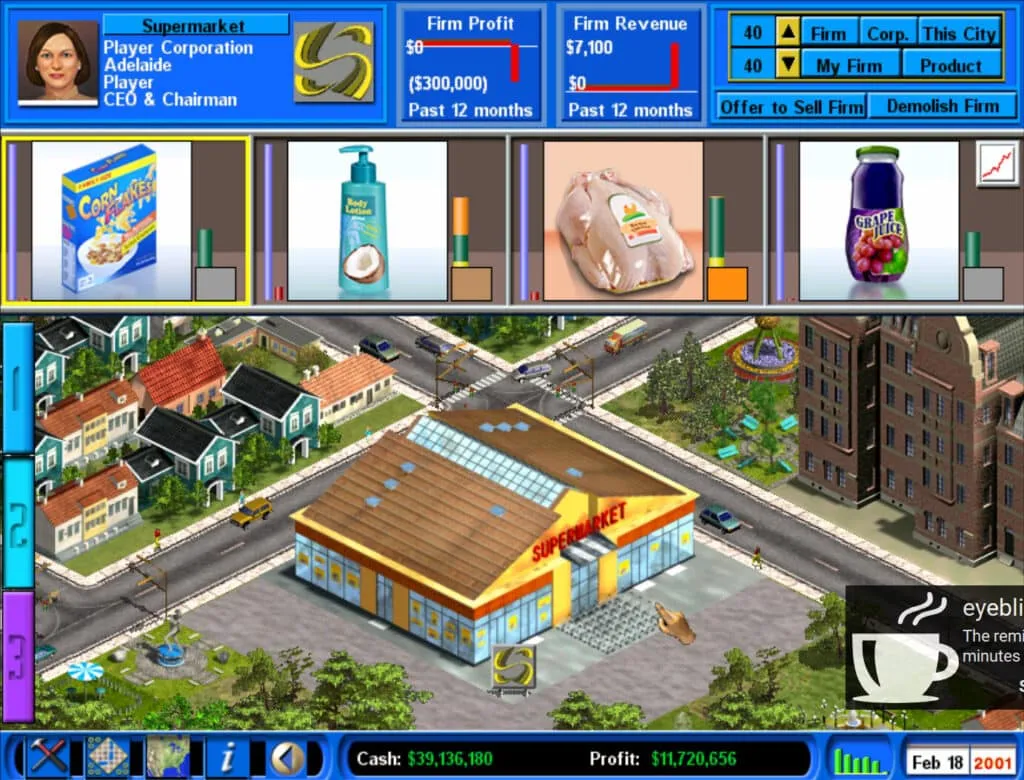
One of the most complete business simulation games available is, without a doubt, Capitalism II.
A sequel to the game Capitalism, released in 1995, the main goal of Capitalism II is to control your own empire of manufacturing and selling products. This encompasses practically every sphere of real-world business.
Players can choose from 60 product options to manufacture. They can choose their business partners and develop new technologies to produce their goods. And they must create effective strategies for marketing, sales, production, purchasing, imports and exports, among others.
A game this complete has the potential to develop countless skills in those who play it. In Capitalism II, you learn to manage resources, negotiate, invest and everything involved in a company’s routine. It is a comprehensive and, at the same time, playful tutorial in business administration.
5) RollerCoaster Tycoon
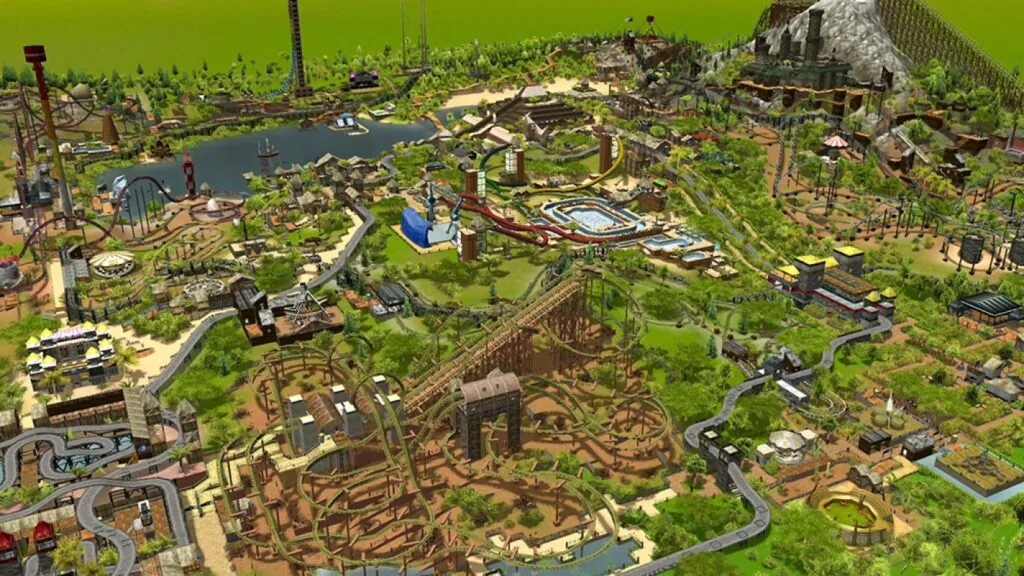
When we talk about games, the first thing that comes to most people’s minds is fun. RollerCoaster Tycoon combines that idea with business by simulating the construction and management of an amusement park.
The player takes on the role of a member of the management team, responsible for building and customizing roller coasters and other kinds of attractions such as carousels, bumper cars, Ferris wheels and pirate ships.
Among the game’s goals are boosting the park’s profit, attracting visitors and hiring professionals to take care of the business’s maintenance, cleaning, security and entertainment. In addition, the player must also look after the visitors’ needs, building restrooms, snack bars and information booths in strategic locations around the park.
By playing RollerCoaster Tycoon, you can exercise management skills and creativity at the same time. Countless types of roller coasters can be built, and the player can alter and customize them however their imagination dictates.
Making mistakes in the virtual world prepares you for mistakes in the real world
To err is human. This popular saying is also an undeniable fact. No matter how good and capable a professional is, they are still subject to their own failures.
As you saw in our article, simulation games offer a hands-on experience of the main aspects of business management, but with a crucial difference: in the virtual world, the environment is risk-free.
Mistakes made in the game have consequences within that environment, such as losing points or taking longer to level up or advance a stage, but they do not affect the real world. Unfortunately, we cannot say the same about the mistakes of a real company.
That is one of the reasons business simulation games are so important. The gamified environment allows people to take risks, create, test ideas and prepare for reality, and the market needs ever more capable professionals, especially in management positions. How about learning that by playing?