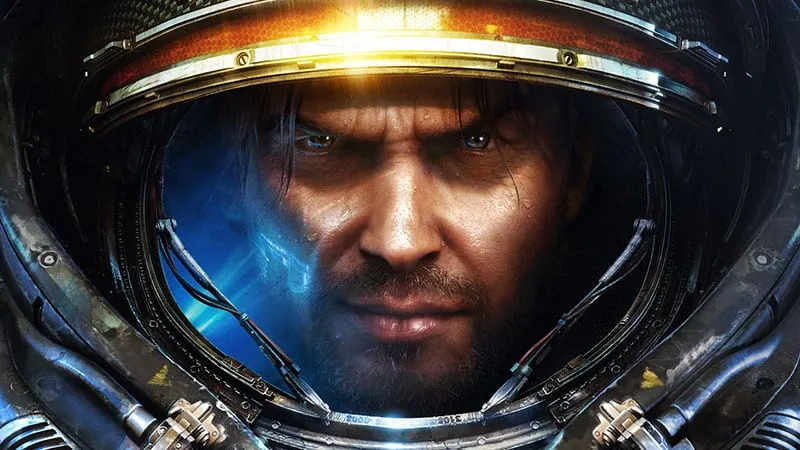
Playing video games and running a company may not be something that occurs to most seasoned business administrators. It can be hard to see how a game developed for recreation could be potentially beneficial in business administration. In reality, however, there are many similarities between a game of Starcraft and business administration. Moreover, in a scenario of fierce market competition and outdated teaching methods, looking for inspiration in unusual sources can occasionally make a big difference!
For those unfamiliar with Starcraft, here is a brief introduction. Starcraft is a real-time strategy game (Real Time Strategy – RTS) set in a futuristic scenario. It features 3 races: humans, extraterrestrials, and alien monsters. When you start a match, you, as the player, have a broad view of the entire map, which serves as the battlefield. You begin with a base building, a few workers, and collectible resources at your disposal. The opponent starts with the same structures and conditions, but on the opposite side of the map. The basic purpose of the strategy game is to build an army and face the opponent until all of their units and buildings are eliminated. As a player, you manage all the units and production in the game, which makes multitasking an essential skill.
We start with a base and a few workers, with the goal of gathering and using resources, erecting buildings and factories, producing combat units, upgrading those units, and making sure the supply of the whole operation does not exceed the cap. After creating the first combat units, you send them out to scout the map and face the adversary’s troops. In short, that is the essence of the game.
And how is this similar to business administration?
1 – Multitasking skills
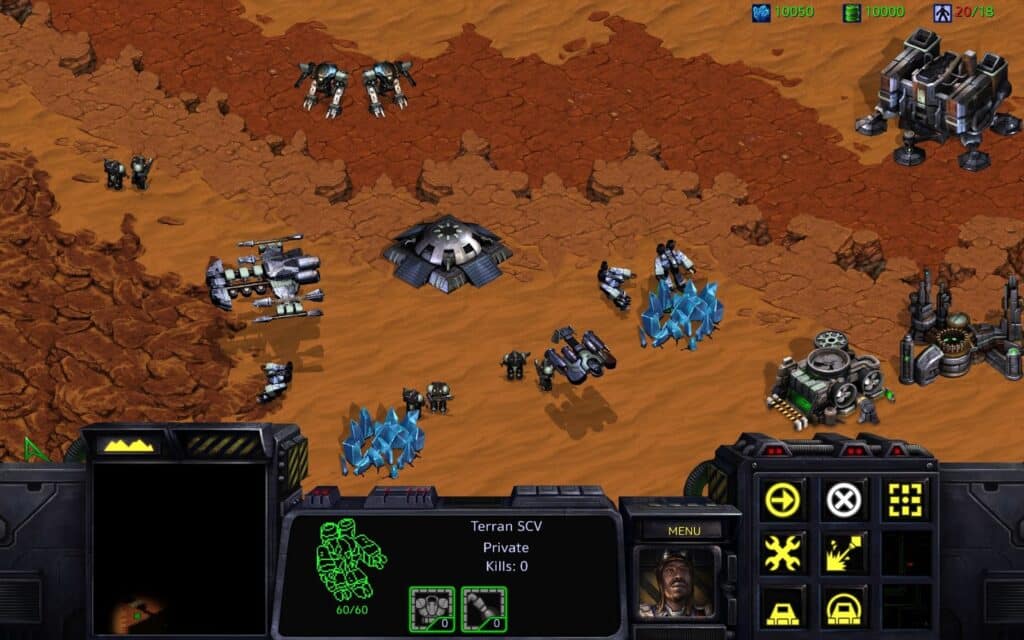
When starting a Starcraft match, the player soon realizes the need to master multitasking and adapt to different activities. Similarly, entrepreneurship requires the ability to move simultaneously among activities such as hiring staff, raising investment, sales, and marketing.
In a match, you must constantly alternate between gathering resources, building structures, producing units, exploring the map, and moving troops. As a result, over the course of the game it is common to experience the “multitasking cycle,” in which you carry out a sequence of actions like the one described below:
- Check that resource gathering is running efficiently
- Monitor your base and the contested territory
- Create combat units according to the resources gathered
- Make sure production is not halted by exceeding the supply cap
In the game, this multitasking cycle occurs, on average, every 7 to 10 seconds. In business, the process may look something like this:
- Check that the cash flow is solid
- Talk to the sales team to make sure goods are moving, and keep an eye on competitors’ and the market’s movements
- Keep up a dialogue with the marketing and production teams to ensure that products are delivered in the right quality and quantity and made available to the right audience in the planned time
- Ensure team satisfaction, making sure everyone has tasks while avoiding disruptions caused by overload for prolonged periods, for example
In business, this cycle commonly occurs biweekly, monthly, quarterly, semiannually, and/or annually.
2 – Micromanagement and macromanagement
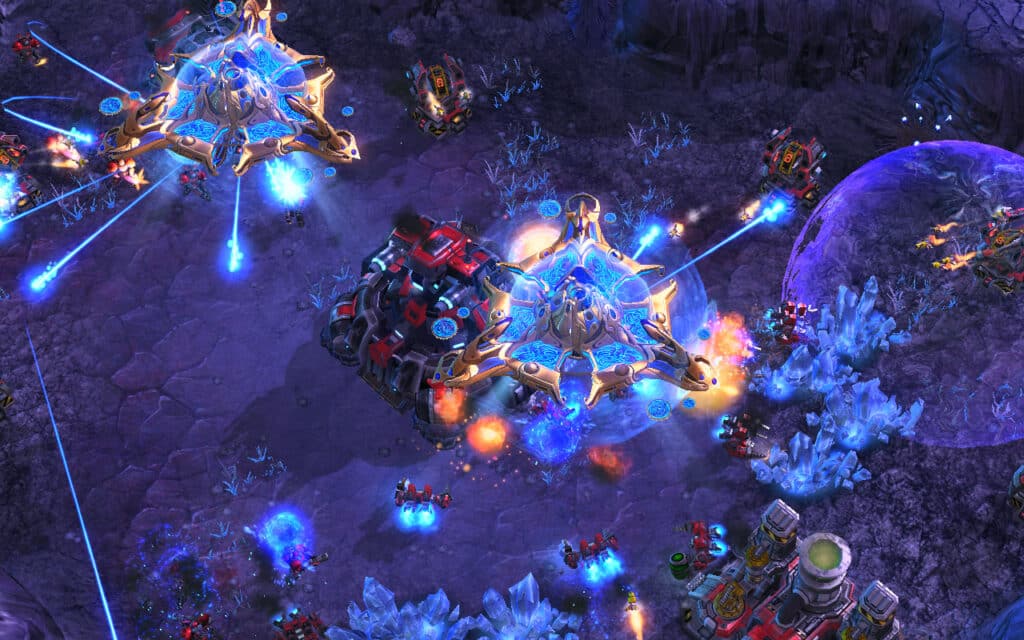
In every Starcraft match, both micro and macro management are needed at different moments of the game, especially in battles.
Micromanagement
Micromanaging each unit can lead to better results, but it is not viable in the long run. In other words, there is a limit to effective micromanagement, and if an opponent does not focus on it, they can gain a significant advantage.
Depending on the combat, it may be appropriate to let the units act on their own (automatic mode), giving them only a general direction, or to select and move units individually during the fight to increase your chances of success. Each approach has its advantages and disadvantages.
In some businesses, project management must be balanced between micromanagement and a looser approach. For each project your company undertakes, you or your managers can choose to control employees in detail or allow them greater autonomy. The skill lies in knowing when to apply each management style. An example of when micromanagement may be appropriate is when a crucial deadline is approaching, or when carrying out a task for a high-importance client or project, where it is essential to ensure flawless work.
However, caution is needed, because micromanagement, both in the game and in real life, can have negative consequences. Overloaded or dissatisfied employees and losing sight of the big picture are some of those problems. In the game, too much micromanagement in a battle can lead to your base being invaded without you noticing.
Macromanagement
Macromanagement is a fundamental part of the strategy game, representing the resource management that determines the opening and overall strategy of the match. In the world of business administration, this is represented by the strategic action plan.
Every business administrator understands the importance of resources. They can be directed to various ends, such as investments, acquisitions, talent, and intellectual property. In Starcraft, besides minerals and gas, there are also the surrounding terrain and the tech tree (used to upgrade units). In a business, you could send selected employees to training or to earn a master’s degree, thereby increasing those employees’ knowledge and value. Or you could choose to technologically modernize all of a company’s equipment, machinery, and processes, or those of certain departments.
Cash flow, one of the most significant resources, can have diverse origins. In the business world, this is known as revenue streams, while in Starcraft it is called “resource flow.” It is essential from the start, in both business and the game, to constantly secure revenue/resource streams. Also, in the game as in a company, accumulating excess resources/money is not advisable – you need to constantly reinvest in improving the product, the production lines, the production cells, the human capital, and in creating new sources and streams of revenue.
A harder aspect of resource management is dealing with the aftermath of a battle. In the game, after a clash, you may lose 80% of your units and return to base with the remaining units wounded or damaged. At that point, you need to spend resources to repair or heal those units. The same happens in business: in difficult times, you may be missing part of your core team and need to invest resources to ensure they stay with the company or that people are replaced. Alternatively, it may be necessary to let them go in order to minimize losses.
In general, it is advisable to balance the time devoted to macromanagement and micromanagement, since there are moments when each is crucial individually or together.
3 – Watching the competition
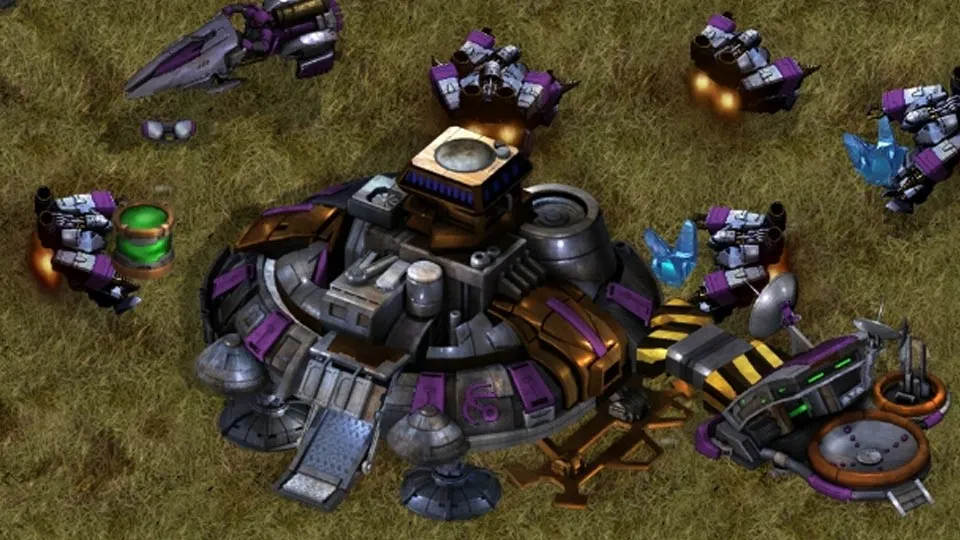
Staying alert to the competition is sometimes as crucial as taking care of your own business. When running a company, it is important to understand that competitors are probably acting or thinking in ways similar to yours. In Starcraft, a vital aspect of the game is sending scouts across the map to monitor the opponent’s actions to the point of perceiving which strategy the adversary is pursuing. Otherwise, you may be surprised by an enemy battalion, with no time or ability to react. On the other hand, it is just as important that you know how to exploit the opportunities the map gives you without the adversary knowing what you are doing.
In some cases, the competition is so intense that large companies such as Apple and Microsoft require their engineers to sign agreements preventing them from working for a competing company. All of this is to keep the competition from learning their present and future plans. All of it to avoid giving the adversary time to adapt to their actions and strategy.
Another way to prospect in the business world is to establish your company near a major university. For example, RIM (maker of the BlackBerry) was headquartered in Waterloo, Ontario, where the local university is world-famous for its excellence in mathematics and science. Elon Musk’s decision to locate SpaceX’s headquarters in Southern California was due to the high concentration of aerospace engineers in the region. In Starcraft, this is represented by knowing where to set up new expansions and take advantage of surplus resources to technologically evolve your base, buildings, and combat units, in order to gain an advantage in the number and quality of troops.
Therefore, just as in Starcraft players constantly monitor the enemy and look for new resources, in the business world it is essential to always be on the lookout for new talent and to keep track of competitors’ actions.
4 – Adaptability to change
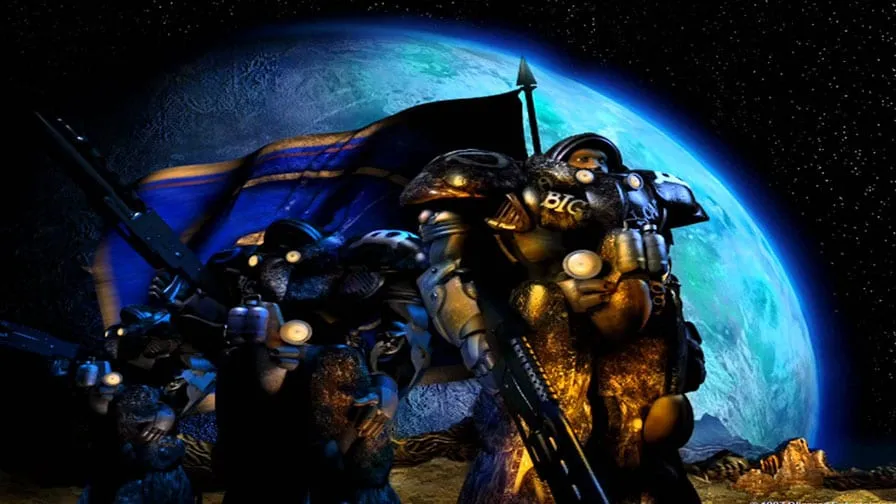
As in real life, situations change and things do not always go as planned. That is why it is essential to adapt to the new context. This is the main lesson learned from Starcraft in relation to business. We start with a plan, a kind of step-by-step guide to follow. However, it is almost certain that at some point, about 30% of the way along, something will happen that requires us to adapt, abandon the previous plan, and create or adjust a new one.
When dealing with changes of plan, the most important thing is not to neglect two fundamental aspects: resources (cash flow) and remaining units (current employees). In the game, a secondary base can suddenly become the main one, especially when the minerals at the starting base run out. The same goes for business: a secondary or unexpected source of revenue can become the main one, depending on the market, demand, and uncontrollable factors (such as technological changes).
A good leader must be able to adapt and adjust to maximize all revenue streams with the resources available; otherwise, they will quickly face difficulties. Having too many resources can also be a problem, although it is preferable to the opposite. For example, if you receive a large investment and do not plan properly or hire the right people to help with gradual growth, you will not only fail quickly but also waste the investment.
Cash flow, especially passive cash flow, is the most important aspect to cultivate in a business, as it can one day be the company’s salvation. It is fine if the cash flow is not fully aligned with the core business, as long as it is present and well managed. And that brings us to the next point:
5 – Decisions
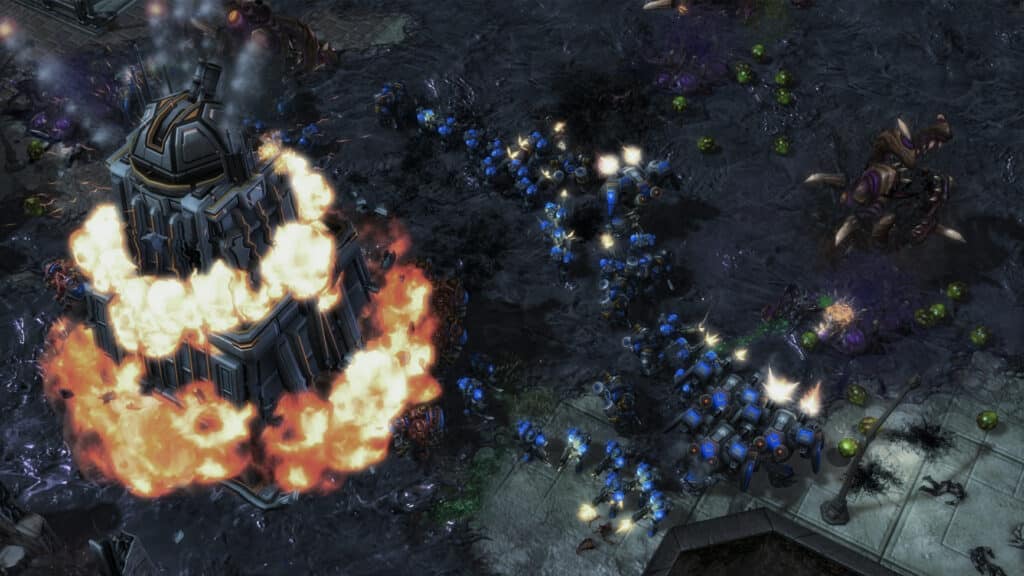
Making decisions is a crucial aspect of both the game Starcraft and business. In both, you need to make constant decisions: big, small, good, and bad. It is a way of life. The problem arises when there is hesitation or indecision, because that is when difficulties appear.
In the game, at around 2 to 3 minutes, you must decide whether or not to expand. Sometimes one option is better than the other, but it is not obvious. Still, both decisions (expanding or not) are better than indecision. Not making a decision means sending 3 “workers” to the expansion area and continuing to hesitate over whether or not to expand for another minute. During that time, you lose those workers’ ability to generate troops and the competitive advantages that come from the minerals or gas gathered, and the opponent, if they made that decision, gets ahead of you.
In business, making wrong decisions is preferable to making none. That is because wrong decisions teach valuable lessons, making better decisions possible in the future. Indecision, by contrast, keeps everything stagnant and without prospects. And speaking of experience…
6 – Experience
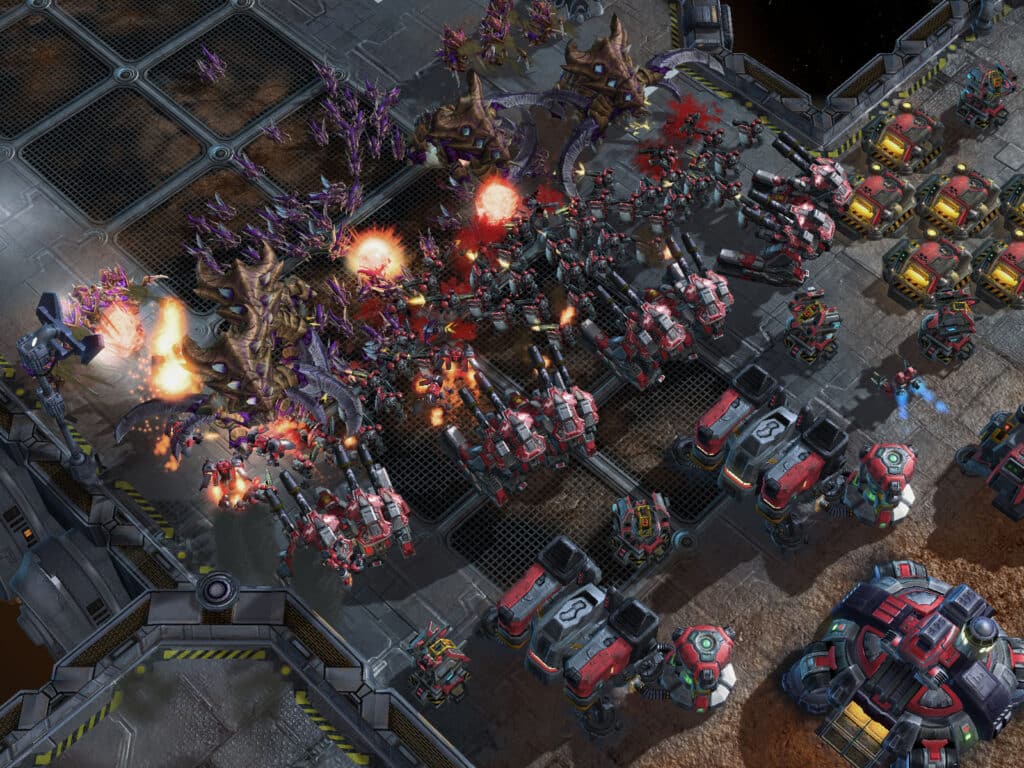
Experience, in both the game and business, helps improve your skills. In Starcraft, experience is gained by playing many matches, while in real life it may involve running a business over a lifetime or creating different ventures over time. I believe that even when managing the same business for many years, the subprojects can be considered mini-businesses in their own right, and all the benefits of dealing with diverse challenges will be useful.
In Starcraft it is also possible to analyze mistakes through the replay, thereby refining your strategy for better performance. Compared with real life, it is the same when we reflect on our mistakes and see how we can do better next time.
Although Starcraft is just a strategy game to many and was created mainly for entertainment, the mental training to act quickly, multitask, and establish a comprehensive strategy are valuable side effects. In a highly competitive world, it is worthwhile to find inspiration in things the competition may overlook.
Establishing connections between seemingly unrelated elements is an excellent way to exercise creativity and critical thinking. I challenge whoever is reading this text to look for and contribute other comparisons between the business world and games.