
When it comes to gamification, few people in the world have as much authority to speak on the subject as Taiwanese entrepreneur Yu-kai Chou. At just 37 years old, Chou has studied the topic since 2003, when he founded a company focused on connecting professionals through a gamified system.
In two decades of work, Yu-kai Chou has managed to overcome the resistance of business owners who saw the possible influence of games on the business world as childish. Today, he is widely recognized as a pioneer of gamification, having shared his ideas with companies such as HP, Google, Cisco, Uber, and Tesla.
One of Chou’s major contributions to the world of gamification was the creation of the Octalysis Framework, a methodology developed after 17 years of research on gamification and behavioral design.

The main goal of the Octalysis Framework is to serve as a foundation for organizing a gamified process capable of engaging and motivating the people who will take part in it. Because it is extremely comprehensive and versatile, it can be used in teaching, marketing, people management, and in practically any other situation where there is an intention or a need to gamify something.
In the following paragraphs, we will break down each side of Octalysis and show how it can be a powerful ally in creating engaging and positive gamified experiences.
Contents
- Starting from the beginning: what is gamification?
- Gamification and human behavior
- Introducing the Octalysis Framework
- The other levels of Octalysis
- The longer path is also the safer one for quality gamification
Starting from the beginning: what is gamification?
In Yu-kai Chou’s own words, gamification is what he defines as Human-focused design, that is, design that focuses on the human factor rather than on an approach purely geared toward functionality and efficiency.
Chou says that most systems take a Function-focused design approach, meaning they are designed solely to get a task done quickly. Human-focused design, on the other hand, seeks to engage people by taking into account their feelings and what motivates them.
Gamification and human behavior
Few industries master the idea of Human-focused design as well as the gaming industry. Finding ways to engage players with motivating elements is the main goal of game designers. Defeating bosses, rescuing princesses in distress, collecting items, and moving on to the next level are not, surprisingly, the main objectives of a game. The greater purpose of this type of entertainment is simply to please whoever consumes it and drive them to consume more and more.
Games are fun because they appeal to emotional elements that motivate people to carry out activities, whether because they feel empowered and inspired or because they are being “manipulated” and obsessed with a goal. Yu-kai Chou calls these elements Core Drives.
Realizing all this, the author began to dive deeper and deeper into this universe to try to understand the differences between each type of motivation. The result of that dive was the Octalysis Framework, a methodology that is now a worldwide reference when it comes to gamification.
Introducing the Octalysis Framework
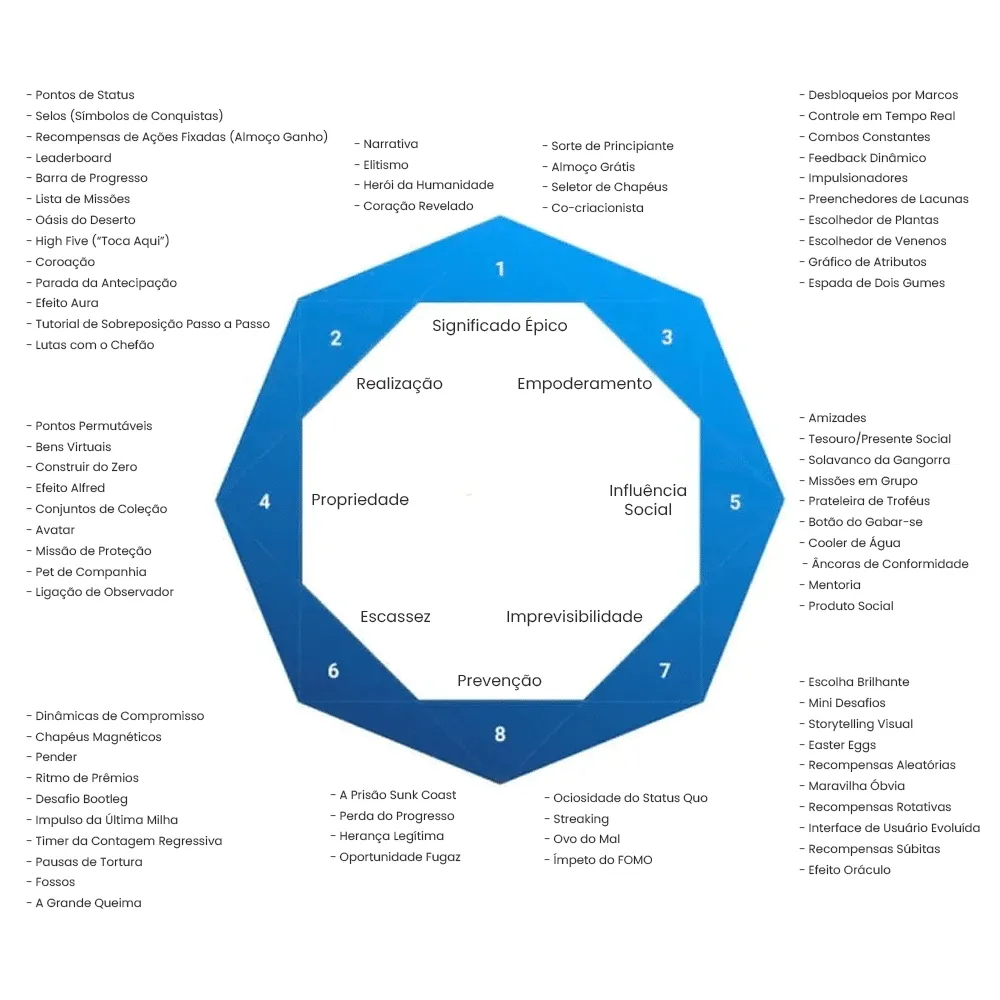
This and other images illustrating this article were adapted and/or translated from Yu-kai Chou. All rights are reserved to the original author.
The Octalysis Framework was designed by Yu-kai Chou himself as an octagon in which each side represents one of the 8 Core Drives of gamification, the driving forces behind human motivation.
1) Epic Meaning & Calling
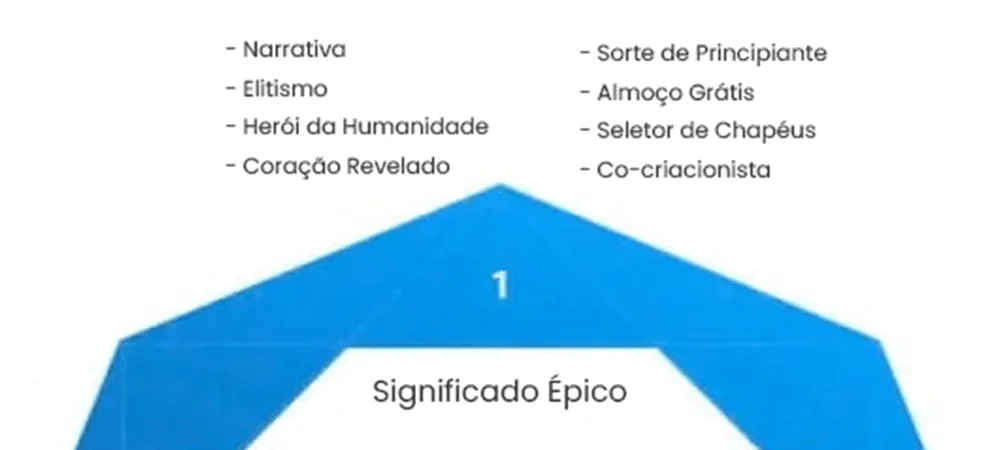
The first Core Drive of Octalysis is called Epic Meaning & Calling. As the name suggests, this is the Core Drive responsible for the feeling that the player is doing something big and epic, even bigger than themselves.
Epic Meaning & Calling can be observed or implemented at any point in the journey; however, it is most often seen in the early stages, when the person is just starting to discover the game and is hit by the famous “beginner’s luck,” which often makes them see themselves as having some kind of gift that helps their performance be above average.
2) Development & Accomplishment
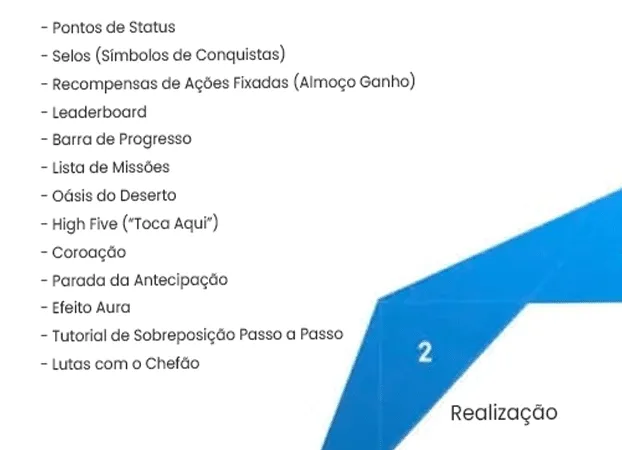
Core Drive number two is Development & Accomplishment. It is the main driver of our desire to make progress, develop skills, and overcome challenges. It is also the easiest Core Drive to apply to gamification, and can be seen, for example, in scoring and reward systems.
3) Empowerment of Creativity & Feedback
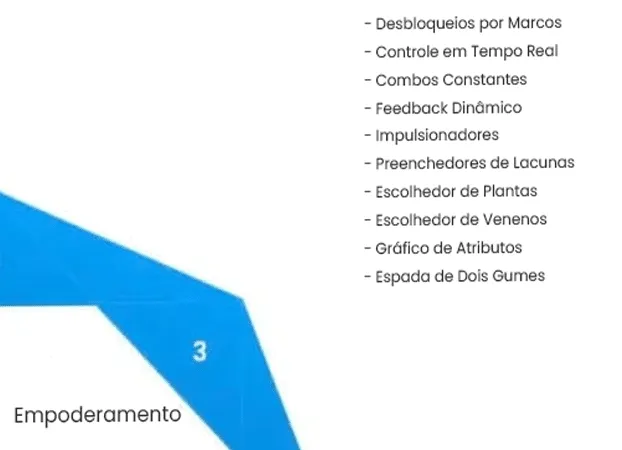
Core Drive number three concerns the player’s engagement in a process of discovering and experimenting with new and different things. Games are also a form of creative expression, and users enjoy, and feel even more motivated by, seeing the results of that creativity.
4) Ownership & Posession
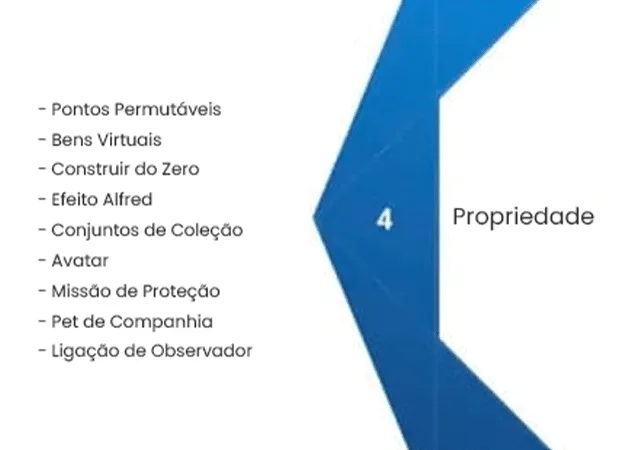
The fourth Core Drive is ownership. When users feel they own something within the game, they automatically feel motivated to take care of it and to work to make it even better and more valuable.
You know those games where one of the main goals is to collect coins or accumulate items? Those titles are excellent examples of this Core Drive being used in game design.
5) Social Influence & Relatedness
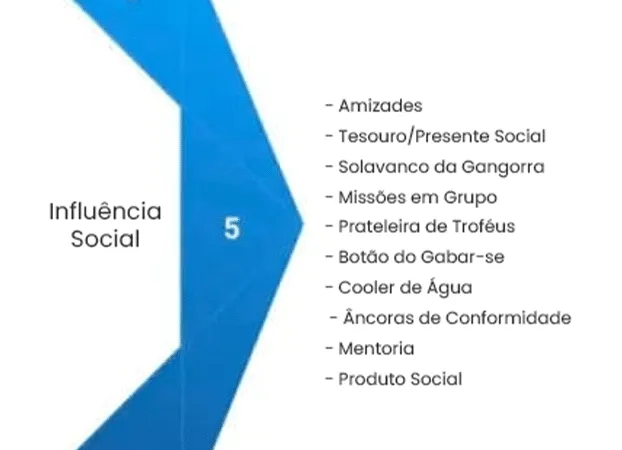
The social elements of gamification are all brought together in Core Drive number five. Positive feelings, such as acceptance, mentorship, companionship, and reciprocity, and negative ones, such as competition and envy, are directly connected to it.
The motivating element of this Core Drive lies in the fact that it drives teamwork, identification, and a kind of competition that, in the right doses, helps users surpass themselves. In times of massive social media presence, this Core Drive has become one of the most studied.
6) Scarcity & Impatience
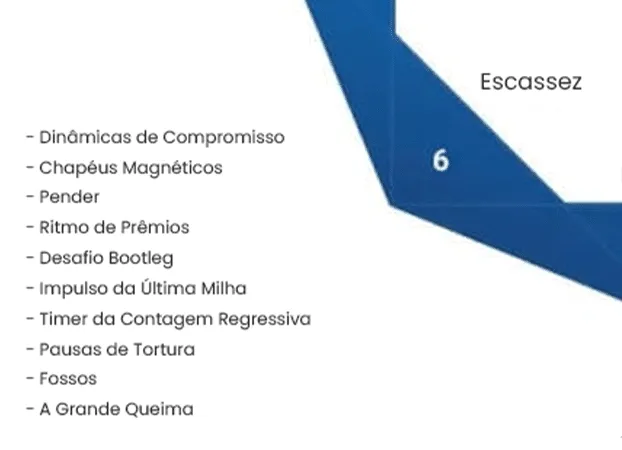
When we can’t have something, we want it even more. That is what Core Drive number six of the Octalysis Framework says. You know when a new product or service is released gradually on the market and that scarcity makes demand skyrocket? That is a practical example of this Core Drive in action. This sense of immediacy is what keeps us from forgetting something until we can get our hands on it, whether it is a product or a game item, for example.
7) Unpredictability & Curiosity
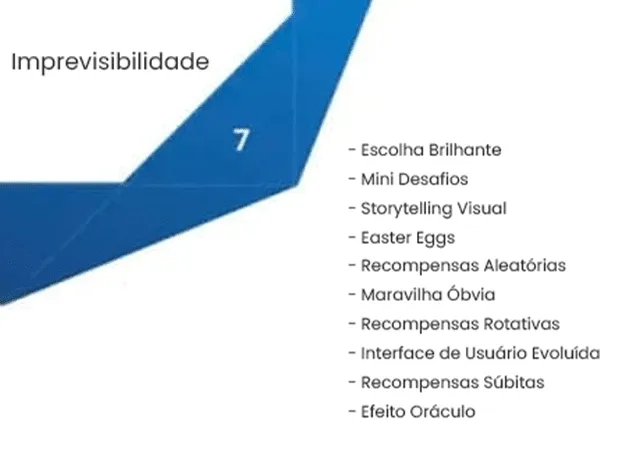
And since we are talking about desire, the seventh Core Drive is also about that feeling. Being involved in a situation and wanting to know what will happen next is a natural urge in everyone, and this also applies to a game or any other gamified system.
How many times have you watched a TV series, for example, and the curiosity to find out what would happen in the story motivated you to keep watching the episodes? When situations like this happen, it means we are under the direct influence of this Core Drive.
8) Loss & Avoidance
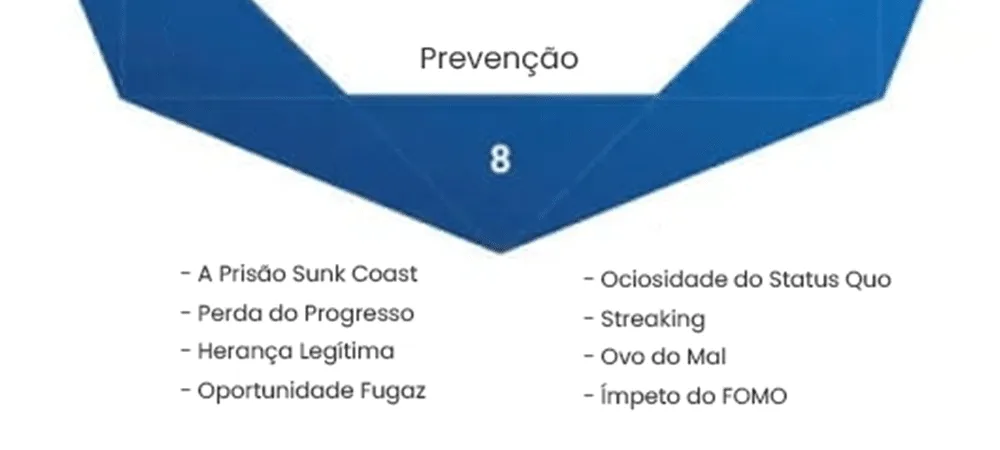
Finally, the last Core Drive of Octalysis concerns our impulse to avoid situations that may make us lose something or put us in a negative position.
Fear is one of the most primitive human feelings and guides, even if unconsciously, a large part of the actions we take. When we play, we feel fear at various moments, including the fear of losing all the progress we have made. It is the Core Drive that keeps us from giving up, for example.
The other levels of Octalysis
Everything we have just described is only what is called level 1 of the Octalysis Framework. Yu-kai Chou’s two decades of work created a framework in which the further people advance, the more advanced the levels they are able to reach. Coincidence or not, this is exactly how a game works.
Level 2 of the Octalysis Framework
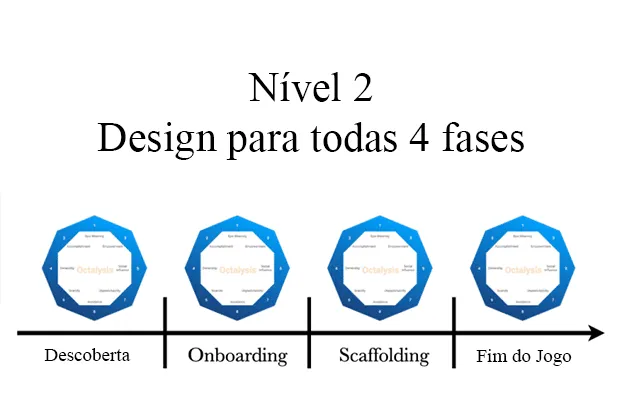
The second level of the framework brings a new element of gamification to light: the player’s journey, which Yu-kai Chou divides into the four stages below.
-
Discovery (why do people want to start playing?)
-
Onboarding (how do you teach users the rules and tools of the game?)
-
Scaffolding (acting cyclically around a goal)
-
Endgame (how do you retain veteran players?)
Level 3 of the Octalysis Framework
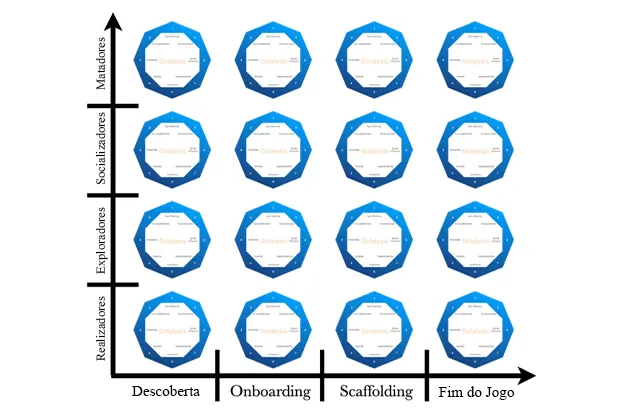
At the third level of the framework, Yu-kai Chou reveals yet another facet of gamification. We are talking about the division of players into four different types: Achievers, Explorers, Socializers, and Killers.
This new layer lets us observe how different types of people behave across the different stages of gamification, helping to personalize each experience.
The longer path is also the safer one for quality gamification
Applying gamification to a process is a much more complex task than our words may make it seem.
The Octalysis Framework is an excellent foundation and starting point, but gamifying involves much more than simply dumping in Core Drives and expecting them to do the work of motivating the participants on their own. Truly efficient gamification requires a lot of analysis, study, testing, and adjustment.
Having a team that truly wants to do its job and be productive is one of the great challenges for companies today. And the gamification proposed by Yu-kai Chou may be the key to blurring the line that separates what people want to do from what they need to do. If that is ever achieved, we can guarantee that quality of life and society as a whole will be very grateful to games.
Source: The Octalysis Framework for Gamification & Behavioral Design