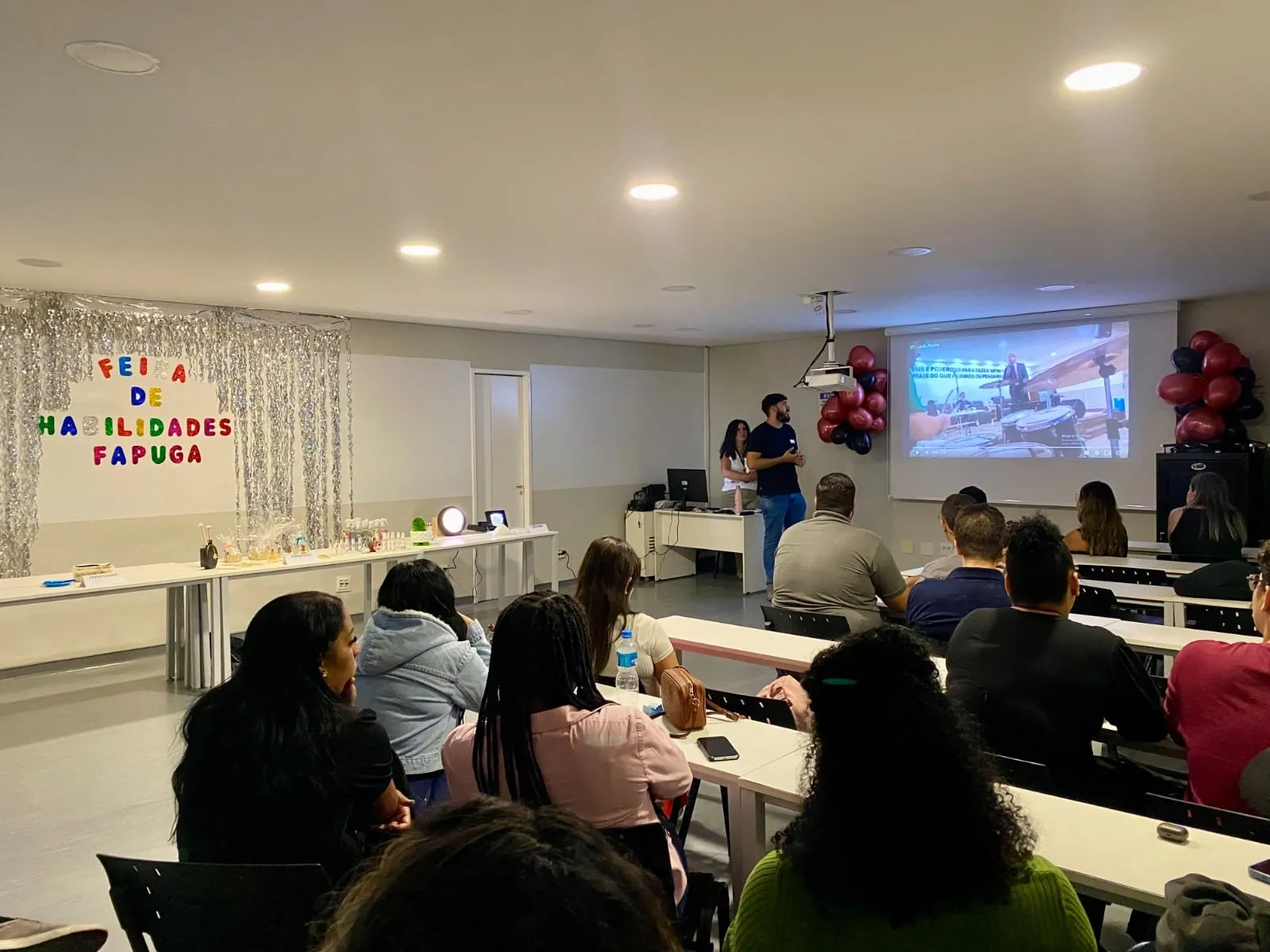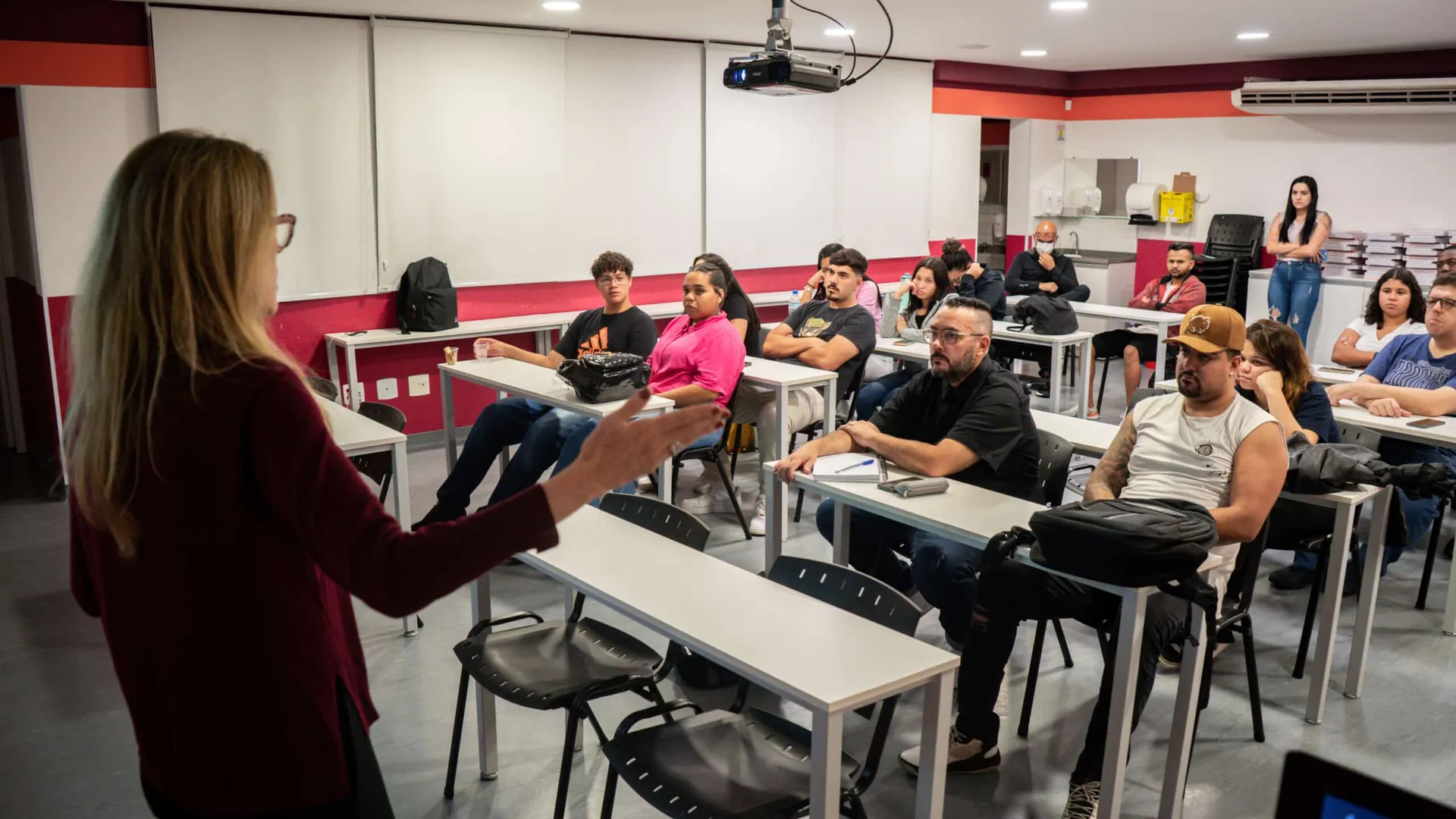
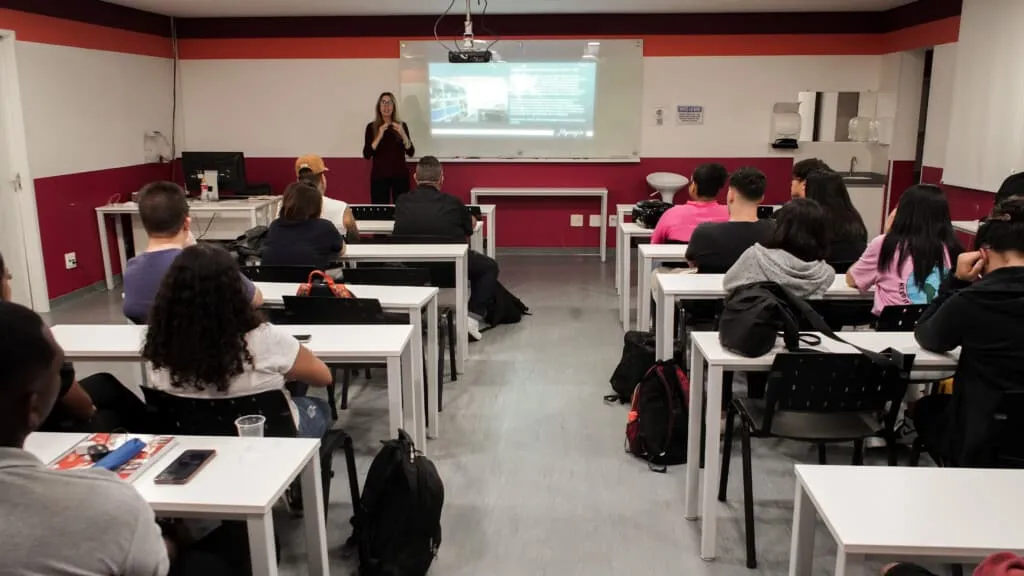
“Learning is constant, so we took advantage of the lecture series to talk more about our educational institution. The mission, the values, and all the actions related to students,” said Gladis Linhares, general coordinator of the institution, who gave the talk on Monday (17th), presenting the main advantages of studying at FAPUGA.
Getting to Know FAPUGA a Little Better
Classes for the Hospital Management and Business Administration programs began on February 13. And a little over two months later, the institution held a conversation to present all the advantages of studying at FAPUGA.
“We managed to make everyone feel more welcome and familiar with the spaces offered. They were also very pleased to learn that we work with technology all the time and that we care about employability from the start,” said the coordinator.
FAPUGA’s Facilities
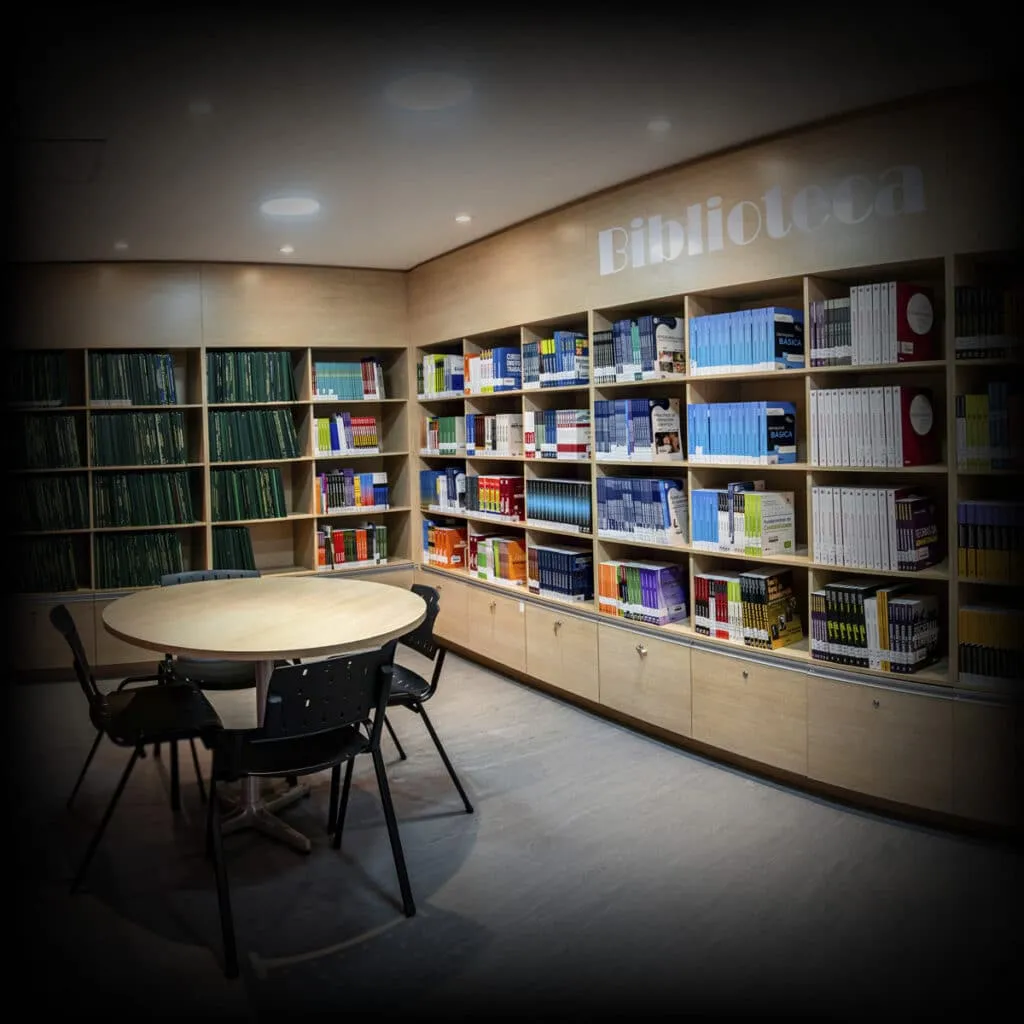
The facilities FAPUGA offers, such as the games space (game library) and the physical library, in addition to the convenience areas, were topics covered during the general coordinator’s talk.
In all, there are 4 classrooms that can be set up as needed, with full or assisted autonomy. The library is fully digitized and also has a physical collection, with group and individual study booths. There are study rooms and a student services room.
For online studies, moodle is a Virtual Learning Environment (VLE) that offers technological tools for teaching, assessment, and management. There are also internal and external evaluation channels, and an online ombudsman, a direct channel with students for suggestions and requests.
FAPUGA’s Programs
The comment above refers to the main student support services, such as the NAP (Psychopedagogical Support Center). There, it is possible to identify the student’s difficulties through active listening, seeking the best quality of coexistence and learning for the student.
During the conversation, Gladis Linhares also shared details about the programs that encourage learning and entry into the job market through partnerships. “Since the first semester we have offered agreements with NUBE (Brazilian Internship Center) and CIEE (Company-School Integration Center).”
Also read – Making it easier for students to access internship openings, Fapuga signs agreement with NUBE
Extension activities include lectures, courses, and technical visits, which is another advantage of studying at FAPUGA. Throughout the undergraduate program, students have access to a Portuguese-language leveling course and to tutorials for better understanding and knowledge of the technological tools.
Donation of Physical Books to FAPUGA Students
Gladis Linhares notes that since 2020 it is no longer mandatory to have a library with physical copies. In fact, FAPUGA opted for the digital version, with a collection containing all the books needed for the areas in which we offer programs.
“However, we keep the physical library. And during the lecture series we offer, as a donation, all 7 copies that are part of the curriculum of the undergraduate programs,” said the institution’s coordinator, presenting yet another advantage of studying at FAPUGA.
The physical books donated to students are:
- Comunicação redacional atualizada (Hêndricas Nadólskis)
- Administração: princípios e tendências (Francisco José Masset Lacombe)
- Organizações do conhecimento: infraestrutura, pessoas e tecnologia (Maria Therezinha Angeloni)
- Estatística básica (Wilton de Oliveira Bussab and Pedro Alberto Morettin)
- Direito fundamental (Gilberto Cotrim)
- Fundamentos de metodologia (Odília Fachin)
- Contabilidade básica (Paulo Viceconti)
The donations happen gradually as the lectures take place, so that by the end of the series, Hospital Management and Business Administration students will have all the copies that will be used as references in the undergraduate program.
And There’s More: The Importance of Soft Skills as a Competitive Edge in the Job Market
The lecture series will have one more event, taking place on May 4 (See all of FAPUGA’s scheduled events).
The topic of soft skills in the job market will be addressed by Prof. Dr. Myrt Thânia de Souza Cruz. The conversation is open to the public and will take place at 7:15 p.m. at FAPUGA, in the east zone of São Paulo.
See how the other lectures went: