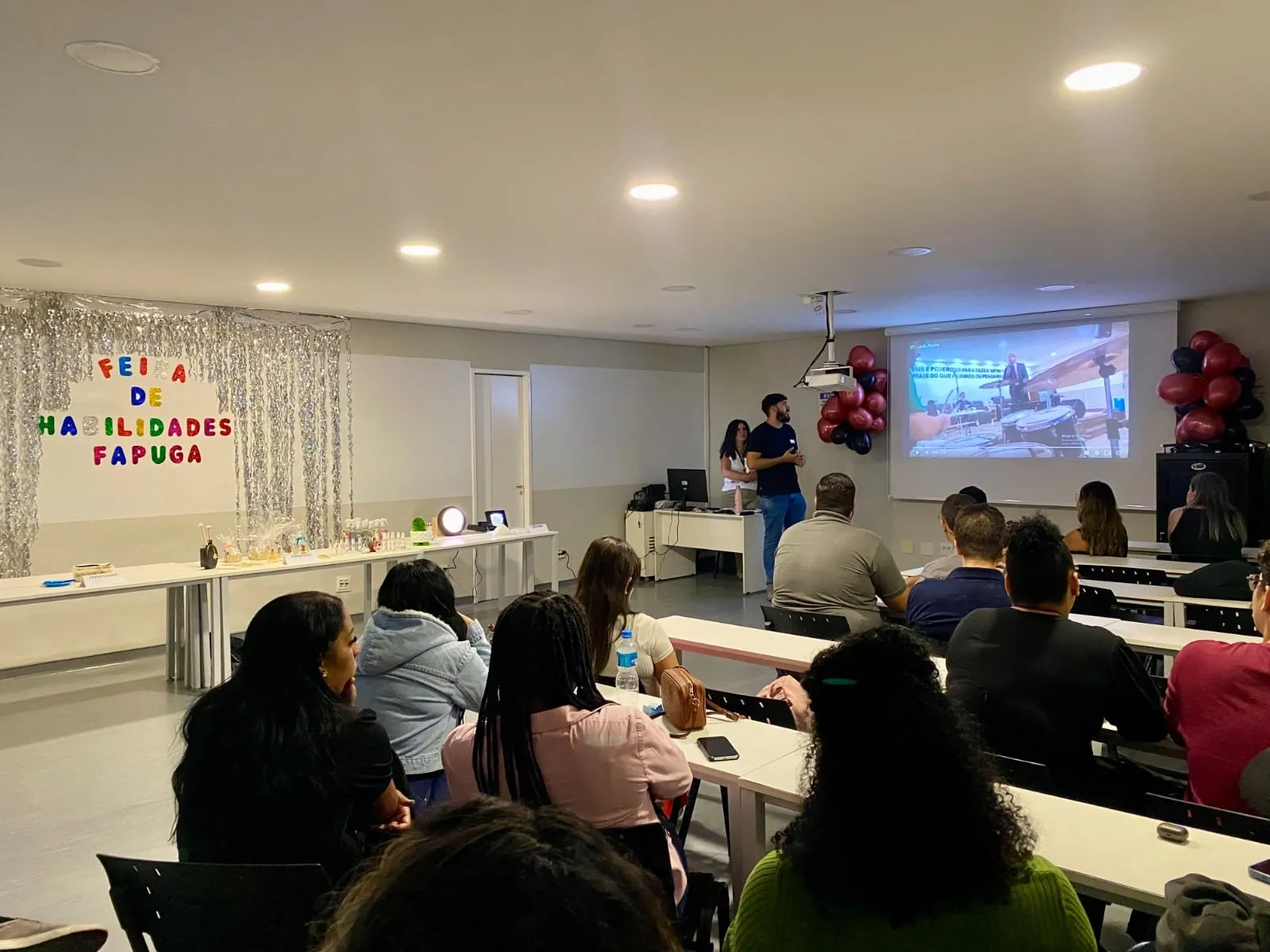
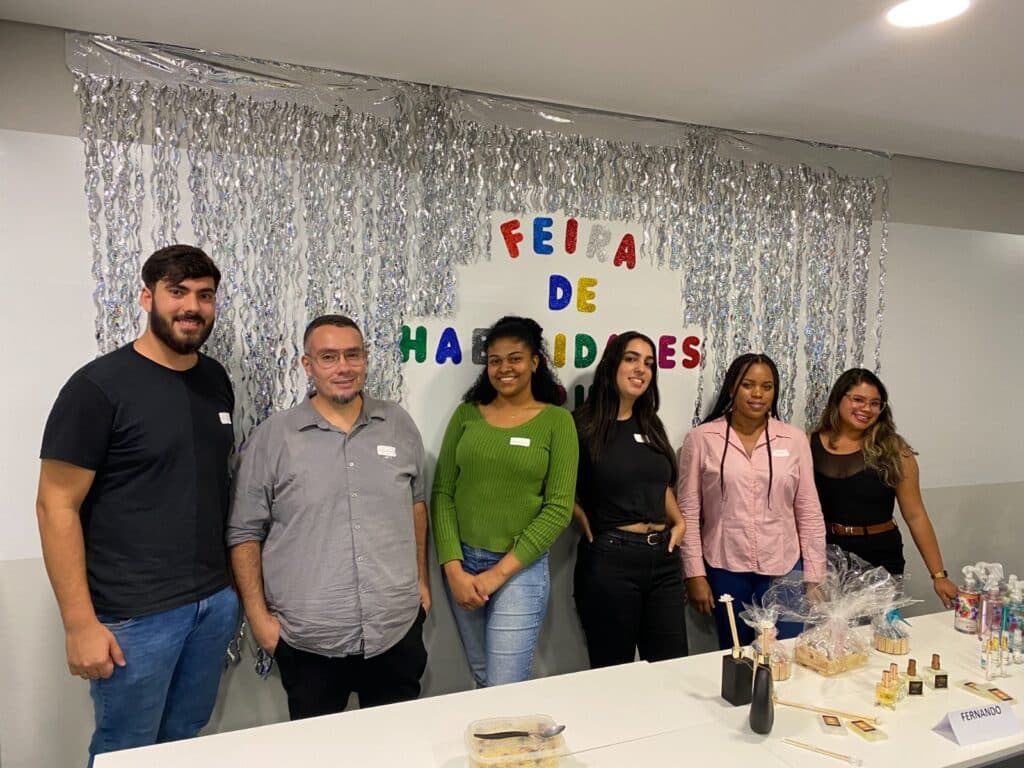
Last week, Fapuga’s Psychoeducational Support Center (NAP) held an event quite different from everyday classroom life, through a skills fair proposed to students.
Contents
- A project conceived by the Psychoeducational Support Center, with the active participation of undergraduates
- An experience designed for this stage of training
- The opportunity to use the college’s facilities to showcase diverse talents
On this occasion, students in the Business Administration and Hospital Management programs were invited to show a bit of what they do best, as well as an invitation to see themselves and present themselves as managers, in terms of the different skills involved in professional practice.
A project conceived by the Psychoeducational Support Center, with the active participation of undergraduates
Although the idea came from Bianca Rafaela, the NAP coordinator, she explains how the undergraduates took an active part in the different stages of the project. That way, it was not only during the final presentation that the students were able to actively demonstrate their skills.
“Personally, I see a reflection of how useful this experience was overall, because we got to see them as managers, from the people who presented, to the relevant questions from the students who were there following along, to the people who helped organize the decorations and the get-together,” Bianca says.
An experience designed for this stage of training
The experience was designed by analyzing the students’ needs at this point in their degree. Being in the second year of this training path, the students have already learned a great deal, but still have many questions, including about their own aptitudes.
Also read:
– “The goal is for class not to end here,” the college’s methodology that extends beyond the classroom;
– Is it better to study in person or online? A Fapuga student talks about his experience;
– Games in business education: how to turn games into learning tools.
Thus, making them agents of this event gave them the chance not to be passive students who merely receive content in the classroom, but to actively think about the aptitudes and skills they are developing, and how these are reflected in their capabilities as managers.
As Bianca explains: “we build opportunities for these people to develop these skills, which will contribute to this training that goes beyond the job market; that is actually the consequence. First, I need to build this awareness, and then apply it in my relationships and understand how these skills will be useful in different settings.”
The opportunity to use the college's facilities to showcase diverse talents
In all, the event made room for 6 presentations:
- A display of crafts made from recycled material;
- An exhibition of original photography work;
- A video showcase and a student’s account of his skills and experiences as a drummer;
- A presentation on the art of conducting;
- A typical dish from Piauí, with a showcase and the story of a culinary tradition;
- An exhibition of lotions with original fragrances.
In the in-person teaching model, the opportunity to use the college’s facilities for interactions like this greatly enriches the training process.
By putting their knowledge and skills into practice, students develop self-confidence in their professional abilities. This self-confidence is essential for feeling prepared for the challenges of the job market and for seeking opportunities for professional growth.