
If you follow the game and gamification posts on our blog, you probably already know that the line separating a player’s journey from a business journey is much thinner than you might imagine.
The Octalysis Framework methodology, developed by Taiwanese entrepreneur Yu-kai Chou, makes this relationship even clearer. In a clear and didactic way, the specialist illustrates and explains how the game industry takes advantage of human emotions and motivations to make its products attractive, engaging and, above all, relevant and popular over the long term.
People do not relate to a game, or to any other type of product, in a linear, one-dimensional way. The user experience develops gradually, as discoveries and new developments arise along the way.
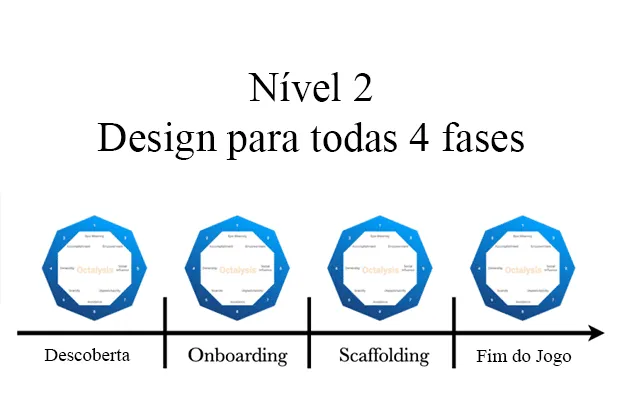
Yu-kai Chou divides this journey into 4 phases: Discovery, Onboarding, Scaffolding and Endgame. They complement the 8 Core Drives that gave rise to the Octalysis Framework, and the author even considers them the basis of what he calls Octalysis level 2, an even deeper version of the original framework. Here, the proposal is to view a product as
In this article, we will break down each of the 4 stages of the player journey one by one and show how they can help you build an even more efficient and lasting gamified system.
Contents
- Phase 1 of the player journey: Discovery
- Phase 2 of the player journey: Onboarding
- Phase 3 of the player journey: Scaffolding
- Phase 4 of the player journey: Endgame
Phase 1 of the player journey: Discovery
A person’s gamified journey begins at the moment they hear about and start to become familiar with a product, service or experience. Yu-kai Chou gave this phase the title “Discovery Phase.”
Gamifying this stage is an excellent way to boost your name and your initial engagement with the target audience. To do so, it is necessary to revisit some points of the Octalysis Framework.
During the discovery phase, the entry point to gamification is usually Core Drive number 7: Unpredictability and Curiosity. However, this is not such a robust way to start the gamified journey.
Working more on Core Drive number 5, Social Influence and Relatedness, can be more effective at winning over the audience’s initial interest once and for all. This is even backed by current marketing theories, which say that, more than simple customers, you need to win over people who buy into the idea and spread the word about your brand, service, product or experience.
But if the idea is to use gamification internally within a company, it may be better to pay special attention to Core Drive 8, Loss and Avoidance, based on the idea that the person will lose something (which in this context can be prestige, respect or even their own professional position) if they do not buy into what is being sold or proposed.

Google uses gamification and player journey concepts in its recruiting process
In addition, the Discovery phase is the ideal time to put into practice all kinds of innovation and attraction strategies. Selling your product or experience as something grand, even bigger than the audience itself, directly stimulates Core Drive number 1, Epic Meaning.
Gamification is so broad and complex that its principles can even be applied by companies when selecting new talent. Google’s Human Resources department, for example, uses the strategy of giving candidates complex programming problems to solve even before the interview. This strategy is a practical example of Core Drive 3, Empowerment of Creativity and Feedback, being put into action.
After all these possibilities we have given as examples, at some point phase 1 of the journey will come to an end. This happens from the moment the person actually starts using the product. That is when phase 2 begins: Onboarding.
Phase 2 of the player journey: Onboarding
The Onboarding phase is when the user begins to learn the rules of the game.
This is generally the stage that companies focus on the most, even those that do not know or adopt gamified or player-journey-based methodologies.
This is because there is a kind of general consensus that if a consumer uses a product or service for a short period of time, they will fall in love with it and become a permanent user. However, this is not always the case.
A well-done Onboarding takes into account that a person’s familiarization with a product or service should be as dynamic, intuitive and easy as possible.
No consumer likes to be forced to read endless pages or watch long videos to understand how what they are trying out works. What they really want is a brief introduction so they can start exploring soon after.
The Core Drive most related to this phase is the second one, Development and Accomplishment. It is also one of the phases in which video games can best serve as a reference point and inspiration.
Games, in general, do not come with big manuals explaining what needs to be done at each moment of gameplay. Nor are they usually preceded by an enormous video showing the step-by-step of every move. The story is usually told through short scenes that do not spoon-feed the information, but rather guide the player and suggest what to do next.
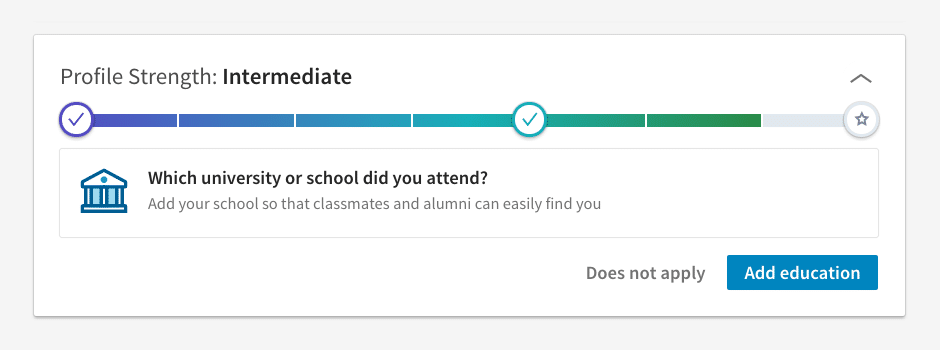
Want an example outside of games? LinkedIn’s progress bar can be a great one. As users complete items on their profile, the bar fills up and the profile strength level rises. This was a simple and, yes, gamified way the network found to show users what it wants them to do, with the plus of delivering an emotional reward (which is precisely the bar’s progress) for completing those actions.
In short, the best way to work on Onboarding is to find interactive solutions that trigger emotional responses in the user and lead them to do what you designed when you created your gamified system. That is what encourages and motivates the user and makes them ready for the next phase of the journey.
Phase 3 of the player journey: Scaffolding
Scaffolding is an English term that is hard to translate into Portuguese. In education, it is usually used to describe a set of techniques used to push students toward a broader understanding and, above all, greater independence in the learning process. A definition that also fits the third phase of the gamification journey well.
In Yu-kai Chou’s words, the Scaffolding phase is the one in which the player/user uses everything they learned in the Onboarding phase to try to get as many gains and victories as possible.
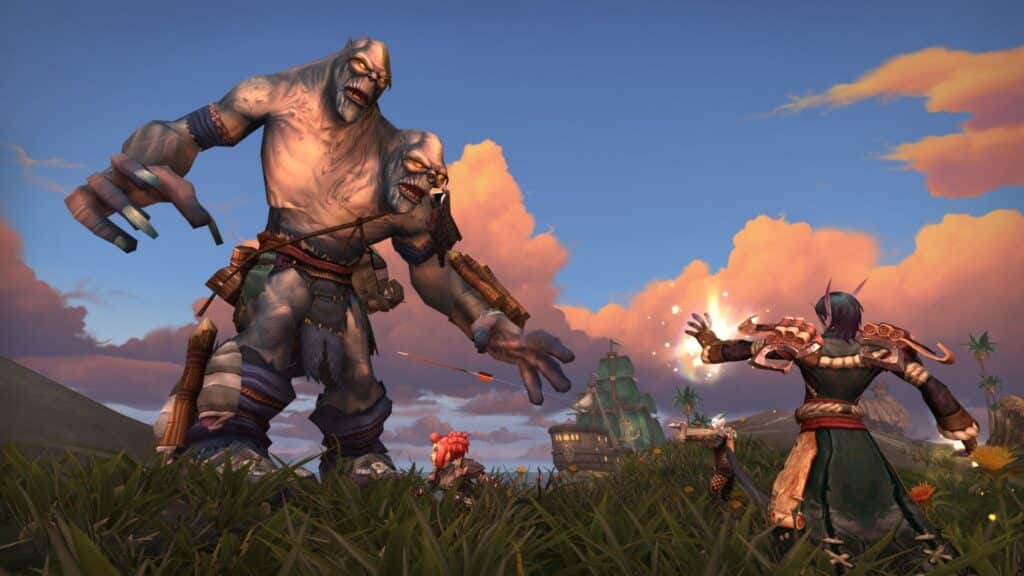
RPGs are an example of well-done Scaffolding. In the image: World of Warcraft
This is generally the most fun phase and also the one in which all 8 Core Drives that make up the Octalysis Framework are present in a more or less balanced way. It is when the player or user comes back daily to perform often repetitive tasks (killing the same monsters in an RPG, for example) that, somehow, make them want to keep doing them.
The origin of that motivation is what the Scaffolding phase aims to clarify. And the “secret” is just one: the balance among all the Core Drives we mentioned in the previous paragraph. If you plan your gamification with this in mind for this phase, you will see your users become motivated and engaged.
The end of Scaffolding comes when the player feels they have already experienced everything that product, service or gamified experience has to offer. It is the moment they believe they are close to the Endgame.
Phase 4 of the player journey: Endgame
And we have reached the end, at least in part.
The Endgame phase is constantly neglected when developing a gamified process. Not giving it due attention is practically a guarantee that many veteran users will get bored and abandon the game.
But what many people do not realize is that these veteran users are precisely the greatest ambassadors and promoters of that game, product, service or experience.
The most important step is precisely to find ways and resources to keep these people connected to you. Generally, but not always, this is done by adopting tactics that directly target the Core Drives that Yu-kai Chou describes as White Hat, that is, those that cause positive feelings and emotions (Epic Meaning, Accomplishment, etc.).
For example: if a veteran user feels that, within that gamified system, they hold a higher position than their peers, their pride will make them stay in the system longer.
Feeding your gamified project with new features and tools that let users put their creativity and inventiveness into practice is another way to keep engagement high.
It is also possible to use an element that Yu-kai Chou calls “Sunk Cost Tragedy” (a loose translation of the Portuguese rendering). In short, Sunk Cost Tragedy is that moment in the game when the player has dedicated so much time to the game that it becomes difficult, almost impossible, to give up all the levels, skills, points, items and everything else they have already earned. The feeling of loss (of achievements and of hours spent playing) is precisely what holds the user.
Anyone familiar with the Octalysis Framework will quickly identify the Core Drive for this type of motivation: number 8, Loss and Avoidance.
Outside of games, a great example of Sunk Cost Tragedy is social media. Take Instagram, for example: many users want to leave the app. However, that would mean losing all the photos, likes, followers and contacts earned through the network. It is an uncomfortable motivation (which is why Chou calls it Black Hat, the opposite of the well-being brought by White Hat motivators), but extremely effective.
As you have seen, a player’s journey can serve as a mirror not only for the gaming industry, but for every market segment. If properly applied and worked in a balanced way, these principles will be the key to generating long-term customers and partners for your venture. One more point for gamification!