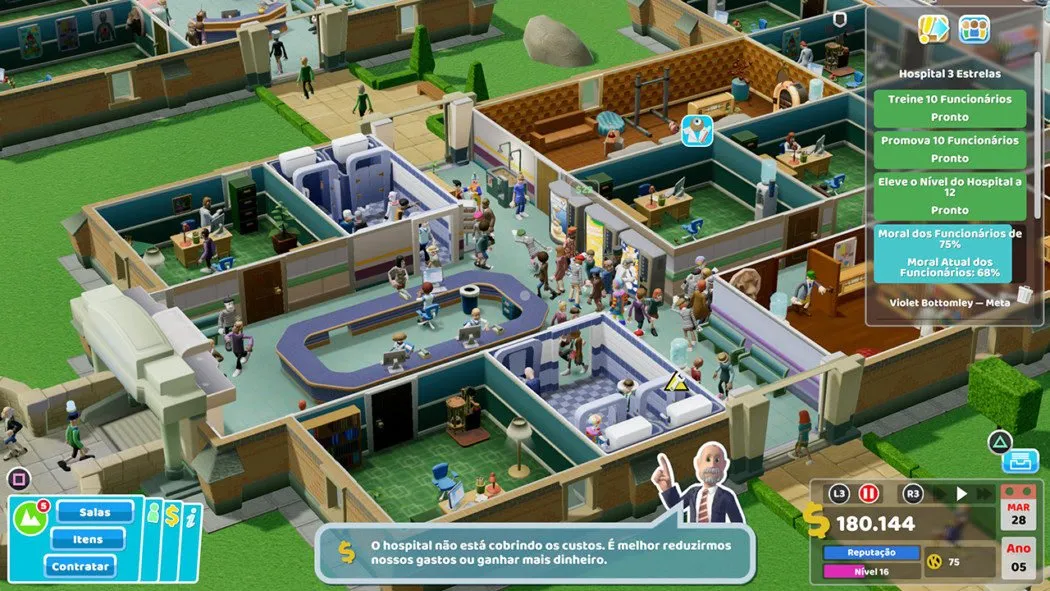
Plenty of managers learn by playing. The same is true in hospital management. Two Point Hospital is one of the simulation and management games that works with the idea of Game-Based Learning (Game Based Learning) and lets players (read: managers) learn more about how a hospital works.
Yes, that’s right! For some hospital managers around the world, simulation games such as Two Point Hospital have been recognized as an alternative way to help hospital administrators and hospital managers learn management functions, roles, and responsibilities.
“Simulation games often have a variety of situational scenarios, for example: the hospital is going bankrupt, the hospital is expanding, the hospital is modernizing, the hospital is growing, and so on. And the purpose of this type of game is to draw a parallel with reality.”
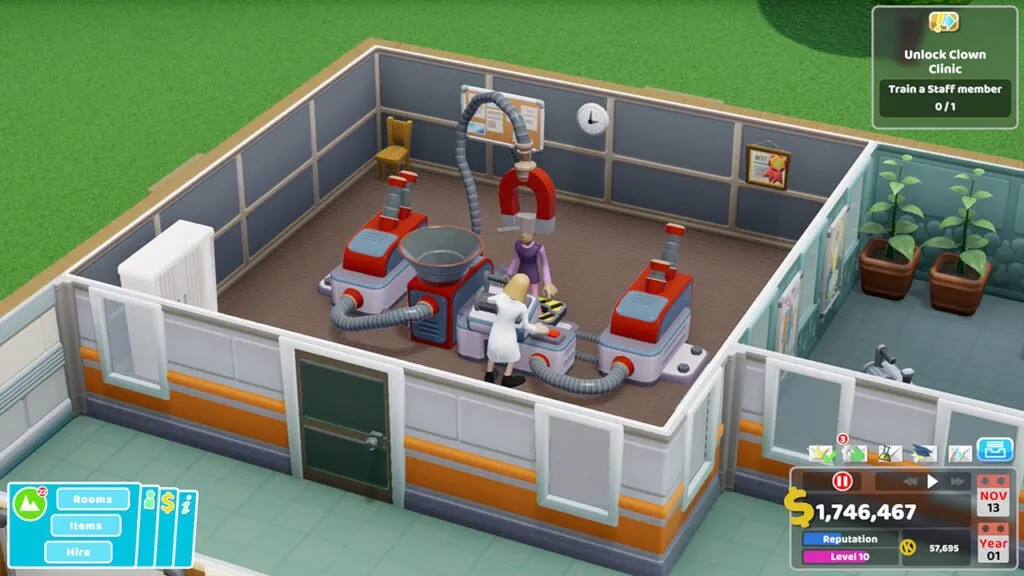
Game-based learning in management simulation games
There are many accounts online about the experience of learning to run a hospital through Two Point Hospital. Players/managers mention the size and complexity of this type of healthcare facility, patient management, the structure of the environment, and more.
“It’s how it really works in real life,” said one gamer hospital manager.
The challenges and decision-making also closely resemble the reality of hospitals around the world. Although the game is meant for entertainment, it becomes a great tool for anyone who wants to simulate the routine of a hospital manager. This is the main goal of learning based on simulation and management games.
Another hospital manager said:
“It’s both comforting and alarming how close these games can get to reality. First, because it lets you identify where and for what reasons problems arise. Impressive, because the fact that it’s a game doesn’t mean it’s easy to solve.”
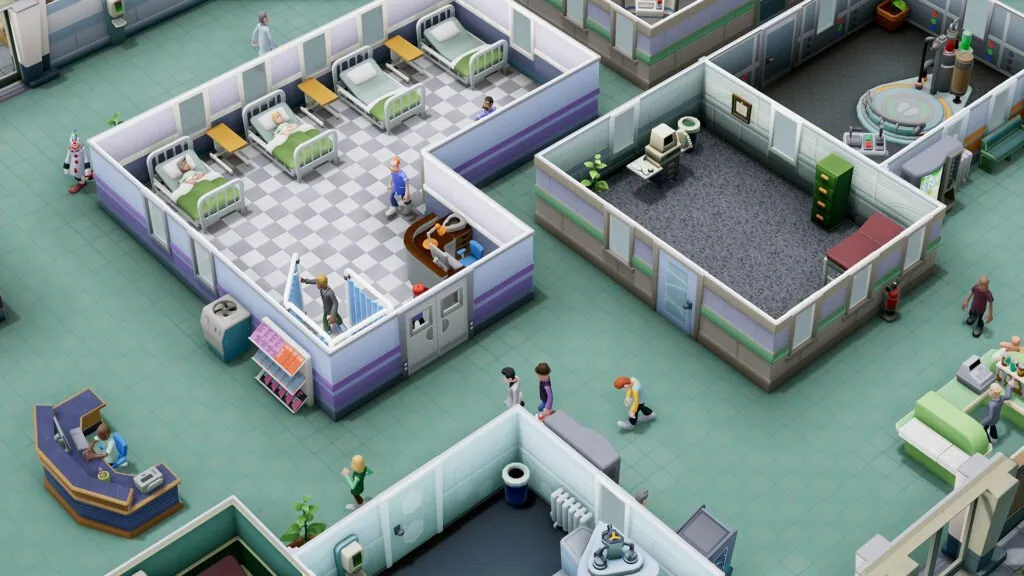
The hospital manager’s critical thinking
One of the most amazing examples we find in Two Point Hospital is the possibility of looking for “the causes of the problems.” For example, after a critical incident at the hospital, the hospital manager (player) has to find out, like it or not, why the problem happened. Otherwise, the incident keeps coming back chronically and can even cause a complete defeat in the match.
And that is where one of the biggest challenges of hospital life comes in: walking a fine line to assign blame and/or identify system failures that may have led to the incident.
Learn more about the narrative context in a Two Point Hospital simulation match
In the narrative context of a random match, for example, the loss of a hospital patient was caused by a nurse’s mistake (a game variable), hired by the hospital manager (player). On her résumé, she had excellent team management skills. However, she had little technical skill in treatments, and the equipment wasn’t that good.
“The people management simulation is fantastic. Because it’s possible to reproduce the real, recurring problem of real hospitals: making sure each team member is in the right role, whether to cure patients or to take part in training for those staff members. The gamer manager needs to make a sincere effort to make things actually work in the hospital, because even hiring the right profile for each role is essential to success in the game.”
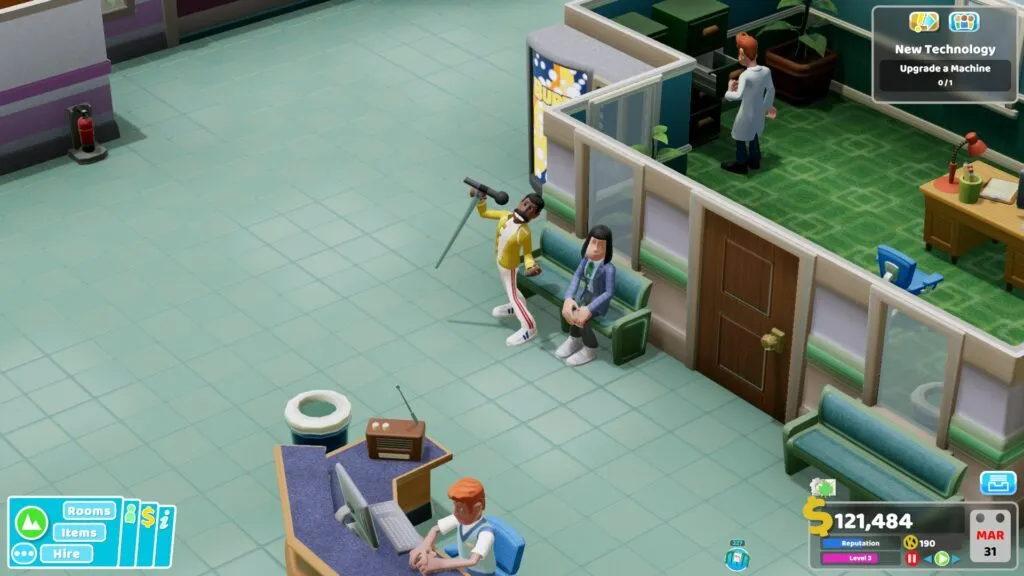
Online work just like hospital reality
And you can’t help but notice, through the narratives that build the most different and possible scenarios about the hospital’s situation at the time of the match, how closely this simulator approaches that peculiar management reality. Thus, there are learning benefits between the player and the hospital manager. As a player, (the person) has fun and, at the same time, sharpens the skills of the hospital manager.
“I was struggling to figure out how to improve my team’s satisfaction. People were in a bad mood, patients were stuck in lines, and the hospital’s money was going down the drain. That’s when I realized it was the same situation I had last Tuesday at my real hospital.”
So, this is a representation of hospital management that happens in the game, but it has all the nuances of the everyday, real work of healthcare professionals and managers – here, once again, the idea of game-based learning:
“It teaches that sometimes we have the illusion that we can manage everything, but things don’t work the way we expect.”
So, you may fail and feel guilty in those moments. But when you get it right, everything goes well, even if you receive no praise for it. When dealing with complex systems, like a hospital, making changes in pursuit of benefits is a constant.

The Two Point Hospital update
Players/managers who experience game-based learning, even without knowing it, develop management skills and competencies relevant to the day-to-day of hospital management.
The development of behavioral skills can also be considered in this context when it comes to the death of patients in the game Two Point Hospital.
The game also notifies the manager player with news such as: “You just killed your first patient. How do you feel?”
And what decision did the hospital manager or administrator have to make after that news, which in real managers causes tremendous emotional discomfort?
If it were you, what would you do?
See how you can draw a parallel between the reality of a game and the real world? In this case, the player/manager moved on with life and, right after the incident, hired a janitor and set about making other decisions necessary for the hospital to run well.
This “tolerance of death” in the game is more frequent and toned down, since the idea is not to get the manager player to deal with it naturally, but to think quickly and smartly about strategies to avoid other possible and consequent “tragedies.”
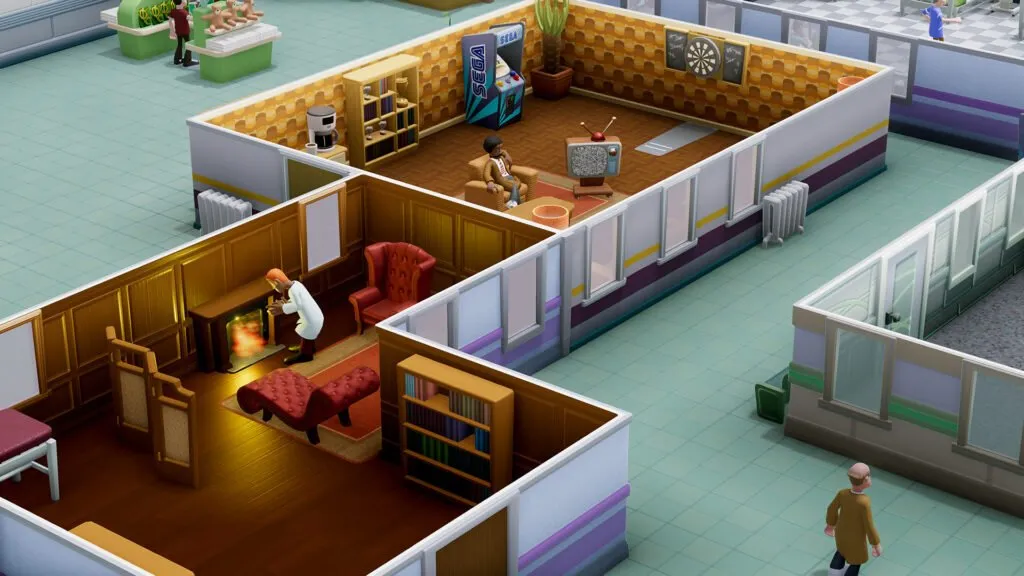
The limitations of Two Point Hospital
One of the biggest challenges of this management simulation game is the race against time, since at higher levels the player/manager is forced to make more and more complex decisions in growing numbers. That is where the bugs come from; for example, patients and doctors (game characters) can get stuck and the match stops. But, to fix this, update patches are soon released.
Final thoughts
Game-based learning is a promising educational approach that can significantly improve the teaching-learning process in hospital management. By using management simulation games, players/managers can engage more actively and participatively in their learning, acquiring practical skills and solving real problems more efficiently.
In addition, gamifying the learning process can make the experience more enjoyable and challenging, increasing the engagement and motivation of players/managers. In this way, game-based learning is a valuable strategy for training more competent hospital management professionals who are prepared to face the challenges of the job market.
And you will only find this approach in the in-person Hospital Management undergraduate degree in the East Zone of São Paulo at Fapuga.