
An example of the effect of breaks on the learning process is getting stuck on a tricky part of a game. Sometimes the gamer is struggling, tries everything, but there seems to be no way out.
Then, tired of the effort with no results, they decide to take a break, drink some water, look around, and may not even go back to playing that same day. But when they do, surprisingly the solution appears as if by magic before their eyes.
But it is not magic; this is the power of a break in the learning process. That is because humans learn more precisely when they are at rest.
It sounds contradictory, I know. However, when we are not worn out by simultaneous information, we can better recall what we observed, reviewing and working out more thoughtful solutions that, in the heat of the moment, we were unable to find.

But the benefits of breaks go beyond the logic of rest and relaxation, extending to the way we learn.
More generally, the human learning process needs rest in order to consolidate. One example is sleep: to convert short-term memories into long-term memories, we need to rest, which is why quality sleep is essential for creating memories and, with them, generating well-grounded learning.
Human learning ≠ Machine Learning
Repeating the same process, movement, or tactic many times is indeed part of the learning process. On its own, however, this strategy is not enough, because we truly learn when we have time to recap and review something.
Speaking on the subject, scientist Altay de Souza comments:
“The moment when you truly learn is in the pause, not in the practice, which is exactly the opposite of the computer. For example, if you take a computer learning algorithm, it learns, so to speak, through repetition. With each repetition it performs, it reduces its error function, and that is an iterative process.”
And he adds: “But when we think about human behavior, the behavior of a biological organism, it does not learn while carrying out the behavior; it learns in the pause after the behavior.”
Altay also adds that we are constantly evaluating the activities we have carried out, thinking “how did that go again?”.
Breaks are important even for the development of motor functions. Think of the gym, for example: doesn’t a muscle need rest periods?
The Train Line Simulator Experiment
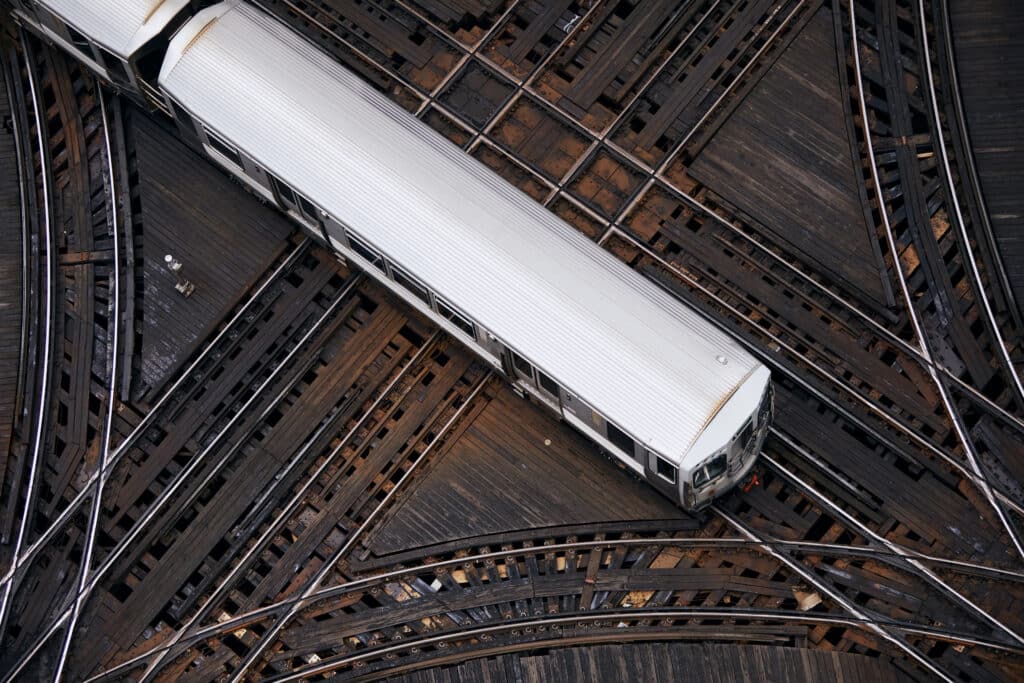
But what should these breaks look like? An experiment conducted in 2017 suggests some answers: during the experiment, 87 people were placed in front of a railway line simulator for 45 minutes, but with different break schemes. The goal was to avoid collisions at the intersections of the model railway, with which no participant had prior experience.
The participants were divided into 6 groups: one of them monitored the simulator continuously for the full 45 minutes, and the other groups were instructed to operate the simulator with a five-minute break, but in different ways.
While one group was told to remain silent during the break, another group could choose what to do during the break, as long as they stayed in the same room.
Three other groups were assigned a song or a music video of the same song, so that one group would only listen to it, a second would also watch the video, and the third could choose between the two options.
The Results
Analyzing the number of errors and the difficulty reported by participants, the results pointed to great difficulty among those who took no break at all, and also a higher number of errors in those cases.
And although all the groups that had breaks made fewer errors by comparison, the people who took a passive break (in silence, with no other stimuli) were the group that had the most trouble avoiding train collisions in the simulator.
Thus, the results suggest that active breaks, involving an activity that does not demand much concentration, are the most beneficial for the efficiency of a main activity.
Active Breaks and Efficiency at Work
Knowing how beneficial active breaks are is, therefore, very important for anyone who wants to learn in the best possible way. Or for anyone who wants to carry out tasks more efficiently and healthily.
Beyond one’s personal level of learning, it is essential that those who coordinate work groups are aware of this topic.
A manager armed with this knowledge will guide their team much better. Instead of imposing restrictions and frowning upon the coffee break, a well-informed leader will recognize how healthy these moments are for everyone, in addition to encouraging learning and teamwork.
Work carried out by people benefits, beyond their technical skills, from their sensitive capacities to weigh options and make the best possible decisions. And working with people means constantly remembering this, for everyone’s benefit and with efficiency as the result.