
In recent years, lovers of good stories have been swept away by a TV series that won the admiration of critics and viewers alike: Succession, an HBO production that aired from 2018 to 2023.
The four seasons of Succession tell the saga of the Roys, a powerful (and dysfunctional) family that owns a billion-dollar media empire. When the health of Logan, the aging patriarch, begins to decline, his heirs start preparing for the succession of the business, setting off a complex battle for power.
The secret behind Succession is, without a doubt, the skill with which the production combines drama and satire to show that even the wealthiest families and the most successful professionals have their own wounds and conflicts to heal. However, the power of the series goes far beyond that.
By portraying the behind-the-scenes of a big business, Succession also teaches administrators and entrepreneurs several quite interesting lessons, mainly about what not to do when running a business.
Stay with us and find out what fictional businesses can teach real-world ones. We promise to avoid spoilers.
Contents
- Success and ego don’t go together
- Leading is essential
- Fear is not respect (and it is the enemy of motivation)
- Know how to build a cohesive team
- Let rationality guide your decisions
- Think about the future (or “Succession’s Main Lesson”)
Success and ego don't go together
Logan Roy, the all-powerful founder and CEO of the Waystar Royco conglomerate in Succession, is a man known for his huge ego and enormous greed, so intense that it turns into selfishness.
Many administrators like Logan exist in real-life companies. However, what fiction teaches us is that this kind of attitude is not exactly the best for a leader.
Over the course of the series, it becomes clear how the pride of both Logan and his children harms the family business. More than that: no matter how insatiable the struggle for power, it is evident that the Roys are unable to thrive without each other’s collaboration.
The lesson for us is simple: instead of cultivating a centralizing corporate environment where actions are driven by self-interest, it is far better and more effective to adopt a culture that prioritizes teamwork and collaboration.
Leading is essential
And since we are talking about leadership, it is important to point out that this is one of the most discussed skills in Succession.
The fight between Logan Roy and his heirs means the business never has a clearly defined leader. And that is perhaps the main reason for the conglomerate’s constant instability, together with Logan’s arrogance, which always seems to smother the company’s chances of progress.
A good leader is not just someone capable of delegating tasks. The most important role of leadership is to set the tone of the company and encourage employees to be more dedicated and to work toward the company’s goals.
Navigating a complex landscape without a capable leader is an almost sure recipe for shipwreck. However, it is also important to remember that the leader does not work alone.
Knowing how to recognize the abilities of those you lead and allowing them to take an active part in corporate activities is an essential quality for anyone who aims to reach and stay at the top, something the Roys definitely did not learn.
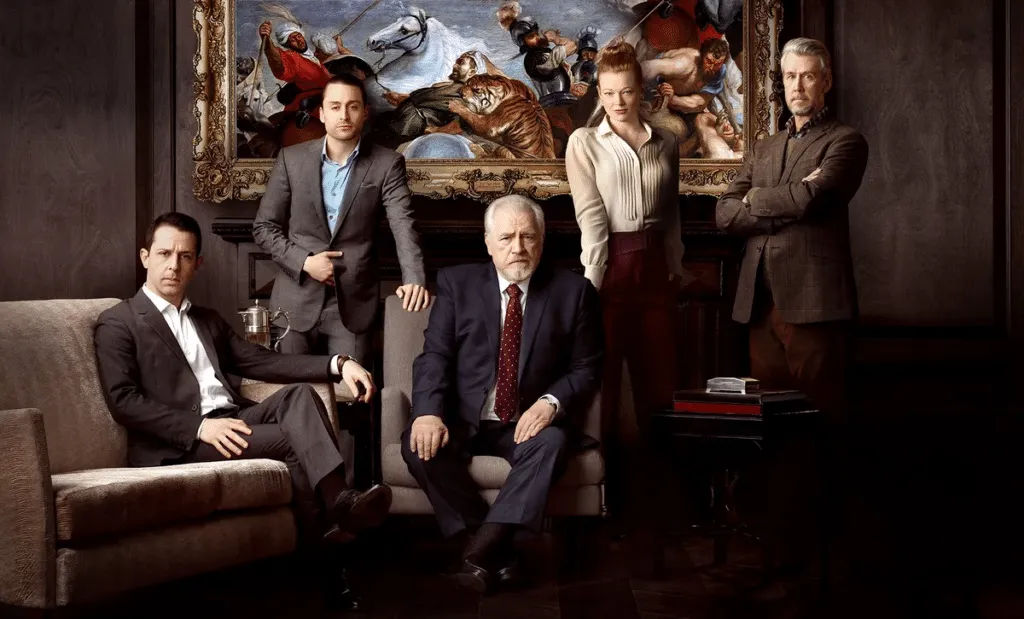
Credit: HBO/TechTudo
Fear is not respect (and it is the enemy of motivation)
If there is something Logan Roy can consider himself a great expert in, it is certainly instilling fear in people.
Some would say the character’s unorthodox methods were effective. After all, he rose from a background of poverty to become one of the biggest media moguls in the world, with a fortune in the billions and plenty of political influence.
However, Logan’s personality also helped develop an extremely toxic corporate culture lacking transparency. At Waystar Royco, motivation is not a word that is part of day-to-day life. Quite the opposite: employees always seem stressed and not very productive.
No one likes working in a place where they constantly feel intimidated. Employees who work under the rule of fear rarely give their best, and they are much more likely to leave the company as soon as a new opportunity arises.
So instead of taking inspiration from Logan, look more to his son Kendall, who is always trying to create a positive environment where employees feel valued and recognized.
Know how to build a cohesive team
Peter Drucker, one of the greatest scholars of business administration, used to say that building a cohesive team is one of the main keys to business success. In Succession, the exact opposite happens.
The Roy family’s constant internal conflicts have negative impacts across every area of the company. These fights end up highlighting just how damaging the results of a dysfunctional team can be.
Choosing professionals who bring, in addition to hard and soft skills, views and values consistent with those of the company is fundamental to building a productive, growth-oriented corporate environment.
Another well-known figure who has shared his view on the subject is Richard Branson, the British entrepreneur who founded Virgin. According to Richard, the strength of any company lies in the people who work for it. That is why he has always dedicated himself to hiring talented employees who truly believe in his company’s goals.
Let rationality guide your decisions
Business administrators make decisions every day, many of them with the power to profoundly impact the organization’s structures.
In Succession, the members of the Roy family often make decisions that are decisive for the future of their empire based solely on their emotions. This kind of approach is extremely risky and is discouraged by both scholars and successful entrepreneurs.
A good example is Mark Zuckerberg, the Meta magnate. Zuckerberg is known in the corporate world as someone who, always guided by logic, thoroughly analyzes every available piece of data before making a decision.
Our instincts can be useful at times. It is healthy, and often necessary, to think outside the box and be daring every once in a while. However, even in those moments, it is essential to think rationally.
Think about the future (or “Succession's Main Lesson”)
As we saw in the introduction to this text, the great conflict that drives the plot of Succession’s 39 episodes begins after Logan, the Roy patriarch, suffers a stroke that leaves him in poor health. From then on, the father and his 4 children begin to battle over who will succeed him in the top position of his conglomerate.
What we have not yet mentioned, however, is that all of these conflicts could have been avoided (or at least somewhat minimized) if Logan had thought about a succession plan.
The magnate’s lack of planning did not harm only his already problematic family. Inside Waystar Royco, a climate of instability and uncertainty became the norm.
Leaders are not eternal. Their legacies, on the other hand, very well can be. Take the example of Warren Buffet, a real-life magnate: at 93 years old, the CEO of Berkshire Hathaway has a very well-defined succession plan underway. Over the years, Warren has been identifying possible successors among people who have the skills needed to continue the work he started.
Succession is just one of the issues involved in the importance of thinking about the future when we run a business. It does not matter whether that future is short-, medium-, or long-term. If we do not plan today for tomorrow, it may be too late when it arrives.
The success of a series like Succession does not happen by chance. Besides its dramatic quality, the Roy saga is relevant because it introduces us to the nuances and dynamics of an extremely complex corporate game. It is no coincidence that business schools already use it as study material.
By analyzing the peculiarities of a family as powerful as it is chaotic in fiction, real-world leaders and entrepreneurs can absorb important lessons about behavior, ethics, values, negotiation, and much more. And this may be the great legacy left by Logan Roy.