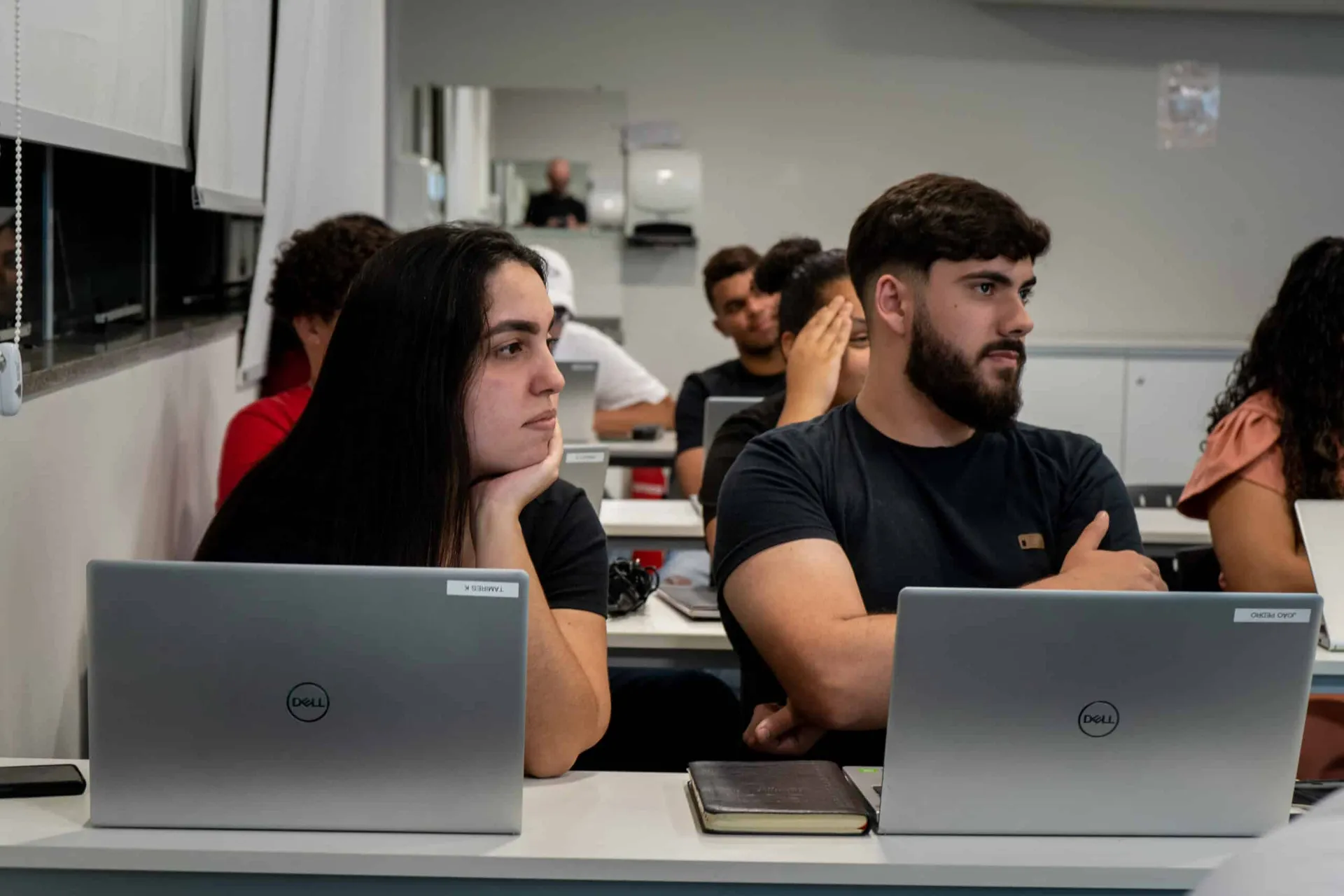
The third edition of the Fapuga Podcast features two students from the Business Administration and Hospital Management programs, who bring to the conversation a reflection on the importance of organization and communication as differentiators in the job market and on how the day-to-day experiences of classes have influenced each one’s development in the professional environment.
Hosted by Professor Bruno Gomes, Jacqueline, a soon-to-graduate Hospital Management student, and Matheus Gonçalves, in his second semester of Business Administration, reveal the reasons that led them to the administrative field and how exposure to the course content is affecting each one’s professional life.
REFLECTING ON THE IMPORTANCE OF ORGANIZATION AND COMMUNICATION AS DIFFERENTIATORS IN THE JOB MARKET
With so many changes in the market, being prepared for new experiences and opportunities can determine personal success in one’s career. Jacqueline and Matheus had opportunities and managed to make the most of them, creating ways to develop within their fields and changing the way they think and act.
Jacqueline and Matheus came from fields other than administration. Jacqueline worked in the automotive sector while Matheus pursued a military career. Both saw possibilities for professional growth in administration and decided to enroll in the undergraduate program.
Of course, every professional has their own path, but the tools for this process are quite similar. Jacque and Matheus did not feel they belonged where they were, and exposure to the administrative field was the starting point for new horizons.
Professor Bruno, who this semester teaches Entrepreneurship and New Business, joins the students in reflecting on the factors that matter in a professional environment and how to stand out using the course content.
WORKING ON COMMUNICATION IN THE WORKPLACE OFFERS ADVANTAGES FOR INDIVIDUAL AND TEAM DEVELOPMENT
Of course, any environment with good communication tends to develop more easily. In the workplace, mastering this “tool” can bring benefits to those who use it.
Good internal communication is responsible for obtaining and providing clear information about objectives, in addition to improving procedures and relationships at work.
When we talk about communication, we imagine only the verbal form, but it is not limited to that. We should remember that there is also nonverbal, written, and visual communication.
In the case of the podcast guests, verbal communication is a point to highlight in each one’s personal growth within their respective workplaces.
Jacqueline is on the “human contact” team. She says her mastery of good communication made her stand out on the team, making her a leader in her department. She stresses that when you connect with the other person, it becomes easier to understand and be understood, bringing advantages to the group’s relationships. With communication, conflicts can be resolved in a more harmonious and satisfying way.

Matheus shares the same view. The way we talk to each other is extremely important in the corporate environment. Human beings are always looking for effective methods of contact. These different approaches and ways of building relationships lead to better understanding and even participation when performing a role in a work group, especially when one masters the tool amid so many technological advances.
Prof. Bruno supports this analysis with the question: “Do you see yourselves as leaders?” Although Jacque is already in a leadership position, Matheus has an interesting reflection on reaching that goal.
For him, this question is closely tied to how you deal with people. Individuality is a determining factor in becoming a good leader. And this achievement is gradual. It is important to absorb experiences so that you can draw lessons from situations and make them add to your own background.
Some points were raised for a person to be a good leader. Being understanding, attentive, and resilient, according to our participants, should be part of the personality of a professional who aims to reach that position.
BRINGING EXPERIENCES INTO PRACTICE OUTSIDE THE ACADEMIC ENVIRONMENT IS ESSENTIAL FOR GROWTH
Jacqueline and Matheus mentioned a common point when asked how they have been applying classroom theory to their working lives. Organization.
The exposure to content during classes is being put to good use by the soon-to-graduate students in their personal lives and at work. Jacque said the content has directly influenced her life. “In a short time I have already gained a bit more awareness in my workplace, such as organization, how to deal with people and, most importantly, ethics. In the public sector, as is my case today working at a UPA (Emergency Care Unit), it is very important to have ethics.”
Jacqueline also comments on her choice of program. “I have tried several other fields. Nursing, social work, but it did not work out. I see myself as a manager. Now I am happy to be studying Hospital Management.”
Matheus came to Business Administration at Fapuga because he is very comfortable with numbers. While still studying for a technical diploma in Administration, he was recommended the undergraduate program by a teacher. “I got here through an economics teacher I had during the technical course. She always saw a lot of potential in me, she saw that I was always very interested in her class. When I arrived I felt very welcomed, I was very well received.”
Watch the full conversation with our guests from this third edition of the Fapuga Podcast.
#3 FAPUGA PODCAST – How did I end up in this profession? Business Administration and Hospital Management