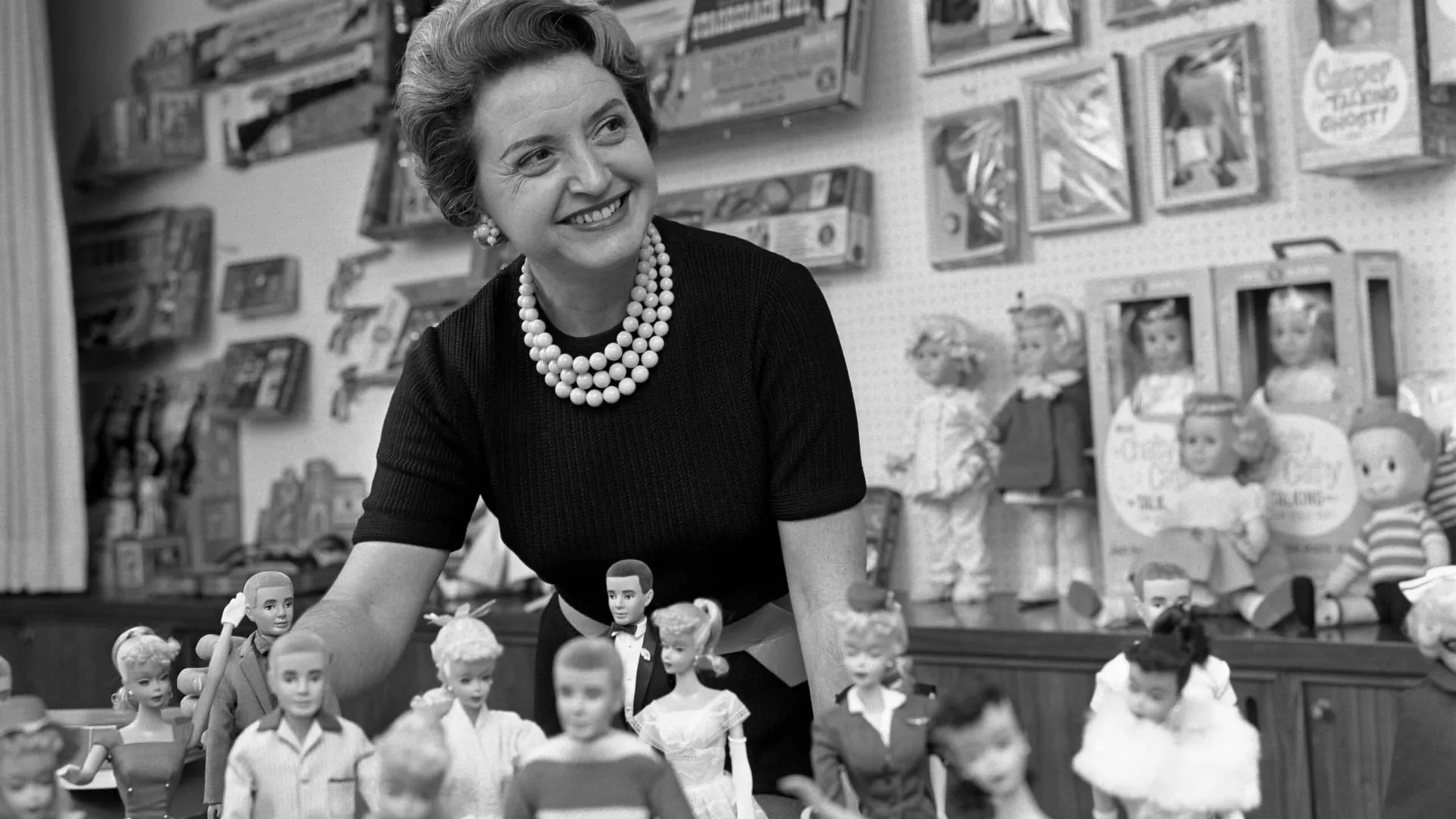
It is clear that, since her youth, Ruth Handler did not fit in, and she herself says she felt the need to prove herself from the start. In her constant search, she created one of the most famous characters in the entire world.
Contents:
- A controversial feature for the time
- Despite the controversy, a resounding success
- Ruth Handler’s business vision applied to another important cause
She started from watching her own daughter, whom she saw playing with “adult” paper dolls, and from how much younger girls admire and want to play with older girls and, more than that, wish to be like them – after all, the search for role models is very important for development. The era, however, was one of dolls imitating babies or children.
During a trip to Germany, Ruth was inspired by a local doll, Bild Lilli, which had a curvy silhouette imitating adult women.
Mattel Toys had existed since 1945. What was initially Mattel Creations, a company dedicated to furniture and dollhouses created by Ruth and her partner, gained another partner and continued expanding its work in the toy business.
A controversial feature for the time
But the doll Ruth wanted to add to Mattel’s catalog faced harsh criticism within the company. There was great discomfort over a feature that was essential to its creator: just like adult women, Barbies should have breasts.
These miniatures of adult women were very different from the doll market of the time, which was made up of toys based on babies. After all, the play assigned to girls was playing at being a mother.
Breasts – or a representation of them – were a fundamental part, an element that girls identify in adult women, in the people they will become in the future. For that reason, the businesswoman and creator stood firm in her vision, and Barbie was launched in 1959.

Courtesy of: Peakpx.
With the new toy, children could use their imagination beyond the imposed role of motherhood while playing – often the only role women could aspire to – and shape who they wanted to be when they grew up.
The creation of Barbie has everything to do with Ruth herself, because, although a mother, she never identified with the exclusive role of homemaker, and was always an integral part of Mattel’s corporate work.
Despite the controversy, a resounding success
There are many questions about whether Barbie is, in fact, a symbol capable of moving and inspiring women positively, including the debate over the unattainability of a beauty standard that has the famous doll as its model, and several more recent versions of the toy were designed to keep up with changes in thinking along those lines.
Despite the controversy, Ruth Handler was endowed with very shrewd business vision. And, observing reality through her own perceptions of the world, she created a product that achieved the feat of being not only remembered more than 60 years after its launch, but an integral part of world popular culture to this day.
A post shared by Faculdade Fapuga (@faculdadefapuga)
Ruth Handler's business vision applied to another important cause
Before stepping away from business, Ruth collaborated on another creation that is also worth mentioning, one that did not receive as much attention as her main professional achievement but was just as important to her, and was able to help women at a different time and situation in life, very different from the girls for whom the first Barbies were intended.
Once again using a personal vision to meet a need of many other women, the mother of Barbie was also active in the creation of breast forms for women who have had mastectomies, with the company Nearly Me.
Prostheses like these already existed on the market, but Ruth had a special insight into what needed improvement and how to do it – she herself had to have her breasts surgically removed because of breast cancer.
So, experiencing it firsthand, understanding the needs and what could be improved, Ruth joined former Mattel designers and her doctor, and thus helped revolutionize the production of these external prostheses.
Breast cancer ended up being the cause of her death, in 2002, but being able to contribute to restoring her own dignity and that of other women was very important to her.
Through her unique vision in business and in life, Ruth Handler’s contributions will always be remembered.
Featured photo: Originally published by the Los Angeles Times. Photographer unknown; Restored by Adam Cuerden, CC BY 4.0 https://creativecommons.org/licenses/by/4.0, via Wikimedia Commons.