Fapuga’s second academic semester has begun, and with it came changes to the institution’s teaching staff. The Human Resources Administration course now has Professor Eder Carlos Amador, who is also Fapuga’s new coordinator. He told us a bit about his experience at the institution so far and, on the occasion, highlighted the strengths of Hospital Management and Business Administration, the on-campus undergraduate degrees offered by the institution.
Eder may be just starting to settle in at Fapuga, but he brings significant experience at higher education institutions, both in his education and in his own work experience as a professor and coordinator in different areas.
Fapuga’s new coordinator holds an undergraduate degree in Information Systems in Mathematics, a master’s degree in Science and Mathematics Teaching, and a specialization in Project Management. At Fapuga, he coordinates the Business Administration and Hospital Management programs and teaches Business Administration and Human Resources.

Courtesy of Eder Carlos Amador, personal archive.
A coordination approach that is closer to students
Drawing on all his experience, he tells us a bit about how he comes to contribute at Fapuga, especially in terms of the student experience and his role as professor and coordinator in that process:
“What I take into account in the time I have worked with students is breaking the paradigm of student and professor, student and coordinator. From my experience in the market, the student always sees the professor/coordinator as a problem in their life. And in this time, I work in a way that the student understands that I am their partner, that I am there to help with their professional development and their career.”
This effort to collaborate, much more than being an authoritative, limiting, and commanding figure, is part of his vision of a more humanistic education, aimed at a development that constantly takes into account the demands, the variety of behaviors, and the possibilities within educational environments.
After all, when dealing with people, with diverse students, each with their own background, personality, and different ways of learning and expressing themselves, a more rigid education cannot even try to include that diversity of viewpoints, whereas a humanistic education brings together efforts in that direction.
The main strengths of Hospital Management and Business Administration
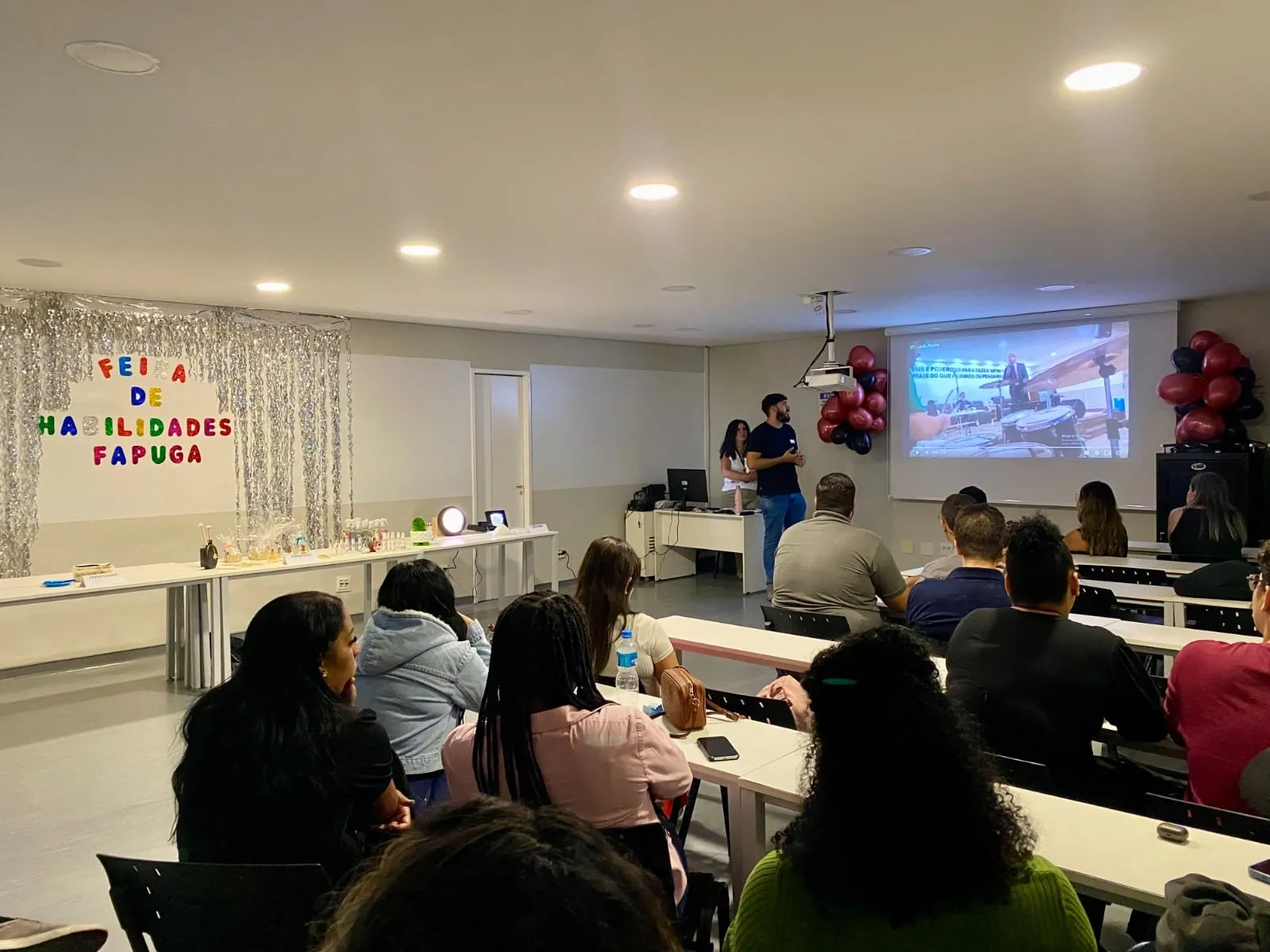
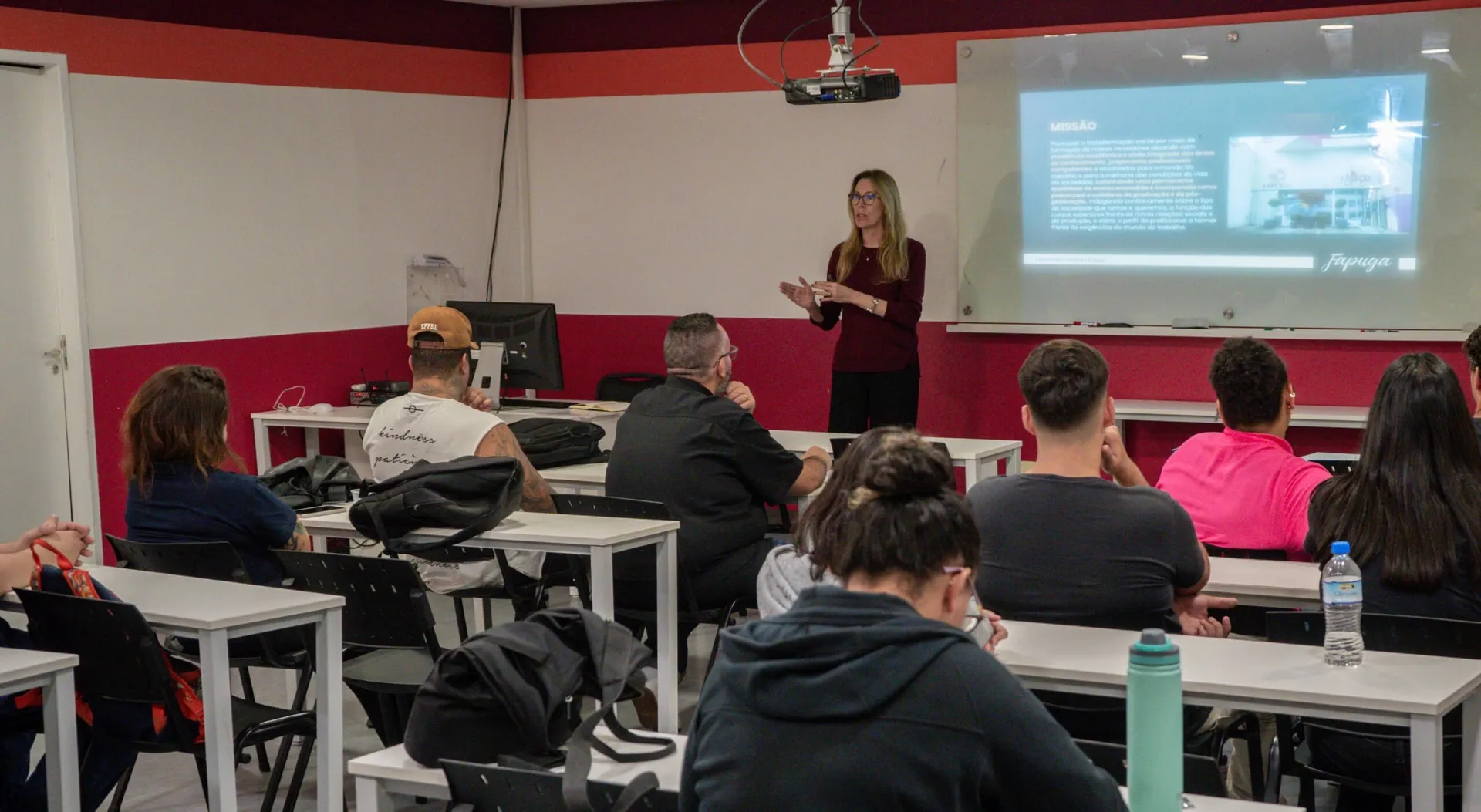
Eder talks a bit more about how this happens in Fapuga’s teaching dynamic, highlighting the personalization and student focus that are part of the on-campus teaching model. This is one of the main strengths of Hospital Management and Business Administration at Fapuga.
As he points out, the institution offers, through the on-campus model, the support needed for students to learn in the best way possible, because within the institution (a higher education institution) students do not need to worry about their comfort, their safety, or technological tools. Everything is already available, including high-performance notebooks for all students.
Beyond this complete physical infrastructure, Fapuga’s new coordinator also emphasizes the way content is taught, with work before and after classes covering each main class topic.
In practice, students have access to a short pre-recorded lesson available on the student portal, then the class takes place on the briefly presented subject, and after each class students have forums on the student portal to discuss the topic covered, ask questions, and further consolidate each lesson.

Fapuga’s renovated facade, in Tatuapé
“The market wants a professional who is not only well prepared; they need to deal with people, to be a human being, and having these humanistic traits is essential,” Eder comments about this class dynamic, speaking especially about the forums as a space to exchange ideas and further develop communication skills.
100% original material in an innovative teaching approach
Comparing with other educational institutions, Eder points out another highlight of Fapuga regarding class content: the professors do not teach content produced by a multidisciplinary team outside the institution, but produce the content that makes up the curriculum themselves.
Eder reports that, in this way, the format gives the faculty even more autonomy, with full freedom to structure classes based on their own experience and the qualified training of master’s and doctoral degree holders. This way, the content is the most up to date and connected to the market.
Eder’s vision and experience come to add even more to education at Fapuga, always seeking innovation to train professionals who are truly equipped with the hard and soft skills most sought after in the job market.