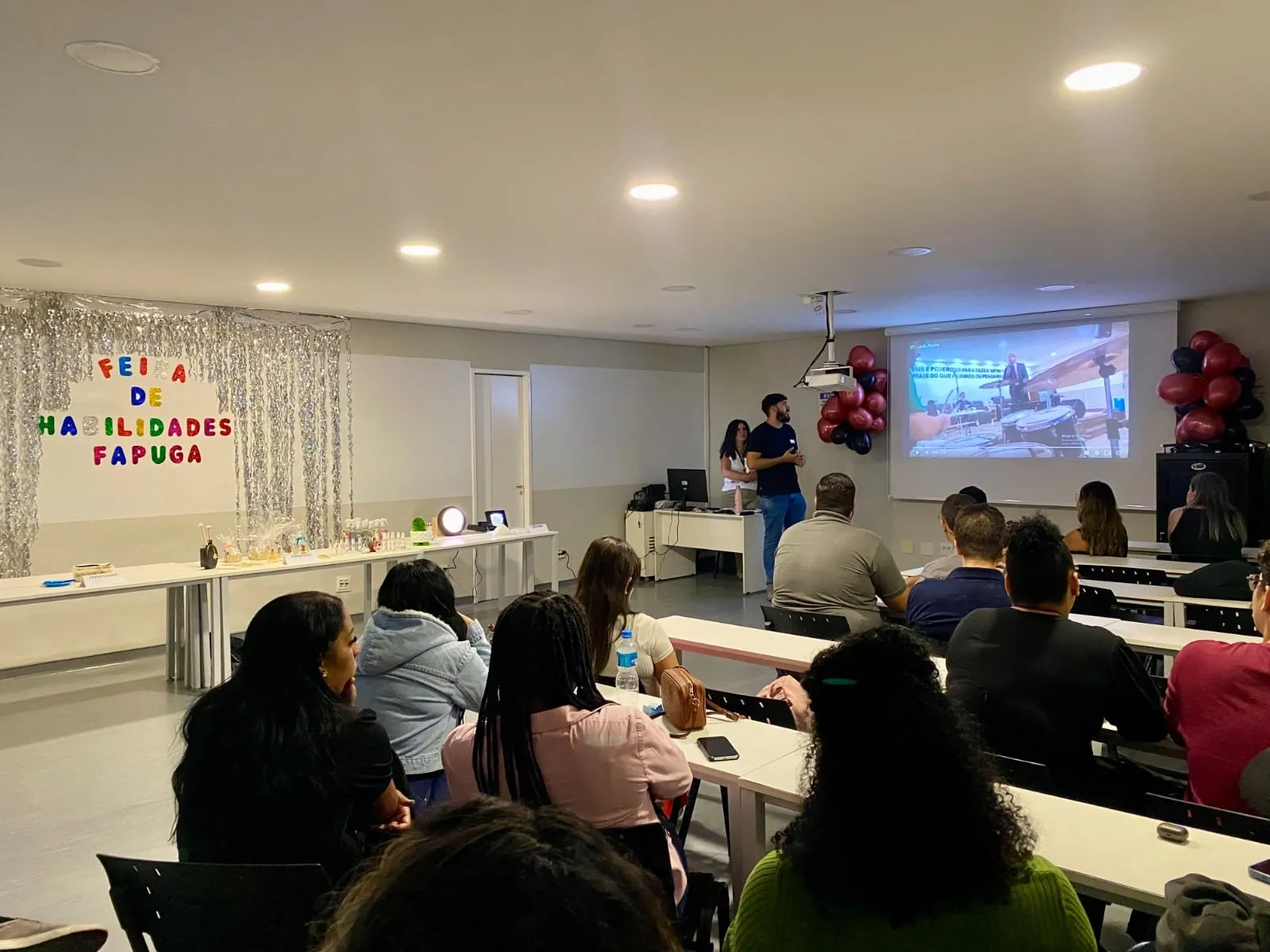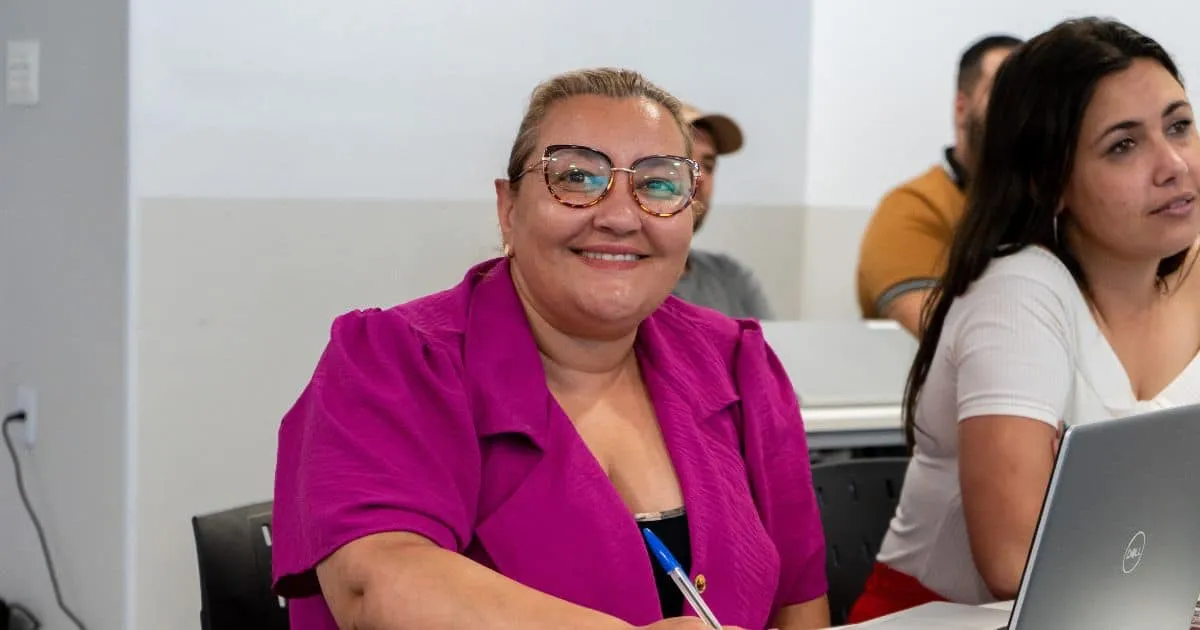
In Wednesday’s (10/11) talk at the Business Management Workshop, Prof. Zulmira Silva, M.Sc., a professor in the Business Administration and Hospital Management programs at FAPUGA, covered the main financial control tools for those who want to start their own business.
The speaker holds an undergraduate degree in Economics from Universidade São Judas Tadeu, an MBA in Corporate Accounting from PUC-SP, and a Master’s degree in Business Administration from UNIP. Drawing on all the knowledge acquired throughout her academic career, she answered the questions of those present at the event.
With Nepuga/FAPUGA postgraduate students in attendance, many questions arose about ventures in the aesthetics field. Prof. Zulmira Silva, M.Sc., therefore explained the importance of drawing up a business plan.
“Before opening a company, whatever the segment, you need to know about the location, the competitors and the suppliers. A good company is well planned, so you need to know what you are offering the customer; if necessary, contact the manufacturer of the products you will use. A business plan requires real research, because that will make all the difference.”
Accounting vs. Finance
To understand how to draw up a business plan, it is necessary to understand the difference between two concepts: Accounting and Finance.
Accounting: It consists of collecting data, recording assets and financial transactions, calculating the taxes owed in a given period of time, determining profits or losses and producing reports. Its goal is to provide users with information, through data analysis, for future economic and financial decision-making.
Finance: It uses tools, such as cash flow and accounting reports, to analyze and monitor the business’s performance, based on its finances.
In this sense, financial management works as a strategic analysis of these transactions and results, so that the company can reach its previously defined goals.
Financial Control Tools: Benefits of Budget Management
The specialist warns that detailing the business’s annual goals, as well as keeping a history of actions, is important to know what not to get wrong year after year. Although the first year is the most complicated, since everything will be built from scratch, the records make the process easier in the following years.
Thus, setting a budget correctly allows you to run your business with more confidence. Among the functions of a budget, the one that helps entrepreneurs the most is that it is a metric that compares what was actually achieved with what was planned.
To implement budget management, it is essential to consider some factors that directly impact your business. See what they are:
Market variables: Assess the market variables that directly impact your business; review data and projections on the country’s GDP, the history of dollar increases, and the economic outlook.
Revenue calculation: Define an exact amount that corresponds to your monthly revenue goal, ask yourself “How much do I need to keep my business running?”, and set a profit margin on top of that amount.
Inventory management: Holding inventory means having capital tied up; however, if you need to keep stock of some product or supply, plan ahead, because in some cases a delay in the product’s arrival can cause losses due to lost customers or patients, for example.
Expected expenses: As in the case of Aesthetic Health professionals, some budgets should already provide for travel expenses for continuing education, since 1 or 2 times a year this is a necessary investment for those who work in the field.
Variable commissions: For professionals who have teams or partnerships with other professionals, an important item to include in budget management is variable commissions; defining that percentage will make it easier to manage resources.
In this way, Prof. Zulmira Silva, M.Sc., an authority in the market, explained in a personalized way how aesthetic professionals can apply financial control tools in their own ventures.
And as a positive outcome of the talk, several attendees expressed their satisfaction: “First contact with budgeting, great ideas!
It opened my mind. Excellent talk!!! Thank you so much for everything,” said Katia Mara R.