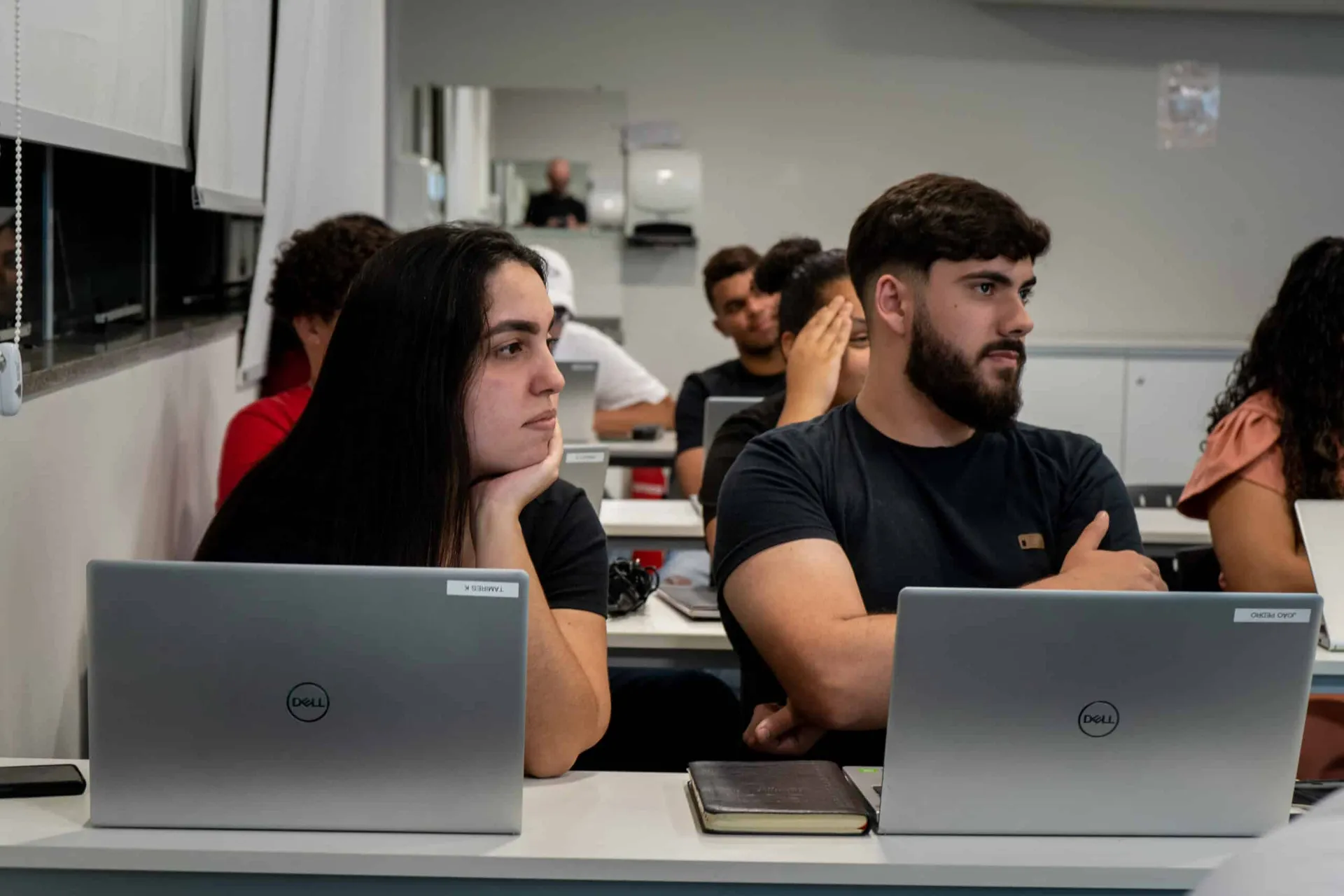
Far beyond a good resume, anyone who wants to stand out in the job market needs certain skills, such as Nonviolent Communication, a soft skill needed by anyone who has to interact with one or more people in their profession.
This soft skill is also advantageous and highly sought by recruiters because it is tied to the way the professional will handle intrapersonal relationships.
Learn more about Nonviolent Communication and find out how you can develop and apply this soft skill.
Nonviolent Communication: A Differentiator in the Job Market
If you are looking for a job or want to prepare for the great battle that is the job market, it is essential to have some of the skills most desired by recruiters.
One of them is Nonviolent Communication, a theory developed by psychologist Marshall B. Rosenberg, which aims to convey to others, or to oneself, a dialogue that is clear, empathetic and free of judgment.
Through this technique, you will communicate empathetically, creating a connection with others, where you can convey your information and needs and they will be more likely to be accepted by whoever receives them.

Leader creating a connection with employees by applying Nonviolent Communication
As an example, consider an employee of a company who is irritated with their job. Even if you are not the leader, manager or administrator, it is worthwhile to know how to deal with your colleague, especially if your work also depends on them.
In that case, what would you do? According to Nonviolent Communication, the ideal would be to have empathy and then communication, making clear that the other person’s feelings are understandable and that you are willing to listen.
For that to happen, Marshall proposes following, in order, the pillars of Nonviolent Communication:
-
observe the situation: what is happening and where is it happening? Try to observe your surroundings to understand what led that person or those people to feel the way they do.
-
feel what the other person feels: this is where empathy comes in. After observing and understanding what may have happened, it is time to connect with the other person’s pain. It may not make sense to you, but there are factors that affect some people and not others, precisely because of their beliefs, culture and understanding of the world.
-
understand what the other person needs: the feeling may be hiding something even more important, which is the need the other person has and whose lack makes them feel bad. There is a need that must be met.
-
make the request: here you are ready to connect with the other person and communicate, showing that you have empathy, that you understand and that you want something to be done about it.
Going back to the previous example, applying Nonviolent Communication, you should observe what might be affecting your coworker, understanding what they were really feeling in that situation, analyzing what they really wanted and could not express, and then communicate, speaking exactly about what they wanted and also expressing how you feel.
By showing empathy, by understanding the other person’s pain, you create a connection with others, making it easier to communicate and, in many cases, to influence them or get them to accept more easily what is being asked of them.
Now that you know the pillars of Nonviolent Communication, is it clear why this soft skill is so sought after by recruiters?
How to Develop Nonviolent Communication
On first contact with Nonviolent Communication, it is common to think this technique is difficult. But with practice, it is possible to develop this soft skill and refine it to the point of applying it very naturally.
The first step to developing Nonviolent Communication is to learn about it. The more you know about this technique, the easier it will be to master it.
Some institutions already include Nonviolent Communication in their curriculum or seek to develop it during the undergraduate degree, as is the case at Fapuga. You will learn and refine this soft skill throughout your classes.
But it is possible to expand your knowledge of Nonviolent Communication and study the technique by other means.
Learning More About Nonviolent Communication
Marshall B. Rosenberg, the creator of the technique, wrote a book about his experiences with Nonviolent Communication, the pillars of the method and the importance of applying it in personal and professional relationships.
Through the book, it is possible to gain an in-depth, technical view and understand the principles of Nonviolent Communication: communicating without judging.
According to Marshall, the act of judging or wrongly expressing your feelings already creates noise and pushes the other person away from you, complicating the relationship.
“When we use such language, we think and communicate in terms of what is wrong with others for behaving this way or that […] Our attention is focused on classifying, analyzing and determining levels of wrongness, instead of on what we and others need and are not getting,” he wrote in his work.
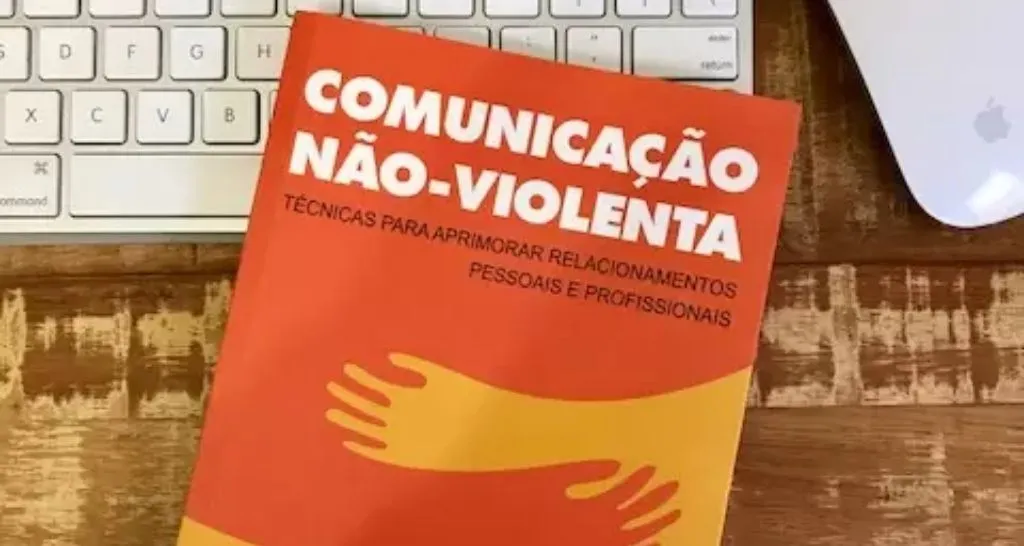
The book Nonviolent Communication
The first chapters of the book explain the four pillars of Nonviolent Communication, while the other nine show how to apply and deepen the technique.
Besides this reading, which is essential if you want to develop this soft skill, you can watch videos and listen to podcasts about Nonviolent Communication to complement your studies.
Because it is a skill so sought after in the job market, there is a lot of content about this technique.
Applying Nonviolent Communication
As we have seen, Nonviolent Communication is an essential skill for dealing with people, but especially in the professional field.
If you are, or are studying to become, a manager or administrator, having knowledge and command of Nonviolent Communication will set you apart.
This technique can be essential for:
- resolving internal conflicts in the company;
- resolving conflicts involving employees;
- conveying bad/difficult information;
- connecting with the team;
- making your instructions more readily accepted
With so many advantages, it is no surprise that Nonviolent Communication is a technique widely used by politicians, institutional spokespeople, leaders, managers and administrators.
The more connected the communicator is with the other person, the easier it will be for the receiver to accept the message. Another key point is that with this technique, besides communication, we must remember that the communicator ends up having more control of the situation at hand, which is essential for professionals who must administer or manage people and companies.
So, did you already know Nonviolent Communication? What else about this soft skill caught your attention? Leave your opinion in the comments!