
Anyone who is part of the business world has surely come across a term that is increasingly present in job openings and job interviews in the corporate environment: soft skills. But do you know what it means?
In general terms, soft skills are those abilities linked to the behavior and personality of a company’s employee.
Unlike hard skills, which are measurable technical abilities learned in settings such as administrative courses and training, soft skills are more subjective and tend to develop over time and according to each person’s experiences. And those experiences can be real as well as virtual.
Yes, the virtual games that many see as mere entertainment are a great tool for acquiring and improving soft skills. And one of the main examples of this is the game League of Legends.
With more than 100 million active players, the MOBA (multiplayer online battle arena) game developed by Riot Games is considered the world’s biggest e-sport (electronic sport). But its success is not limited to the gaming world.
Like any good strategy game, League of Legends has a lot in common with the routine of a corporation. Playing it is, besides fun, a way to develop soft skills that business administrators value highly.
Want to better understand the relationship between the world of League of Legends and the business world? Then hit start on your ability to learn and explore the next paragraphs with us.
Contents
- In life or in the game, knowing how to collaborate is essential
- 4 soft skills that make a difference, whether in the business world or in League of Legends
In life or in the game, knowing how to collaborate is essential
The similarities between the business universe and League of Legends can be identified right in the game’s premise.
The most common way to play LOL is a competitive match between two teams of five players each. Each match has several strategic objectives and the final goal is to defeat the enemy base, which in the game is called the Nexus.
To win these matches, gamers must organize themselves and form the most efficient and effective combination of characters among countless different ones. Each of these characters has strong and weak hard skills (just like candidates in a selection process, for example), and that is where the first and main soft skill taught by League of Legends comes in: teamwork.
To win the game, the big secret, and biggest challenge, is making sure all five team members act together in an environment where tactical and operational conditions change at a very fast pace. Such a situation is also extremely familiar to those who live in the corporate world, where scenarios and markets change dynamically.
4 soft skills that make a difference, whether in the business world or in League of Legends
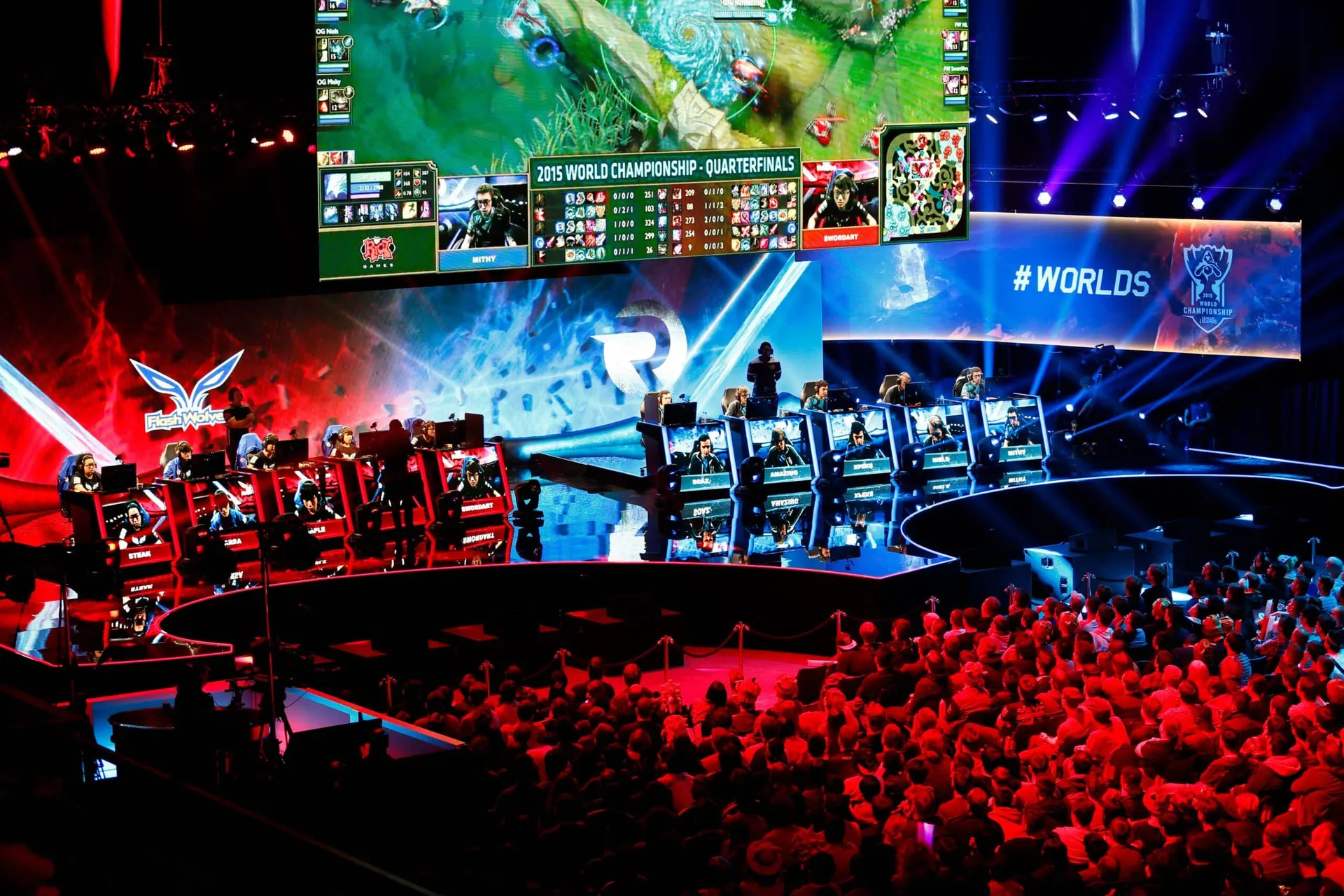
Source: Complex
As you read in the previous paragraphs, the main soft skill that a LOL player develops during matches is teamwork. But it doesn’t stop there.
The challenges that Lead of Legends teams face along their journey in the game have several analogies with a company’s routine. And, in many cases, the same skills need to come into play for things to move forward.
1) Teamwork
In a game where 5 different people need to come together to win, the ability to work as a team depends mainly on communication between the players.
That is because, even though everyone is part of the same team, nobody can control another player’s actions. Ineffective and uncoordinated decisions at key moments of the match are common and, since the game happens in real time, assertive actions need to be taken quickly.
At those times, you need someone who knows not only how to play their own character, but also understands the role, importance, positioning and hard skills of the allied characters, and who can lead the movement and fighting spirit of their teammates.
Put in other words, it is the same as the human side of the leader, or their leadership soft skill, driving, motivating and orchestrating the other soft skills and hard skills of the whole team. And such abilities are highly sought after and valued in the highly competitive corporate world.
Like the business environment, a good LOL team has a defined leader (in professional e-sports teams, there is also a coach and, sometimes, an analyst). This leader must be someone with an active voice, able to guide the team, manage conflicts and have the final say on crucial decisions.
Besides the leader, all the other team members also have determined roles and priorities. And just as a professional’s role in a company is shaped by their soft and hard skills, a LOL player’s duties during the match are also influenced by their main abilities.
Although consensus and communication among everyone is important, the game’s decisive actions cannot happen without the leader’s approval. Making sure this hierarchy works in harmony is one of the key elements of a successful match, together, of course, with fundamental doses of patience, dedication and strategy.
Another fact that should be stressed is that when you have a team that brings together people with different opinions, backgrounds and personalities, conflicts and arguments are inevitable and part of the routine.
The important thing in these cases is not to let those disagreements negatively affect the team’s performance. And at moments like these, an old saying can be extremely useful: nothing like one day after another.
2) Adaptation
Saying that the business world lives in constant change has become a cliché, but a quite true one. And if someone wants to stay relevant amid so many transformations, it is essential to train the soft skill of adaptation.
Inside League of Legends, things also change all the time. And the players’ ability to adapt usually relies on three verbs that the corporate world must also learn to conjugate: observe, test and renew.
Observe: a LOL player usually learns a lot about the game by watching other people play, especially those who compete in professional tournaments. After all, what could be better for achieving success than learning from those who have already achieved it? This maxim also applies to business: if you aspire to something, start by observing those who have already obtained what you want.
Test: League of Legends frequently introduces changes to characters and items already in the game, besides expanding the universe with new elements. This takes players out of their comfort zone, forcing them to test new processes that may or may not work, but are vital to keep them active in the game.
In the corporate setting, technological, operational and cultural changes also emerge strongly day after day. The ability to adapt is also highly valuable for job interviews, internships, trainee programs and, above all, for becoming a senior executive. All the situations arising from LOL matches can be widely applied in the contexts and interactions of the business world. Every LOL player who works in business organizations has a better chance of staying ahead of the competition and growing exponentially.
Renew: nowadays, the version of a product or service that reaches the market is rarely final, especially when we are talking about the digital environment. What is most common today is that, based on public feedback, the product is constantly improved to meet the needs and preferences of the consumer, which are not always what the creators initially thought.
Something similar happens with a League of Legends player. Many times, the user comes across strategies that seem very efficient on paper. However, the only way to know whether that theory really works is to put it into practice in a match.
A real-time game has variables that theories are unable to predict, and the same happens in business.
3) Management
In the LOL universe, there are some resources scattered across the map that temporarily boost a character’s abilities. Only one player can collect that resource, and it is up to the team members to decide which of them will do so. This situation is a basic lesson in resource management.
The analogy between the scenario described above and the business routine is clearer than it seems: imagine, for example, that you are responsible for distributing the company’s financial resources among all departments. Which sector should receive more resources, attention and focus? And which should receive less?
As in the game, the exact answer is only one: it depends on each case. The only way to make this kind of decision is to be someone with sharp instincts and a well-developed analytical skill, and playing a game where you are exposed to a situation like this can be a great way to improve.
4) Resilience
Defeats are part of life, and that is a fact that not everyone digests easily. But what many don’t see is that they also train an extremely important soft skill for a successful player or professional: resilience.
Jane McGonigal, an American author and game designer who is one of the greatest advocates of games as tools for personal improvement, defines resilience as the ability to stay motivated, determined and optimistic even in extremely challenging situations. It is the ability to grow stronger through difficulties instead of letting them weaken you.
According to scientific studies publicized by McGonigal, 3 key elements are needed to develop resilience: positive emotions (3 for every negative emotion), social connections (at least 2 people we see weekly and can turn to when we need help) and stress-related growth, which is nothing more than giving yourself 100% to something difficult.
It doesn’t take much thought to see that each of the 3 situations described by Jane happens all the time in League of Legends matches. There is the whirlwind of emotions ranging from frustration to euphoria, the constant connection with other players and the unstoppable determination to win.
Gamers develop resilience every day. The routine of a professional LOL player, for example, is comparable to that of a high-performance athlete in traditional sports, with training, rest, championships and, of course, challenges.
In an interview given to The Wall Street Journal, the same Jane McGonigal even says that the main emotional characteristic of a gamer is believing that they will improve if they try again. And that is perhaps one of the most valuable lessons the world of video games teaches the corporate world.
As we have seen, playing League of Legends can bring far greater benefits than most people imagine. Games and business are worlds that connect closely, and fortunately more and more people are opening their eyes and seeing the enormous potential of this integration.
The common sense that still considers games frivolous and incompatible with a corporate environment is a challenge to be overcome. In one of her articles, Jane McGonigal states that her work as a game developer has been accused of “helping people waste time,” for example.
There is, however, a growing group of visionary administrators who already value the presence of gamers on their teams and seek them out in the hope that the soft skills they developed while playing will positively impact the work routine. And this is a movement that tends to keep growing.
And you, do you have any specific soft skill that you think you developed thanks to your passion for games? Tell us in the comments.