In September 2021, Dr. Thais Carmo took over as Coordinator of the undergraduate programs at Faculdade Ana Carolina Puga (FAPUGA). With a record of strong qualifications at several colleges in São Paulo-SP, she is optimistic about the changes for the next semester.
With a degree in Pharmacy and a postgraduate degree in Hospital Management from USP, a Master’s in Education from UNIMEP, and a Ph.D. in Public Health from USP, FAPUGA’s new Program Coordinator talks about her experience:
“I’m in my first month of work, getting to know the institution and developing strategies and work processes. It’s been very challenging and, at the same time, stimulating. Starting practically alongside a new institution, helping to structure the programs, taking part in defining projects is very thought-provoking,” says Dr. Thais.
Distance learning methodology makes access easier for students
As a central factor of the institution, it is increasingly necessary to understand the profile of FAPUGA’s students and their needs as undergraduates. For that reason, one of Dr. Thais’s first actions as Coordinator was to hold a meeting so she could get a general overview of their demands.
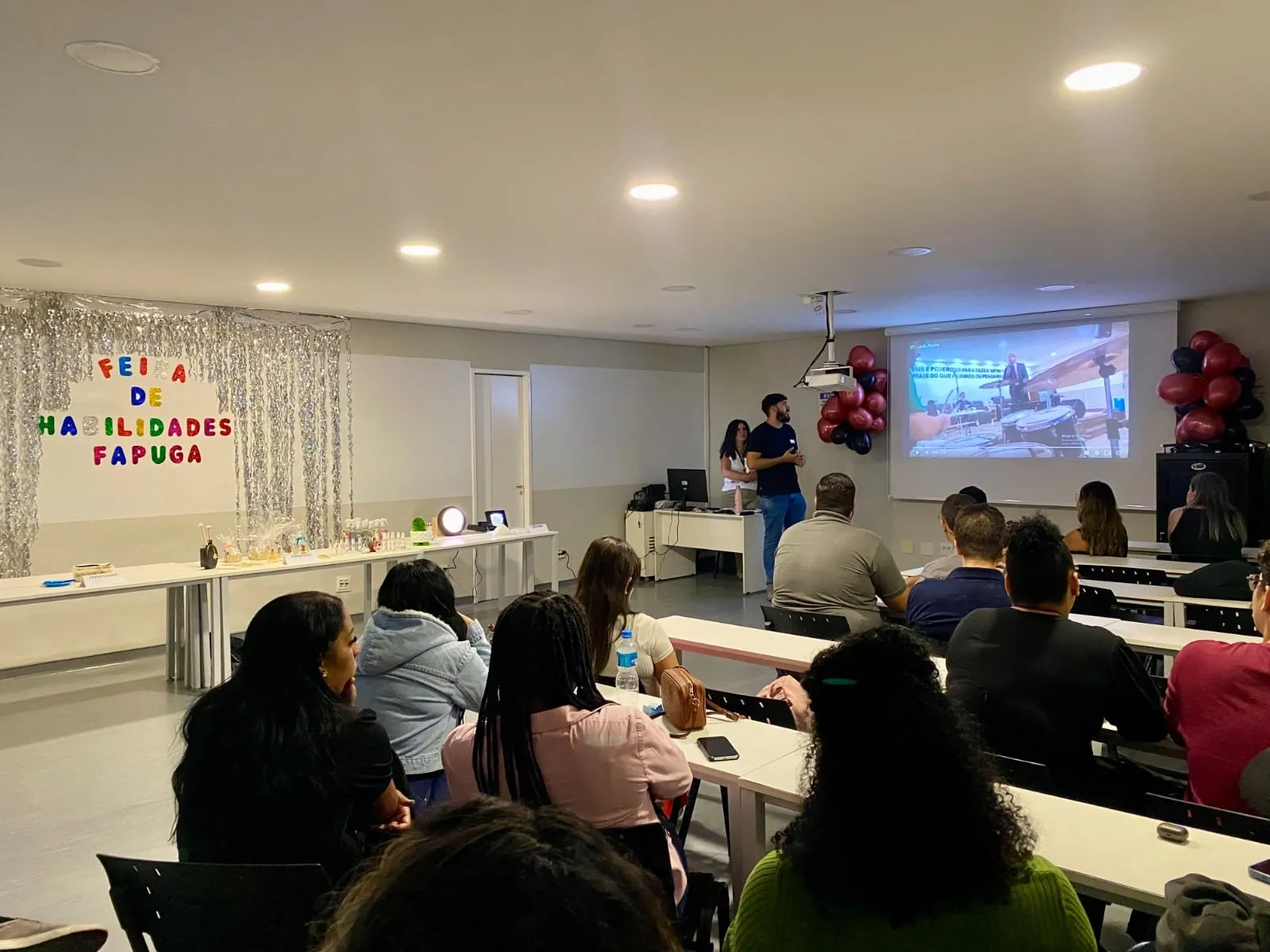
“Currently, the vast majority of FAPUGA’s students are workers who have been out of school for some time and who live far from other colleges. I’ve already held a meeting with them and the feedback was very positive. They rated the programs, the professors, and the institution’s facilities very highly,” she says.
The issue of distance comes up in internal discussion topics and student forums. Precisely because it is located in Greater São Paulo, the HEI (higher education institution) noticed that distance learning (EAD) made it easier for students to access undergraduate education. “Distance learning gives students a flexibility that is very hard to come by in in-person education. They can plan their schedules and divide their time to carry out the educational activities. That makes it much easier for working students to organize themselves,” Dr. Thais explains.
Despite the flexibility that distance learning provides, the coordinator also stresses that this methodology demands greater commitment from the student, since the student becomes the central element of their own education. “Most people don’t understand that. They think distance learning is easier, that there are fewer demands. But, without the professor’s physical presence, the one responsible for the learning process is the student. They are the protagonist, and in that sense, they have to know how to organize their time and their commitments.”
Changes at FAPUGA for the next semester
With promising plans, the Coordinator says she intends to adapt academic and administrative processes to meet the guidelines of the MEC (Brazil’s Ministry of Education), as well as update the programs’ curriculum matrices in light of job market demands and, above all, implement internships for the Business Administration Program.
In addition, Dr. Thais says she wants to integrate FAPUGA more and more with the Ana Carolina Puga Study Center (Nepuga).
“Special attention will be given to developing extension projects involving professors and students. At first, the intention is to offer mentoring and consulting to students in NEPUGA’s postgraduate programs. We will take advantage of our professors’ expertise to contribute to the management of aesthetic clinics and offices.”
The intention is to identify students’ main difficulties and problems and look for strategies to solve them.
In the medium term, the proposal is to extend mentoring to undergraduate students and to contribute, above all, to encouraging and developing an entrepreneurial mindset. In this way, FAPUGA aims to provide tools to train professionals who have solid theoretical knowledge and, at the same time, practical skills.