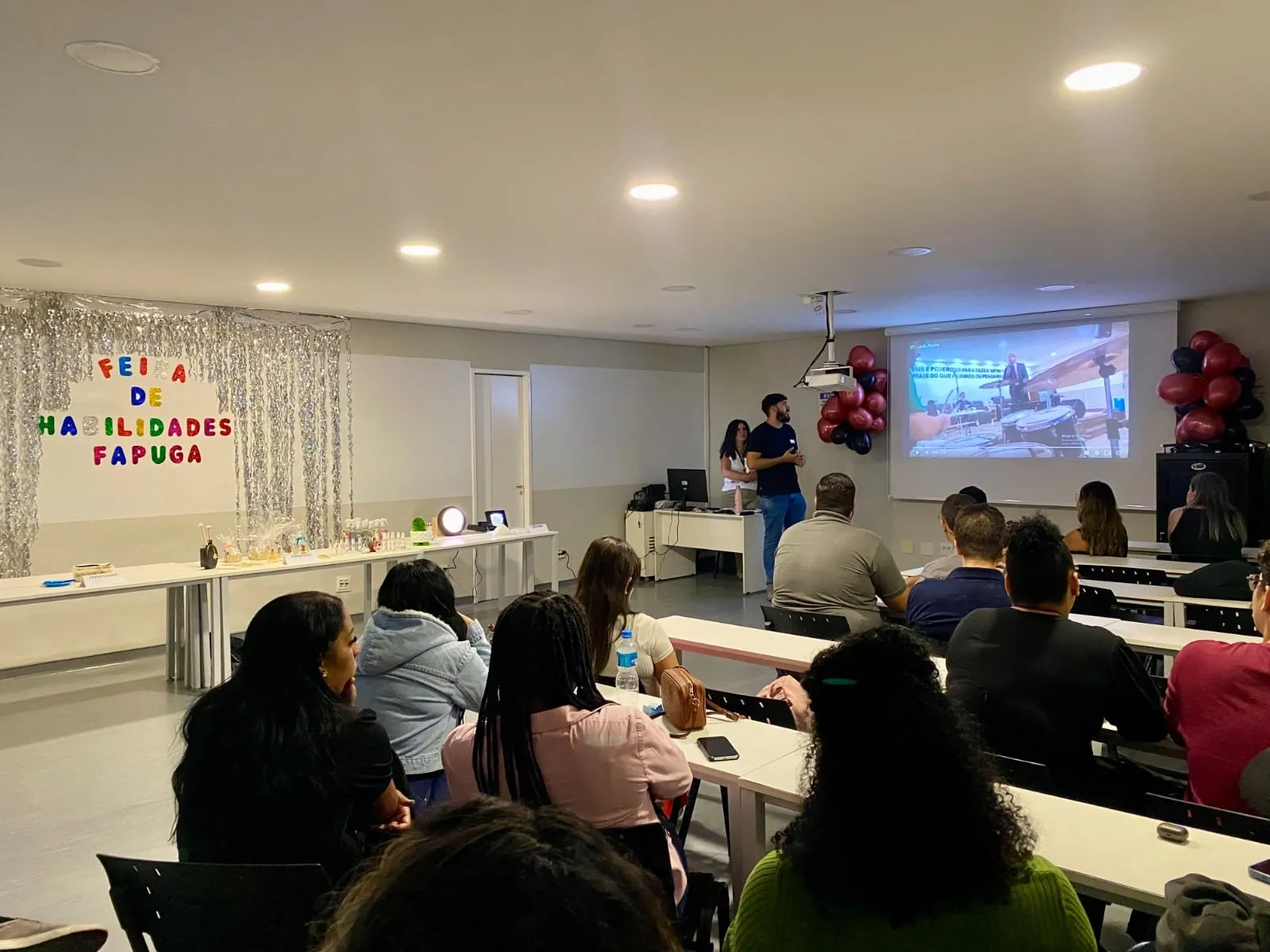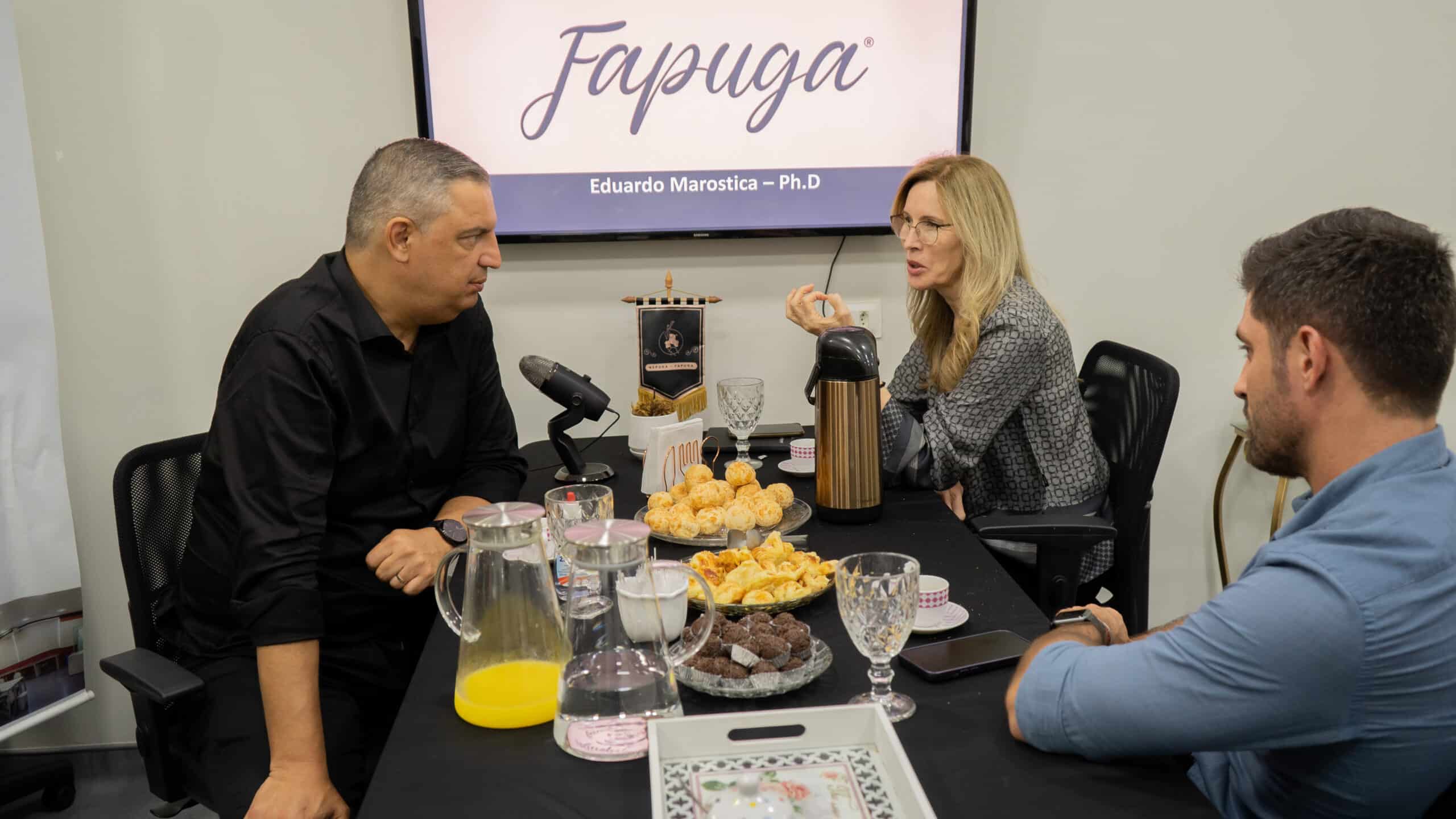
Professor Dr. Thais Adriana do Carmo was one of the first professionals to give a talk to FAPUGA undergraduate students and Nepuga postgraduate students at the Business and Management Workshop.
With an extensive academic background, she is a pharmacist, holds an MBA in Aesthetic Pharmacy, and is the coordinator of the Hospital Management program at Fapuga.
“And one thing I have noticed throughout my career is that health professionals are not trained to be entrepreneurs, nor as managers to run anything. In fact, our training steers us toward professional practice, with the technical knowledge to work. […] Today we don’t have to worry only about being a good health professional; we also need to know how to place ourselves in the job market”, the professor explains.
With that in mind, the topic of her Workshop talk was Developing an Entrepreneurial Behavior, aimed at fostering this important knowledge so that health professionals can identify opportunities to start ventures in their careers.
Keep reading and see how to build this mindset!
Different Concepts: Entrepreneurial Behavior vs. Entrepreneurship
Right at the start of the talk, the professor explains the difference between entrepreneurial behavior and entrepreneurship, which some people confuse and treat as the same thing, but they are not.
“Entrepreneurial behavior is something broader, a concept we bring to professional life. It is a behavior that will guide my career and that the job market expects us to have. There is no longer room for a professional who is complacent and doesn’t leave their comfort zone, someone who has a vision for the future”, she says.
And citing the author Joseph A. Schumpeter, the professor explained entrepreneurship, which has its origin in the capitalist system, which needs novelties and new products to sell.
For this, new products, new production methods, and new markets must be developed. And, consequently, to create the new, one must refute the old, and staying alert to what is around you is what moves the world.
Workshop: Entrepreneurial Behavior in Aesthetics
Aesthetic professionals, starting from an entrepreneurial mindset, can identify opportunities in the job market to innovate and offer services that people are looking for at the moment.
The act of entrepreneurship is identifying, analyzing, and implementing business opportunities with a focus on innovation and value creation. An example the professor used, thinking of the aesthetics market, is to analyze the space where you want to open your business, check whether there are other nearby places offering the same services, and whether you will be close to your target audience.
For this, it is essential to think about how to stand out in the market and to observe the state of your job market, your sector. You need to be optimistic and always see a crisis as an opportunity to evolve. In addition, your actions must be based on the needs of your market.
Characteristics of an Entrepreneur
A professional with an entrepreneurial mindset, who always thinks “outside the box,” has some traits in common, such as:
- Optimism: quite different from a dreamer, the optimist always expects the best from a situation.
- Self-confidence: they believe in themselves, know they have talent, value it, and stand up for their opinions.
- Risk-taking: but in a calculated, rational way.
- Courage: the entrepreneur does not fear failure or rejection; they believe in change and in themselves.
- Persistence and resilience: professionals who believe in their projects overcome their challenges and keep going until the final goal.
Entrepreneur Competencies and Skills
Competencies and skills can be developed throughout the process of personal and professional development and of becoming an entrepreneur.
- Having deep technical knowledge about the product/service they intend to offer and about the market;
- formalizes strategies and uses planning and control tools;
- delegates and trains their employees to deal with the unexpected.
Types of Entrepreneurs
The professor adds that when we talk about entrepreneurs, we are not referring only to the owner of a business, but to three types of profiles:
- Business entrepreneur: one who identifies opportunities in the market, plans, and builds new companies;
- Internal entrepreneur: the individual who promotes changes within the company where they work, reinventing the company and its business;
- Community or social entrepreneur: one who promotes change, brings together resources, and builds for the benefit of the community – volunteering; third sector.
So, do you now know whether you have an entrepreneur’s mindset and what to do in the field of Aesthetics? Leave your comment below! 😉
Want to watch the details of this talk? Go to the events tab in your student portal.