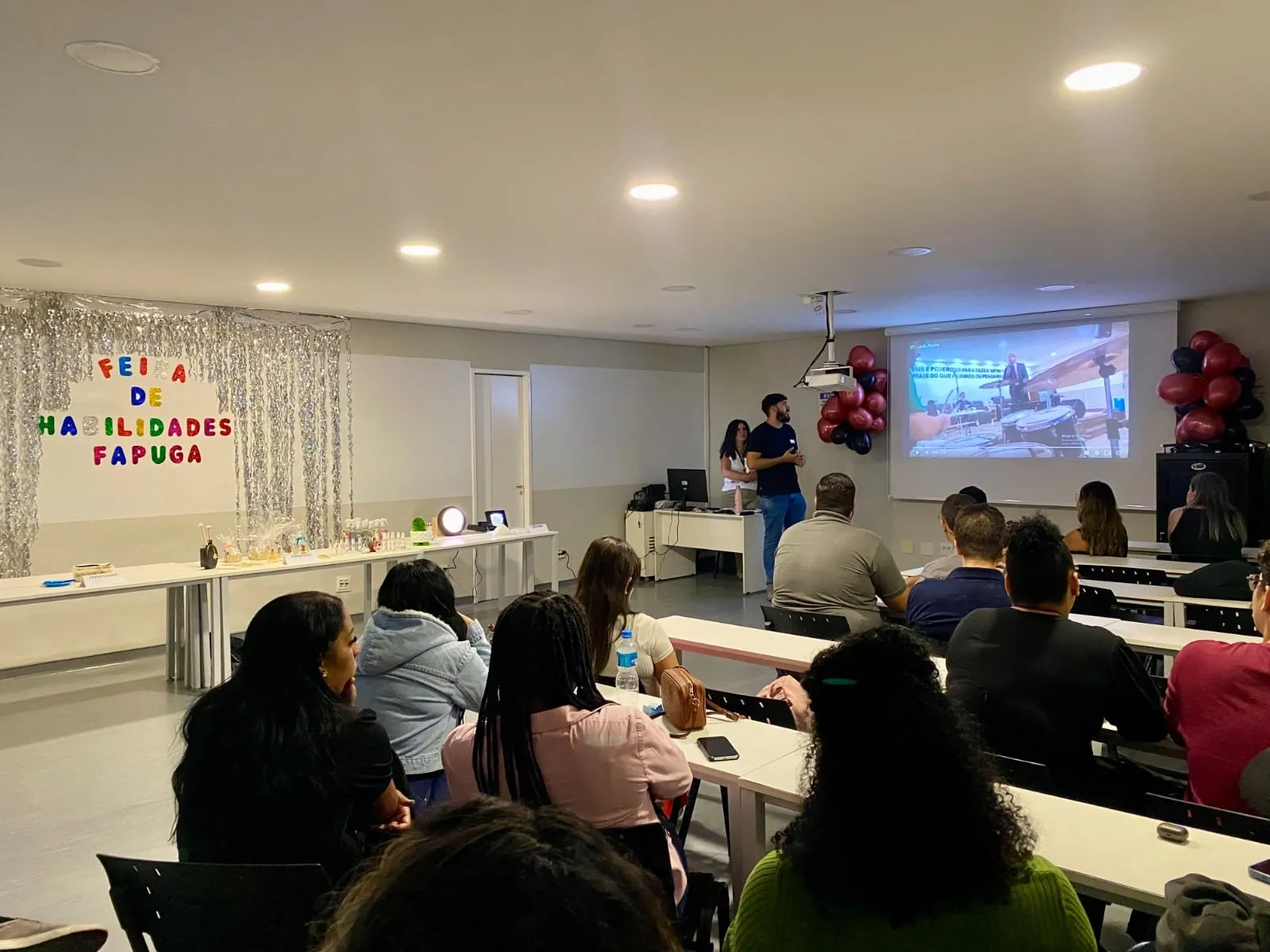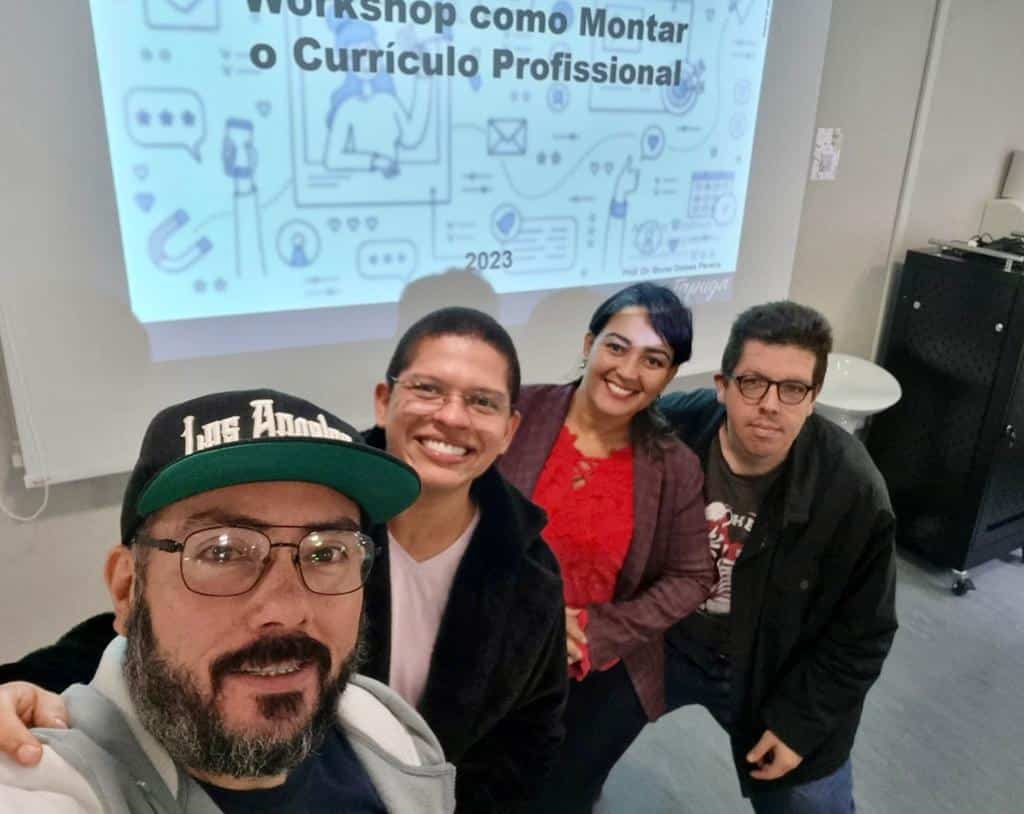
Last Saturday (17th), Prof. Dr. Bruno Gomes led a workshop on how to write a good résumé, meeting the needs of those looking for new job opportunities and helping Fapuga students with their biggest difficulties.
What you will find in this article:
Strengthening bonds through in-person experiences
The main tips for writing a good résumé
3 – Don’t forget your personal details
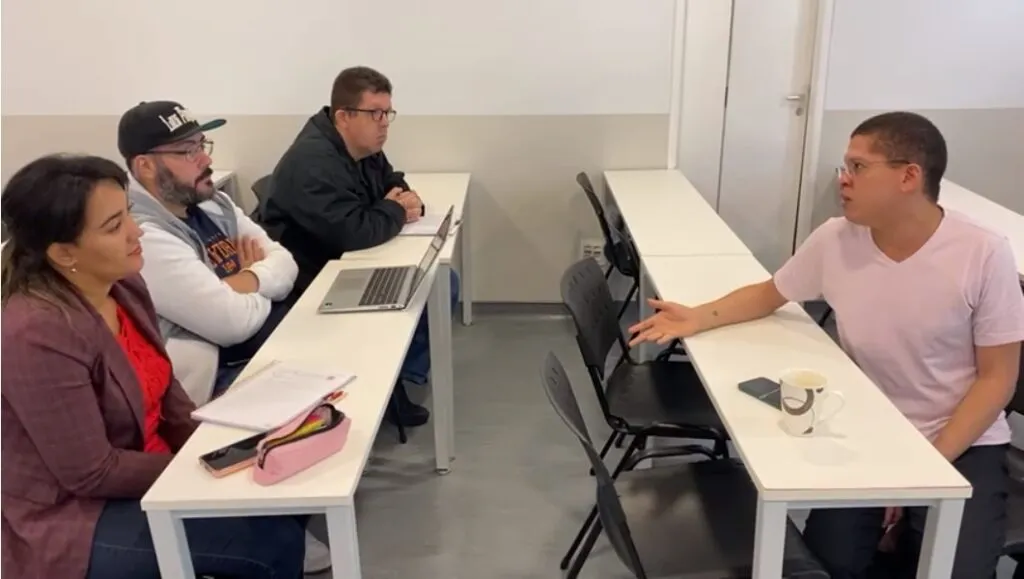
The course was held mainly as a conversation, offering tips on how to do it, what a résumé should include, and what should be avoided, in addition to covering the social media that help promote one’s own skills and experience.
Using several ready-made résumé templates, Prof. Bruno was able to illustrate in different ways what is right and wrong when preparing this very important document.
The instructor talks a bit about one of the main difficulties encountered when writing a good résumé:
“Before producing it, they do some prior research to find out what it looks like, but they always go wrong on access, they always like very long résumés, they like very detailed things because they think the length will impress the company, and that’s exactly what we worked on, those myths.”
Strengthening bonds through in-person experiences
The course Bruno teaches, Language and Argumentation, is the only one in the Business Administration and Hospital Management programs that is taught with recorded classes, and there are big differences in an in-person workshop opportunity like this one.
In the recorded classes, the instructor says, lessons are planned around the most common difficulties. When it comes to résumés, for example, recorded classes would address the common mistake of overdoing the information included, in volume as well as relevance and truthfulness.
During an in-person exchange, on the other hand, it is possible to see in practice the nuances of the difficulties and each person’s reality in their experiences and search for opportunities.
Bruno also comments on this difference in closeness: “I think these moments we have are important, important for strengthening bonds and also for getting to know our students as individuals.”
He also says that the students’ reception was very good and even generated ideas for upcoming meetings. There is no date yet, but the main idea was to hold a next workshop on job interviews.
And, until that workshop happens, you can check out the latest episode of the Fapuga Podcast, in which the conversation focused precisely on the job market and the search for career growth opportunities.
#2 FAPUGA Podcast – Grow within the same company or look for new opportunities outside it?
The main tips for writing a good résumé
The tips below are based precisely on the experience of the workshop led by Prof. Bruno, and on other tips you can also find on Fapuga’s social media.
1 – Know the company
If you are going to apply for a specific position, it is well worth researching the company offering the job, if only to assess its values, in addition to highlighting your own education and experience in the way that is most relevant to the position you want.
2 – Always be objective
As mentioned, overdoing the amount of information is not an advantage. The ideal is to select the most relevant information to spark the company’s interest. After all, organizations receive a very large volume of résumés, and it is not a multi-page document with loose information that will make your résumé stand out.
3 – Don't forget your personal details
It is essential to add personal contact details and academic background. The former, so the company can easily get in touch; the latter, to certify that, as a candidate, you meet the main requirements to perform a given role.
4 – No fake news
There is no point in listing skills that look good on a résumé but that, in practice, are not part of your abilities.
Once you are hired, those skills will be required, and it is important to be confident in performing them and to make it the best professional experience, much more than a new line on your résumé.