Besides being a self-analysis tool, a personality test can help with career decisions. Thus, the best MBTI personalities for management roles are those that combine the traits of someone able to lead, coordinating a team of people to reach a common goal.
Contents
- The 4 best MBTI personalities for management roles
- Does this mean only these personalities make good managers?
All personalities have traits that can bring very important contributions in different situations. That is why it is important to recognize that, although certain profiles stand out in particular cases or roles, everything depends on the context and on who is doing the evaluation.
The 16 personalities test, or Myers-Briggs Type Indicator (MBTI), categorizes people based on their energy and motivation, how they perceive the world, how they make decisions, and their lifestyle. This makes it a potential tool for self-knowledge, but also for companies.
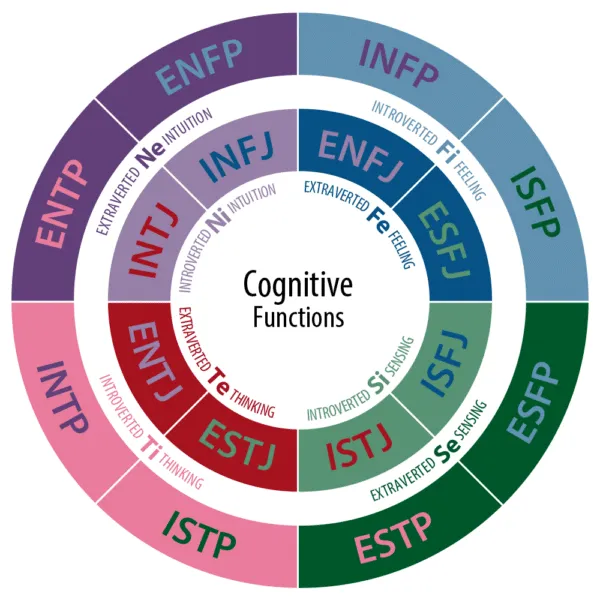
Courtesy of Jake Beech, CC0, via Wikimedia Commons.
The most popular way to take this test is through a questionnaire in which you review several statements, rating your personal level of agreement or disagreement with each one. The more honest the answers, the more reliable the result.
In terms of self-knowledge, the test and its results can help you look more closely at your own convictions and ideals, and at the way you see the world and behave in it. In this way, the results of a test like this can offer clues, among other things, about which career decisions best match your own personality.
In institutions, the analysis of this test’s results can be used in recruiting new talent, or even in identifying needs within a team, as well as making better-informed decisions about promotions.
The 4 best MBTI personalities for management roles
Let’s move on to the list itself, with a short explanation next to each personality about what makes it a good leader. What they all have in common is extroversion, a trait that makes communication much easier. Communication is an essential pillar of leading a team and keeping an institution’s goals or projects clear.
Besides communication, extroversion is also a trait of people who are more confident in their own convictions, to the point of defending them when they consider it necessary. They also have the firmness to resolve complex situations that are their main responsibility.
ESTP – Entrepreneur
The Entrepreneur personality is among the Explorers, so it belongs to curious and bold people who not only like being the center of attention but often are, because they stand out from others.
Unlike other profiles on this list, the Entrepreneur does not do very well in more rigid situations governed by routines that are always the same and full of rules.
Routines and patterns can be important, but people with this profile prefer to break with what is considered common sense in the name of innovation; that is how they feel truly alive.
In management positions, Entrepreneurs are great at encouraging a team to see beyond the obvious and look for creative solutions. All the more so because this profile stands out for noticing details that most people would not have caught.

ESTJ – Executive
Very different from Entrepreneurs, Executives value order and more conservative, traditional values, and feel much more comfortable following hierarchies and pre-established methods.
To some people, these may seem like the traits of someone considered a stickler, too by-the-book, but valuing order along with solid values and impeccable character can contribute a great deal to organizing a team.
Leading by example, people with the Executive profile work hard and see this as the only way to reach goals. And, because they are among the Sentinels, they are stable and reliable people.
ENFJ – Protagonist
Protagonists are among the Diplomats, which characterizes this personality as empathetic and a mediator. They are leaders who inspire through their passion for the causes they believe in, and they take pride in guiding groups of people toward those passions.
They are eloquent, so they find it easy to gather ideas and communicate them to an audience. This communication skill moves people and makes them identify more easily with the purposes expressed by the Protagonist.
But their leadership ability does not stop at speeches, since ENFJs also have a lot of empathy for people and truly make themselves available to help. Their belief in people, their optimism, and their ability to step forward and inspire others are the elements that make people with this personality good managers.
ENTJ – Commander
Unlike Protagonists, who are more sensitive and altruistic, Commanders are more rational, although they also draw crowds through their own charisma and determination.
People classified as Commanders also enjoy challenging situations, believe they can achieve any goal, and think strategically about how to accomplish certain feats in the long term.
They are dominant in negotiations, but good at recognizing other people’s talent as well as their flaws. Thanks to this analytical ability, they are able to give their team good feedback.
Does this mean only these personalities make good managers?
In short, no. These 4 out of 16 personalities are not the only ones with the potential to become excellent managers. As highlighted at the beginning of this content, good managers can have very different traits from one another, not least because there are many possible management models, according to the different needs of each business.
The intention here is to point out that, among the 16 MBTI personalities, Entrepreneurs, Executives, Protagonists, and Commanders are born leaders, often standing out among figures remembered for their great deeds in history and, why not, in important management positions.